

Delegation of European Institute students attends OxPeace workshop on multi-level negotiation, mediation and diplomacy
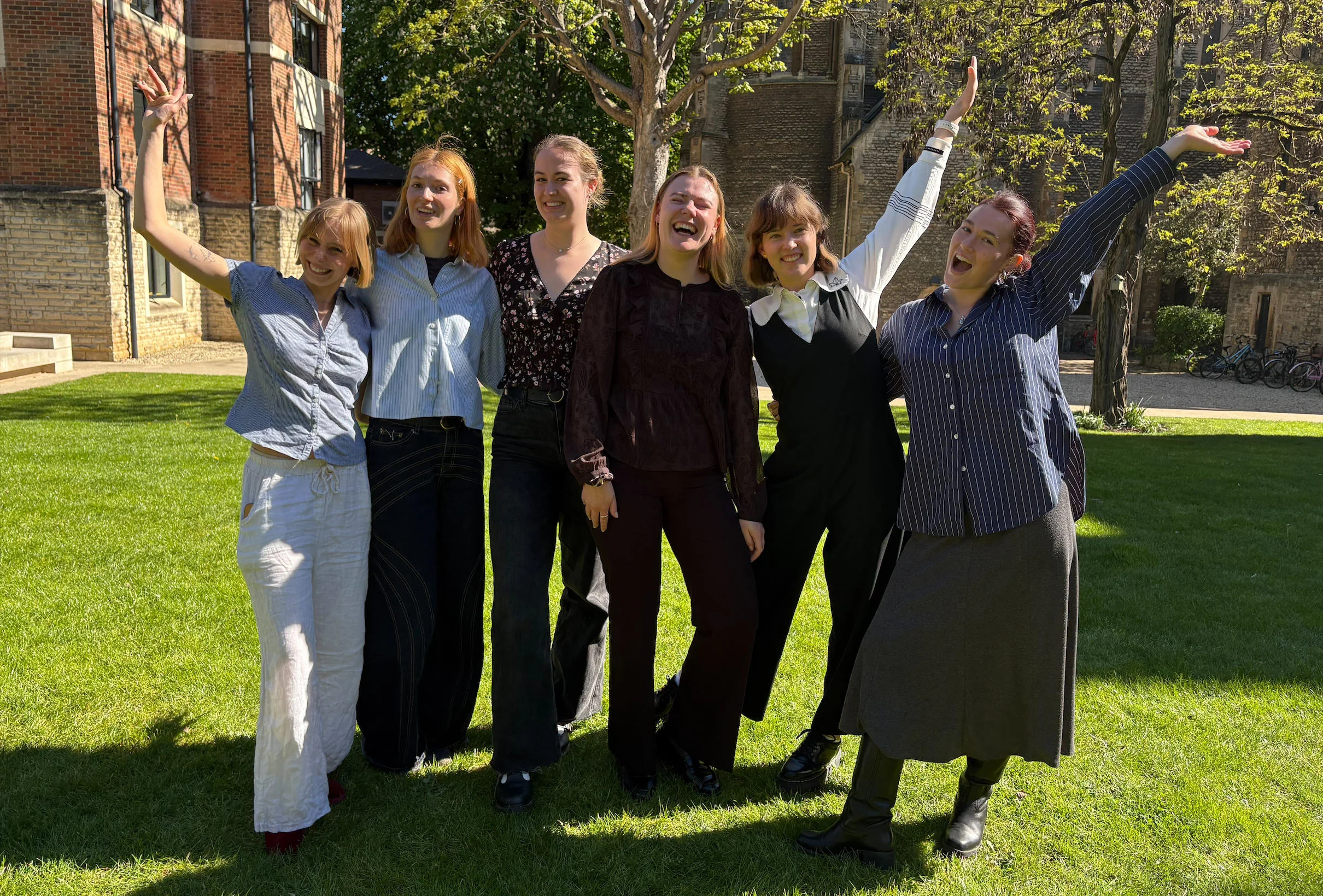
On 23-24 April 2026, a delegation of MSc students from the European Institute attended the OxPeace Training Workshop 206 at St Anthony's College in Oxford.
This year's intensive two-day Oxford Network of Peace Studies (OxPeace) Workshop, entitled "Multi-Level Negotiation, Mediation and Diplomacy: Negotiating with Difficult Actors", focused on international and local negotiation, mediation, and diplomacy. It covered core concepts, lessons learned from the field, as well as hands-on exercises, with a particular focus on how to mediate conflict and negotiate with difficult actors who resist agreements for mutual gain and disregard established international norms and principles.
We sat down with our MSc Culture and Conflict in a Global Europe candidate Anna Bezpala to hear more about her experience and main takeaways attending this high-level academic workshop in Oxford with fellow students from the European Institute.
Q: What motivated you to attend this workshop on multi-level negotiation?
Anna Bezpala: Well, for me, the main reason was tied to my career plans. I’m from Ukraine, thus there is a particular “difficult actor” (to put it lightly) that my life has partially been shaped by, as Russia attacked my country when I was just 10 years old. It is no wonder that the career I see for myself has to do with international and domestic organisations tied to peace, security and reconstruction. You can understand why, when I first saw Adam's email notifying us of this workshop, I knew I wanted to sign up right away. In a few weeks I learnt I got in, and in a few more weeks I was coffee in hand, laptop with pre-course readings on the table, rushing aboard a Great Western train towards Oxford.
At the workshop, there were quite a few of us from the European Institute: Callie Butte, Clara Mohr, Amira Khader, Emilia Struppler, Beatrice Timken, Raquel Hijano and a few others. Together, we had a packed trip ahead of us!
Q: What did the workshop entail?
Anna: The two days were full of negotiation simulations, followed by reflection and feedback sessions with our convenors – Martin Albani and Valentin Ade. We facilitated some negotiations between a separatist group and a government of an unnamed country and dived headfirst into others –- taking the roles of a head of an international organisation and even a “difficult actor” –– a village head with patriarchal views on women’s education.
All culminated with a large-scale negotiation in an UN-like body, where some of us were the “UN” facilitators, others advised presidents of the countries on the brink of a tariff war, yet most of our EI delegation got the roles of… the press! This turned into quite a fun exercise as we got choose our affiliations: a right-wing outlet, a state-owned outlet of one of the countries involved, an outlet tied to one of the interest groups, an international outlet… We organised press conferences, interviews, and asked “the difficult questions” on tariff negotiations, all doing our best to uphold our affiliations.
Apart from all the simulations, we also had several engaging seminars, learning about the practical implications behind concepts such as a “difficult actor,” “shuttle diplomacy” or a "formal negotiation," determining BATNAs, reservation values or ZOPA for a negotiation.
Q: What was it like to attend a high-level academic workshop?
Anna: We learned a great deal from each other’s experiences. Indeed, one of the best parts of the workshop was the people. Unlike many of the in-house LSE events I attended before, here I truly got a chance to meet post-graduate students from universities all across the UK, as well as practitioners from other countries.
More than that: some of the post-graduate students were practitioners themselves, who decided to pursue an additional degree to up their qualifications. That way, apart from the convenors, in the room, in the pubs and on coffee breaks we got to chat with (including but not limited to) a former member of the UK’s representation to the UN, a Pakistani diplomat, public affairs officers and legal professionals – all post-graduate students.
Q: What was the highlight of the event?
Anna: A true highlight of the workshop was the amazing picnic lunches and dinners Revd Dr Liz Carmichael (one of the organisers) cooked for us herself at her residence. We got to sit in her residence’s back garden enjoying the warm sun, eating the delicious soups and sandwiches and sharing our experiences, opinions on the workshop, ideas and plans for the future.
Q: What were some of your key takeaways from the training?
Anna: Sitting in our metaphorical Oxford backyard here, these are some of the main takeaways I had from the two packed days:
- When approaching a difficult actor, it is crucial to ask: “why are they difficult?” – perhaps the root cause of the difficulty is something feasible to resolve, like a personality clash with someone in the mediation team, the actor feeling unheard or disrespected, or a values clash in need of being broken down
- Determining values and needs of your difficult counterpart is a crucial first step
- It is of great importance to continue building trust and a long-lasting relationship with the counterpart even in highly difficult negotiations (if appropriate and possible)
Q: Is there anything else you would like to share with our EI community?
Anna: I am very grateful to Adam Judge for notifying us of opportunities like this one, to Flora Marlene Willimek and Revd Dr Liz Carmichael for their amazing work organising this workshop, as well as to Martin Albani and Valentin Ade for convening it.
If you’d like to join something like this in your year at the European Institute, do watch out for Adam’s emails!
Thank you, Anna for sharing your experience with us!
If you are interested in exploring these themes and topics at the European Institute like Anna, discover our MSc Culture and Conflict in a Global Europe on our website.