
European Institute academic and alumnus join forces on collaborative research
Transparency lies at the heart of canonical theories of international negotiations and institutions—yet it is rarely directly measured or explained.
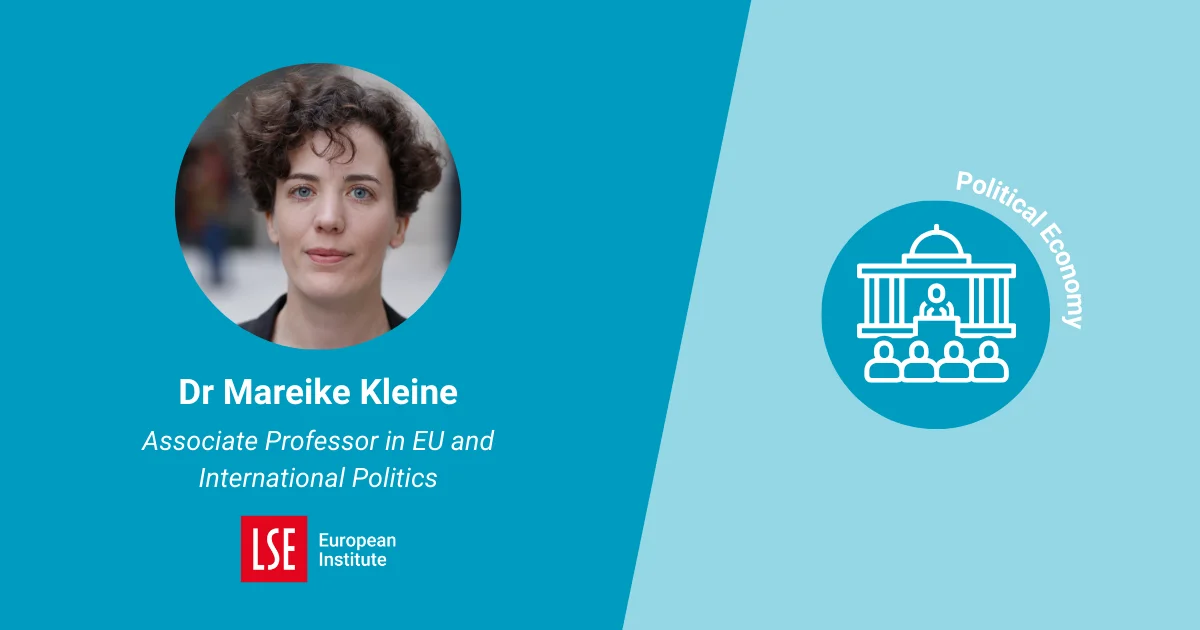
Our Associate Professor in EU and International Politics Dr Mareike Kleine has published new research in The Review of International Organizations with our recent graduate Samuel Huntington, an alumnus from our MSc in European Political Economy (Class of 2022) who is currently working as an economist at the UK Department for Science, Innovation and Technology (DSIT).
Their journal article, “Negotiating with your mouth full: Intergovernmental negotiations between transparency and confidentiality,” challenges received positive and normative theories about transparency in international institutions and contributes to the literature on informal governance, negotiation studies, EU politics, and the transnational democratic deficit.
Abstract
"This paper explores the potential downsides of transparency reforms in intergovernmental negotiations and institutions. We argue that as formal international meetings open up to the public, negotiators face incentives to shift deliberations to more informal and opaque venues, especially for sensitive and domestically contested issues. To test when and why this occurs, we present new data on three decades of intergovernmental negotiations in the Council of the European Union (1990–2019), and in particular the use of informal breaks where no minutes are taken. We find that recourse to such breaks—especially at lunch time—has increased substantially, and that ministers often take these opportunities to discuss controversial topics. We deploy quantitative and qualitative analyses to show that variations in informal breaks correlate both with institutional enhancements to transparency and with specific concerns over antagonistic political mobilization at home, notably in the form of Euroscepticism. These findings challenge received positive and normative theories about transparency in international institutions, and contribute to the literature on informal governance, negotiation studies, EU politics, and the transnational democratic deficit."
Read the full journal article