

Research Reports

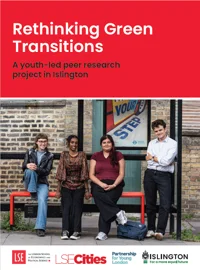
The final report for the Rethinking Green Transitions project explored how youth experience and envision climate action. Engaging over 150 young people, it found that climate efforts must prioritise social justice, safety, and inclusive public spaces. The report outlines ten recommendations to make green transitions more youth-led and equitable.
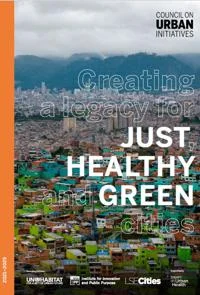
Creating a legacy for just, healthy and green cities
From 2021-2025, the Council on Urban Initiatives was a leading research and advocacy platform co-led by LSE Cities, UCL Institution for Innovation and Public Purpose, and UN-Habitat. To cement its learnings, the Council has summarised it’s key insights into a final report.
Public Innovation: building capacity in Europe's city governments
This report, led by LSE Cities and developed in partnership with Bloomberg Philanthropies and Eurocities, is based on a Eurocities Pulse survey of 65 European cities and seven deep-dive case studies. It maps the landscape of government innovation capacity in Europe’s cities, and asks what’s working, what can cities learn from each other, and where they need more support to meet the challenges of the 21st century through city government innovation.
Old Cities New Ambitions: the future of urban Europe
This publication captures our research, presenting new data and case-studies, and drawing together viewpoints from cities experts and urban leaders. It will discuss the needs, capacity challenges, and priorities faced by cities leaders; the development of post-growth agendas in many European cities and the challenges and opportunities these represent; developments in housing, transport, and climate policy; and the (slowly) changing demographic profile of European Mayors.
Better Access to Urban Opportunities: Accessibility Policy for Cities in the 2020s
This report analyses the policy choices made by governments in response to the COVID-19 pandemic and makes recommendations to national governments to boost recovery through policies that promote more compact, connected, clean and inclusive cities.
Driving towards urban recovery in London: Future scenarios for Lambeth and Southwark post Covid-19
This report is the outcome of a collaboration between Impact on Urban Health and LSE Cities about the future of Lambeth and Southwark. It analyses the existing social and demographic characteristics of the boroughs, looks at a number of factors likely to influence them in the shortto-medium term and then evolves a series of ‘scenarios’ designed to help shape future policy.
As the Mexican government charts the country’s recovery from COVID-19, this paper, created in partnership with the OEDC and the Coalition for Urban Transitions, sets out national solutions to urban transport and housing challenges that will put Mexico’s cities on a path to prosperity and resilience.
Living in a denser London: How residents see their homes
Since 2016, a team of LSE researchers has spoken to over 500 residents from 14 high-density developments about how they experience living at density in London. This report analyses the 14 schemes and provides best practice recommendations.
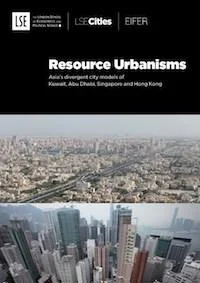
Focused on Asia’s divergent city models of Kuwait, Abu Dhabi, Singapore and Hong Kong, this report presents the key findings of the 'Resource Urbanisms' project which was led by LSE Cities between 2015 and 2017.
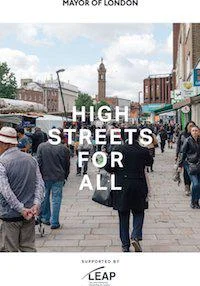
The study takes one of the most commonplace experiences of the city – the high street – and uses the perspective of Londoners to understand its diverse economic, social and environmental benefits, collectively known as its ‘social value’.
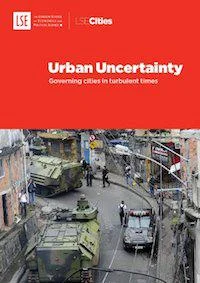
The essays and event summaries in Urban Uncertainty: Governing Cities in Turbulent Times capture the ways in which formal state institutions, as well as everyday urban life, relate to unpredictable, unknowable or unmanageable events.
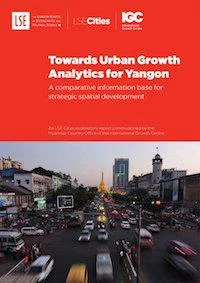
Towards Urban Growth Analytics for Yangon
Based on the work of LSE Cities and IGC Myanmar, this report reviews urban development in the city of Yangon.
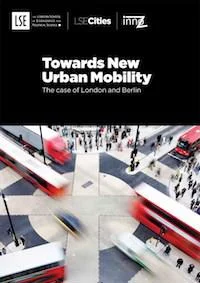
Drawing on the LSE Cities/InnoZ household survey of 1,000 residents each in Berlin and London, Towards New Urban Mobility: The case of London and Berlin provides insight into how urban transport policy can better leverage new and emerging mobility choices in cities.
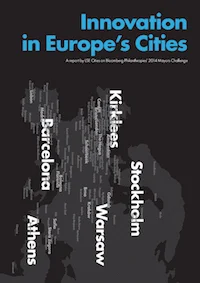
Innovation in Europe's Cities sets out the context for Bloomberg Philanthropies’ European Mayors Challenge. It gives an overview of the key themes facing European cities today and provides an independent analysis of the 155 submissions to the award and a detailed review of the five winning proposals.
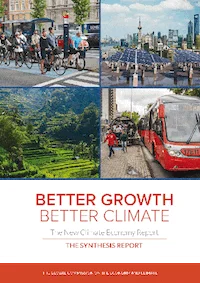
The cities research studies on the New Climate Economy
This series of studies for the Global Commission on the Economy and Climate presents new evidence that cities will be central to global economic growth and climate action.
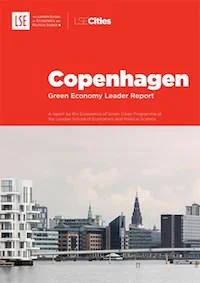
Copenhagen | Green Economy Leader Report
This report outlines the strategic choices facing Copenhagen as it builds on its pioneering work as a global green economy leader.
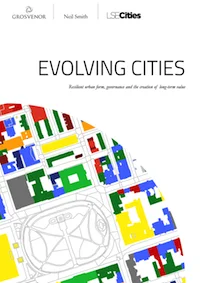
This project involves an exploration of the interplay between the designed and built qualities of urban form and urban governance over time in creating ‘resilience’. Its focus is on neighbourhood-scaled pieces of major cities and urbanised regions which exemplify long-term processes of land management through ownership, planning, investment and development.
Measuring Impact: Preliminary insights from interviews with impact investors
This research paper – the second of LSE Cities’ Measuring impact beyond financial return research project – draws out points of convergence and divergence in approaches to impact measurement.
Measuring impact: Critical overview of concepts and practice
This paper, available in full length and summary versions, draws on a range of relevant literature around the notions of ‘non-financial return’ and ‘impact’, and their assessment in practice.
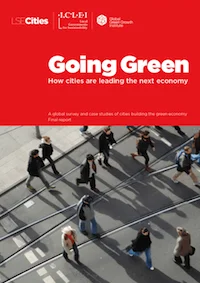
Going Green: How cities are leading the next economy
Going Green offers a fresh perspective on the environmental challenges that cities face, along with the opportunities and barriers to going green and fostering economic growth. The survey covers key aspects of green policies and the green economy, smart city technology, green policy assessment and urban governance.
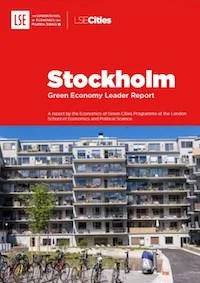
Stockholm | Green Economy Leader Report
This report, produced in partnership with the City of Stockholm, shows that Stockholm took early action to build a green economy – unlike most cities, environmental policies have been important to Stockholm for over 40 years.
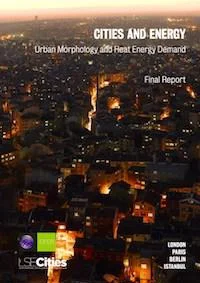
Cities and Energy: Urban Morphology and Heat Energy Demand focuses exclusively on theoretical heat-energy demand related to design issues at their most fundamental level: building design and urban form.
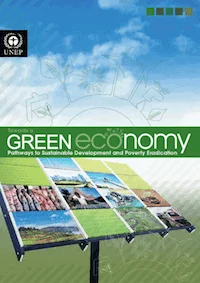
The report challenges the myth of a trade-off between environmental investments and economic growth, and makes central the roles of cities in an emerging ‘green’ economy.
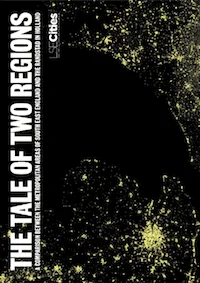
The study investigated how regional authorities in the Randstad and South East England can promote access to both jobs and open space for all income groups, how planners should respond to moderate economic growth or even decline, and how metropolitan areas can become more viable and sustainable places to live and work.
The Global Metro Monitor examines data on economic output and employment in 150 of the world’s largest metropolitan economies, located in 53 countries, from 1993 to 2010.
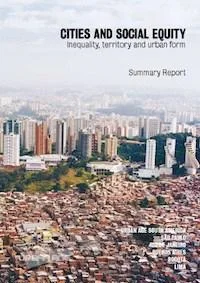
As a follow up to the Urban Age South America conference, Cities and Social Equity assesses the impact of inequality in an urban context with comparative research and data collection in five cities: São Paulo, Rio de Janeiro, Buenos Aires, Bogotá and Lima.
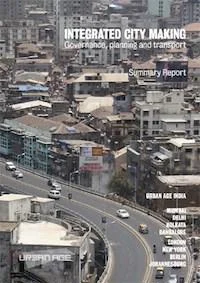
Integrated City Making is a report based on a research programme in Mumbai, Kolkata, Delhi and Bangalore followed by the Urban Age India Conference in Mumbai to understand and assess how these cities are responding to the challenges of growth, and to compare these approaches to those adopted in other cities throughout the world.
Density and Urban Neighbourhoods in London
Density and Urban Neighbourhoods in London focuses on the issue of density in urban neighbourhoods and what makes them successful. The report has practical lessons for the whole approach towards sustainable communities in the UK and internationally.