

Nuclear Megaprojects
As siting of megaprojects accelerates globally, what lessons from nuclear energy projects offer insights regarding the value of public engagement?
Kelle Barfield, Class of 2024-26, explored answers to this question as part of the Executive MSc in Cities at LSE.
The Challenge
My research project examined whether early public consultation in nuclear energy projects reduces delays, opposition, and long-term costs during project delivery. As nations increasingly adopt nuclear energy to meet climate and energy security goals—with 33 countries pledging to triple nuclear capacity by 2050—public support has become critical to successful project implementation.
Public consultation is defined as a deliberate, two-way process that allows citizens and stakeholders to shape decisions before they are finalized, replacing older “decide-announce-defend” approaches. Effective consultation enhances transparency, legitimacy, and trust, particularly in high-risk sectors such as nuclear energy, where public perceptions of safety often differ from technical assessments.
The Findings
Using comparative case studies in Canada, Japan, and Switzerland, the research explored nuclear new-build construction, reactor restarts, and spent-fuel repository siting. Interviews with regulators, operators, and policymakers reveal that early, sustained engagement helps identify local concerns, build trust, and reduce the likelihood of costly opposition later.
Historical failures reinforce this finding. Projects such as Shoreham (USA), Bataan (Philippines), and Yucca Mountain (USA) demonstrate how inadequate public engagement contributed to cancellations, political resistance, and billions in financial losses despite technical viability of those projects.
The study finds that while exact avoided costs through effective public engagement are difficult to quantify, investment in consultation is minimal compared to overall nuclear project budgets and can prevent expensive conflict, often leading to project delays or cancellation. Successful engagement depends on several factors: understanding local cultural, political, and social contexts; involving communities in shaping consultation processes; maintaining transparency; and investing in skilled relationship-building personnel rather than relying solely on technical messaging or media campaigns.
A key conclusion is that stakeholder engagement is not about persuading communities to accept nuclear projects but about ensuring communities become genuine participants in decision-making. Effective consultation requires beginning early, adapting continuously, and treating public involvement as a long-term strategic investment essential to project sustainability.
Future Impact
Future research on this topic could examine staffing models, cultural variations in engagement strategies, and comparative approaches in selecting host communities for major nuclear infrastructure.
The EMC in Practice
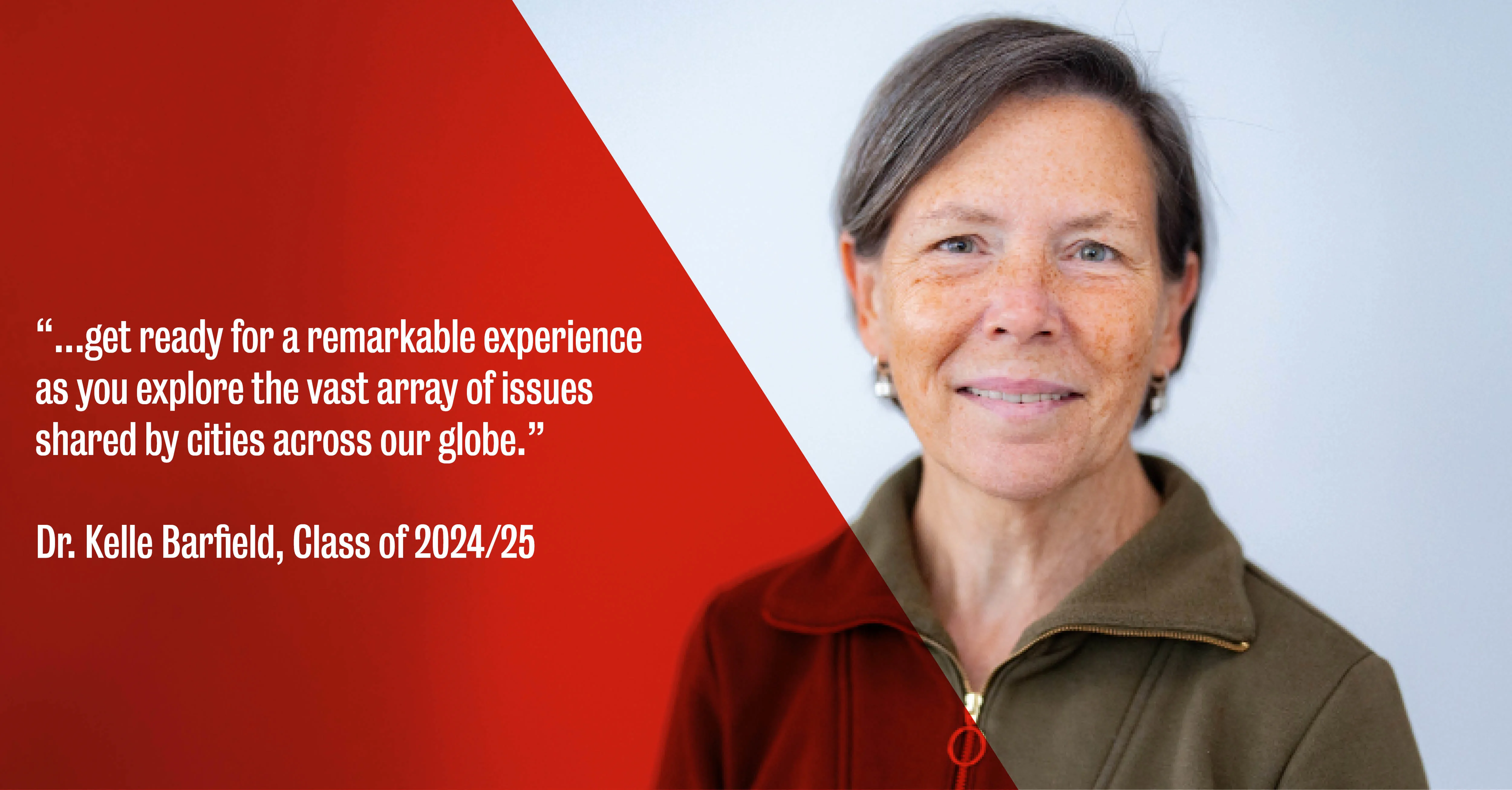
My advice to future participants in the Executive MSc in Cities programme is to get ready for a remarkable experience as you explore the vast array of issues shared by cities across our globe. The perspectives of your tight-knit cohort offer important insights to the lessons led by an amazing faculty and high calibre guest speakers.
Dr. Kelle J. Barfield is a Fulbright specialist and U.S. consultant on nuclear energy stakeholder engagement, serving as an advisor to the International Atomic Energy Agency and U.S. Department of State, where she is on the speaker program roster.