

Passing the torch: three generations of LSE trailblazers
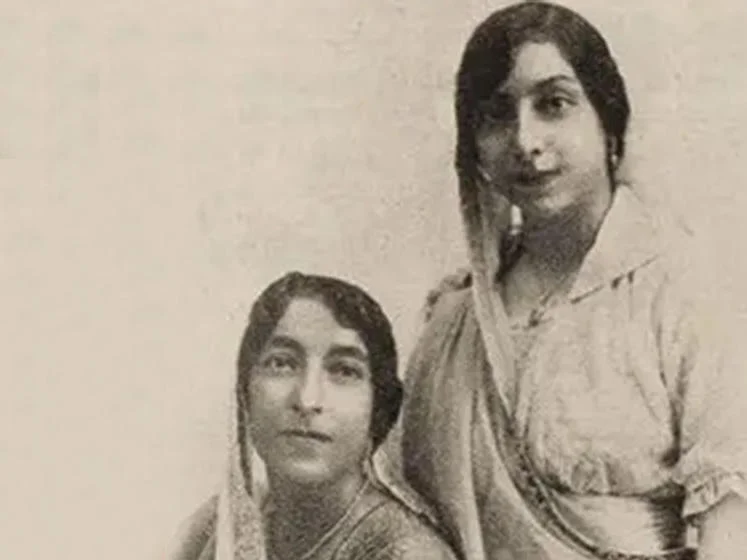
This academic year marks LSE’s 130th anniversary; a celebration of our history and the global impact of our community. As part of this milestone, we are revisiting inspiring stories of our incredible alumni who have helped to shape the world. Niloufer Lam (LLB, 1995), founder of NL Legal law firm in Mumbai, reflects on the legacy of her late grandmother Mithan Tata, an LSE alumna and the first female barrister in the Bombay High Court.
Research into Mithan’s life story also uncovered that Mithan’s mother, Herabai Tata, was registered as a student at LSE between 1919 and 1922. Join Niloufer as she shares an extraordinary LSE story that spans through generations of her family.
Mithan's journey to LSE
Mithan’s father, Ardeshir Tata, was pro women’s education. We must remember that this was a time in India when a lot of women didn’t go to university, so in this way Mithan and her mother Herabai were trailblazers. Mithan very much believed in equal rights for women and became a pioneer of the suffragette movement in India. I think her journey to studying law was part of that. In addition, as India was a British colony at that time, she campaigned for women to have the basic right to vote, including in the House of Commons. She was one of the first woman called to the Bar at Lincoln’s Inn on 26 January 1923.
After Lincoln’s Inn, she returned to Bombay and she practised here. Again, at that time this was unusual. Yet, despite this, Mithan became the first female barrister in the Bombay High Court. It would not have been easy, as women didn’t appear in the courts – it was something new and unique.
In regard to the question of whether or not the time is ripe for a measure of Women’s Suffrage in India, Miss Tata called attention to three facts – first, that all educated men desire the enfranchisement of the women; second, that there is no Anti-Suffrage movement among the women themselves; and third, that Purdah women already unveil in the Courts and before registrars when executing deeds for the transfer of land and similar business.
Looking back on Mithan's legacy
I think she was a trailblazer and her life represents a journey of tremendous achievement for that time. Mithan showed incredible resilience and persistence, We are particularly proud of how she worked to dismantle gender biases and patriarchy within the profession. Firstly, she was the first women to be appointed Sheriff of Bombay in 1947. Then in 1961 she was awarded the Padma Bhushan, the third highest civilian award in India, by the Indian nationalist leader, Jawaharlal Nehru. Mithan was also an Indian delegate at various United Nations seminars and was appointed Justice of the Peace in 1971 and she was actively involved in the All India Women's Conference (AIWC) and served as its president for the term 1961–62. Finally, she was a professor at the Government Law College, Bombay for several years. Her actions were historic and pioneering for her generation and she shaped the framework for women in India today. Since then, life for professional women in India has changed drastically.
I think that if you look at women in law firms today, there's a huge number who reach very senior levels and that's been the case I think for the last at least 10 -15 years. We see women in both the high courts and the Supreme Court as well. However, I think there are still some challenges to overcome because the legal profession in India can be demanding in terms of time. Some women find it difficult because they're appearing in court during the day, then they need to meet clients and draft things in the evening. So, it can be difficult with balancing family life. However, the profession has moved leaps and bounds since Mithan’s day.
My own journey to LSE
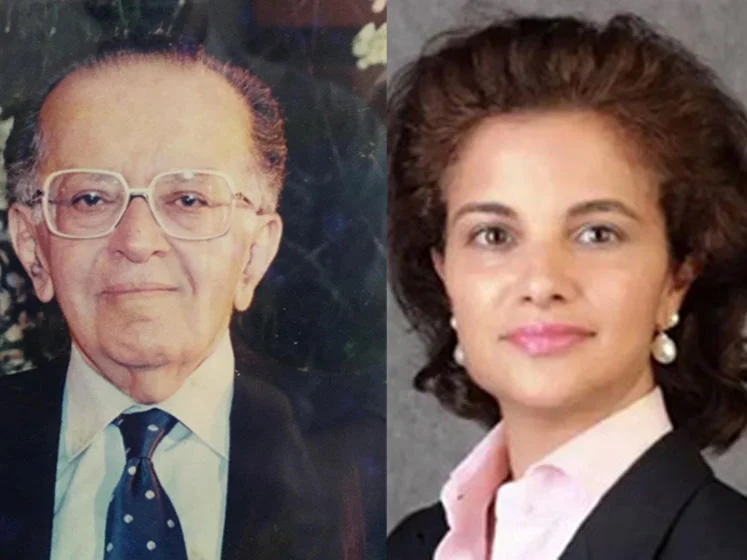
My stepfather Russi Taraporevala inspired me to study at LSE. He had also attended the School, studying here in the 1950s, before going onto having a dual career as an economist and as a publisher.
LSE had a transformational effect on my stepfather's life. He often talked about the post-war era. There was strict rationing: every week they got one piece of meat, a Cadbury’s chocolate, and plenty of boiled cabbage, leaving an indelible mark on his palate, as he ate boiled chicken every day for decades beyond LSE! He regularly played chess. Professor Basil Yamey was his mentor, recommending him for his MBA at University of California Berkeley, which he went on to obtain. The two of them kept in touch for many decades thereafter. My stepfather also made many life-long friends at LSE.
From my perspective, the institution of LSE speaks for itself, but I liked the fact there were options to take courses outside of law. Multi-disciplinary learning enables different thinking, perspectives and opportunities that can help not just professionally, but personally as well. I also appreciated that LSE offered courses that many other universities didn’t cover.
There was a fantastic diversity of courses and subjects that you could take and the tutors that you had.
And of course, LSE is just so cosmopolitan. You become friends with students from all around the world and I think LSE is quite unique in that respect in the UK. It is an amazing experience for you to have at university, because it's not just about the learning, it's also the cultural understanding, fun and exposure that you get through all of that, which makes you able to appreciate different cultures and countries. You can adapt more easily as you meet people from those countries as you move through life as well.
Thank you, Niloufer for sharing your family’s LSE history! To those interested in learning more about Herabai and Mithan Tata, you can find out about their lives and contributions here.