

How an idea took April Stephenson from fieldwork to tech startup

An idea born during a fieldwork trip to Kenya inspired April Stephenson (MSc Social Innovation and Entrepreneurship 2020) to found Simba Technologies. April looks back on her career, why she chose LSE for her master’s, and why she was inspired to sign our Entrepreneurs’ Pledge.
The journey to LSE
I had been working in fast-paced fintech for most of my career, but it had ultimately burned me out. I now sought to work in more socially driven arenas, and LSE offered the perfect programme - a Master’s degree in Social Innovation and Entrepreneurship with the Department of Management. In addition to this, I really liked the School's broader ethos - the idea of contributing to "the betterment of society” - and its global community and international approach. It was very much aligned with how I envisioned working in the future.
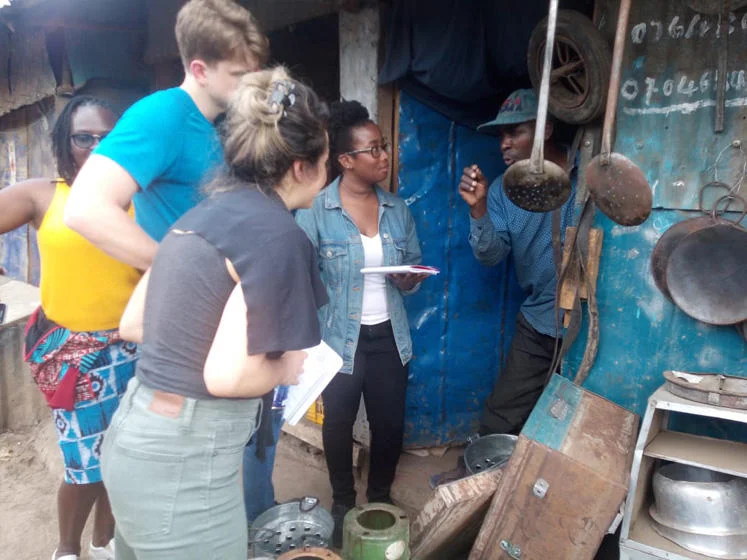
During this master’s I had the opportunity to do fieldwork in Kenya. The trip was amazing as it provided a special opportunity to be immersed in the lives of real people whose needs are often poorly understood. The relationships I built during my time at LSE, whether with faculty or my peers, have been unparalleled. It is rare to spend so much time with such an amazing group of people from around the world.
The idea
I got the idea for my startup, Simba Technologies, during my time at LSE. That field trip to Kenya involved doing surveys in Mukuru, an informal settlement in Nairobi. As I walked door-to-door interviewing people with pen and paper, I found it odd that there weren't digital ways to keep in touch with them - especially given that everyone had a phone. I puzzled through solutions to this problem for a while, and it eventually became Simba Technologies.
Simba is a WhatsApp-based data and AI tool for impact organizations - we help them collect, translate, and analyse feedback from the ground in real time. By turning community voices into structured, research-ready data, organizations can make faster, more evidence-based decisions and streamline their impact reporting for donors and beyond.
LSE's entrepreneurial support as I built Simba was amazing. Even though I had worked in tech and startups for nearly a decade, I still didn't know many things about how to start a tech venture. My course itself was valuable, but it was particularly helpful to have LSE's entrepreneurship hub, LSE Generate, as a resource as I figured things out. It's where I did my first-ever pitch and was a safe place to learn and make mistakes early on. I gained a lot from my time at the LSE, and I am so grateful for it. From my academic experience to the support I received at LSE Generate, it only seems fair to pay it back.
Advice to new entrepreneurs
Fundamentally, everyone's life is different, and while it can feel scary to take your own path - especially early on - it's the only way to find a life that is yours. I studied anthropology and literature as an undergraduate, but I ended up working in decision science in the fintech industry.
If you are open to chance, work hard, and are willing to learn and try things, then there are so many interesting possibilities in this world!
April Stephenson
(MSc Social Innovation and Entrepreneurship 2020)
November 2025