

LSE female founders on giving back and growing forward
Celebrating LSE’s female entrepreneurs on International Women’s Day
For International Women’s Day 2026, we reflect on the theme of Give to Gain with our entrepreneurial alumnae. Four UK-based founders, Kanupriya Batra, Kirsty Kenney, Lauren O’Donnell and Mikai McDermott look back on their own journeys and what Give to Gain means to them as female entrepreneurs.
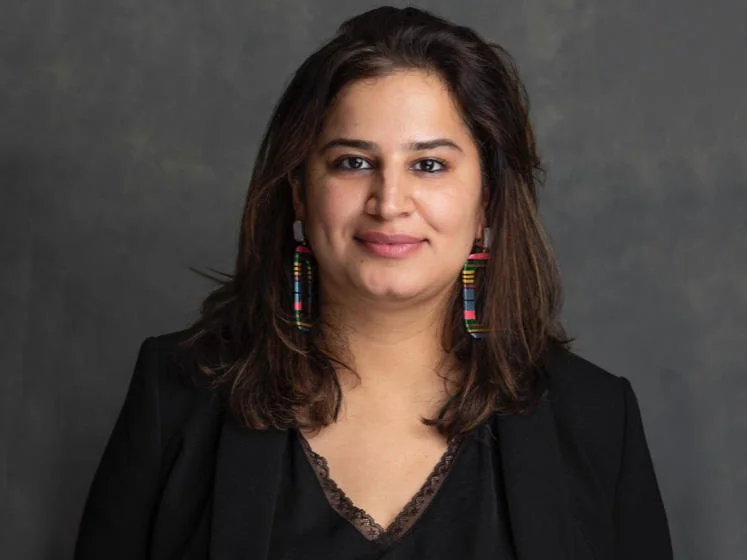
Kanupriya Batra (MSc Management 2020)
Speek Health
My journey to founding Speek Health began with lived experience. During my time working in digital health, I encountered a gap between what was clinically delivered and what people needed. When mental ill health enters a family, parents become the first responders, holding fear, uncertainty, and responsibility, while receiving very little support themselves. Speek Health was born from a desire to bridge that gap.
One of the challenges I have faced as a woman has been learning to take up space without apology. Women are often conditioned to be collaborative, careful, and accommodating - qualities that are valuable, but not always rewarded in entrepreneurial environments. There have been moments in fundraising rooms or sales conversations where I felt I had to prove readiness before being believed. Thankfully, joining the Accelerator Programme run by LSE Generate provided the much-needed community, mentorship, and confidence that helped transform an early idea into what Speek Health is today.
I hope that more women feel empowered to lead in their own way, knowing that when we lift others, we create lasting change far beyond ourselves.
Looking back, almost every turning point in my journey came from someone giving, be it time, advice, encouragement, or an introduction, without expecting anything immediate in return. Give to Gain reflects how progress truly happens: women opening doors for one another, sharing hard-won lessons, and celebrating each other’s growth. I try to give back by mentoring founders, supporting peers, and building teams where generosity is seen as strength rather than softness.
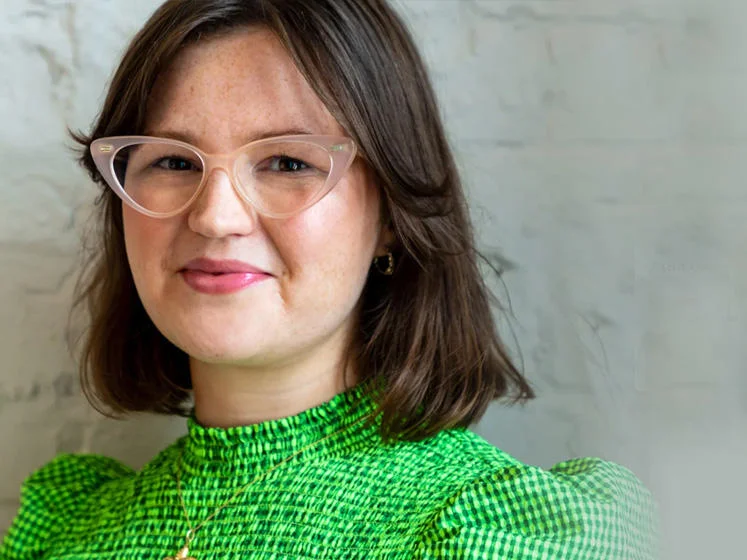
Kirsty Kenney (BA Geography 2014)
Kuppa
At LSE, I studied geography, where I explored my interests in the built environment and sustainability. I followed those interests throughout my career and ended up at a home improvement startup. There, I could feel homeowners were looking for ways to make their homes more sustainable, but doing so was complex, expensive and hard to find reliable information on what works.
That insight was the starting point for Kuppa. However, the journey was far from straightforward; we spent a long time in the trenches, trying things that didn’t work (or half worked) until we pivoted to a business model that did.
When it comes to the challenges women face, I’d like to see more focus on intersectionality. There’s an important conversation to have around social mobility and the background of founders. We need to find ways to make the risk of building a company viable for women from every background, while broadening opportunities and access that makes that possible
I’m a real believer that you never really achieve much alone. My success is my team’s success. I muddled through thanks to a great support network that I could call on, from across the startup community. I’ve most enjoyed being part of a founders’ circle, a group of 8 of us who meet monthly to share and exchange experiences. We show up for one another when we most need it. There’s a lot to be gained from just having that space to be honest and vulnerable about the challenges of company building.
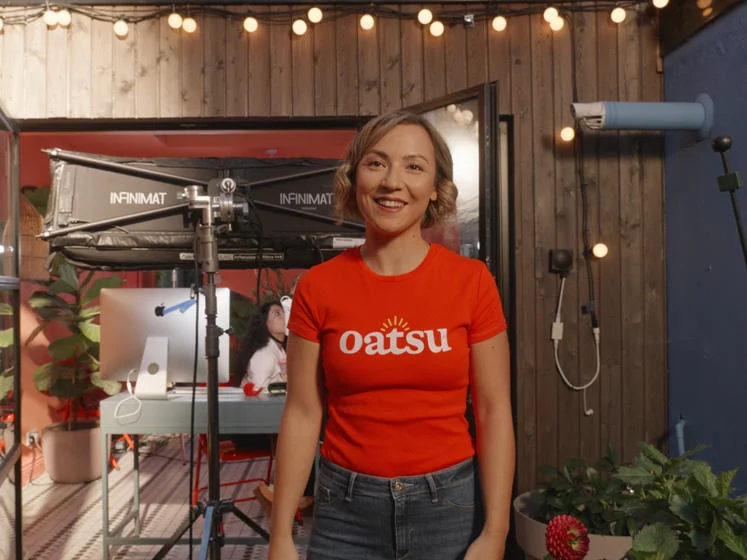
Lauren O’Donnell
(BA Geography 2013, MSc Social Policy and Administration 2014)
Oatsu
My entrepreneurial journey started with a very ordinary problem: weekday mornings. After several years working in finance, breakfast was whatever I could grab on the way. It highlighted how difficult it is for busy people to sustain healthy habits. Oatsu was born from that tension: making a genuinely good breakfast feel effortless, not aspirational. Though it began at my kitchen table, today Oatsu is a team of five, and our overnight oats are stocked in British supermarkets and department stores -Ocado and Selfridges.
Fundraising, however, presented some specific challenges. It required projecting confidence and scale before everything was resolved. As a young woman, I’ve found that credibility – particularly in technical or commercial conversations – needs to be established quickly and explicitly. Taking part in the LSE Generate Accelerator Programme in 2023 was hugely valuable, giving me practical guidance during my first fundraise, which ultimately reached 250% of our target – as well as a supportive community of fellow founders. I’ve also found value in connecting with other founders through UK entrepreneurial events like Bread & Jam and online communities such as Buy Women Built.
I want young women to see that ambition isn’t something to dilute or apologise for. If my journey helps even one person believe they can build boldly and on their own terms, that feels like a meaningful contribution.
I’m passionate about supporting other female founders and sharing what I’ve learned openly – whether that’s through founder communities, mentoring, or speaking honestly about the realities of building a business. Recently, I led a session at my former school, North London Collegiate, speaking to students about applying entrepreneurial thinking to any profession. The more I’ve given my time, insight and encouragement, the more support, perspective and confidence I’ve gained in return.

Mikai McDermott
(MSc Empires, Colonialism and Globalisation 2020)
The Linen Service
I began my career working across beauty, media and culture, building a personal platform while writing and thinking seriously about history, power and representation. Studying at LSE sharpened my instincts. I was trained to analyse systems so that, when I entered the creative industries, I could see how informal and opaque many systems were, particularly for young women. I went on to build The Linen Service so that female founders, creatives and operators could bring real questions and leave with practical clarity. I wanted to help women move from participation to ownership, from visibility to leverage.
The central challenge, as a female entrepreneur, has been getting taken seriously. When you are a woman building in public, people conflate visibility with superficiality. If you operate in cultural or digital spaces, your work can be framed as instinctive rather than strategic. I have had to assert that I am building businesses, not simply producing content. Studying at LSE trained me to think structurally about power and gave me analytical confidence and mobility. I want more women, particularly those from working-class and immigrant backgrounds, to feel entitled to those spaces rather than intimidated by them.
For me, giving is structural. It is about building platforms, capital pathways and communities that outlast individual moments of success.
Give to Gain resonates with me because I have benefited from people who shared information openly, made introductions, and trusted me before I looked established on paper. That generosity accelerated my trajectory. Through The Linen Service, I try to formalise that exchange. We create rooms where women share hard-won knowledge about funding, scaling, contracts, leadership and failure. When that information is hoarded, progress slows. When it is shared, momentum compounds.
Thank you to our four founders for sharing their insights.
Support the next generation of LSE founders
The LSE Entrepreneurs' Pledge, delivered in collaboration with LSE Generate, is a brand-new giving opportunity, inviting our growing community of entrepreneurs and innovators to pledge their support to the School today – but only make the donation when they are in a position to do so.
Kanupriya, Kirsty, Lauren and Mikai are all signatories of our Entrepreneurs’ Pledge – promising to give back to LSE when they are ready.