
Director's message

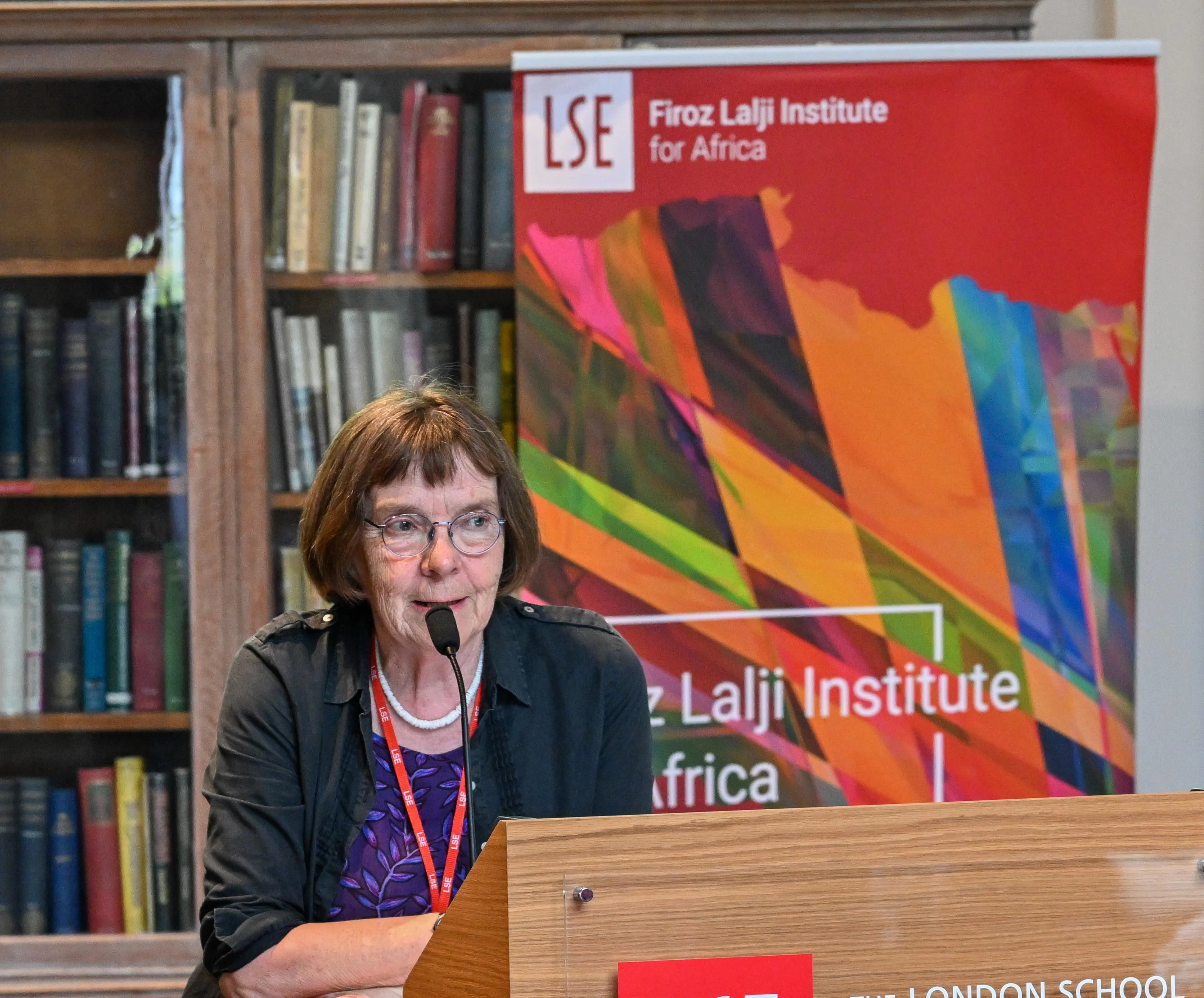
As the Interim Director of the Firoz Lalji Institute for Africa, I’m delighted that the Institute has completed its first decade at LSE.
Given that this is our 10th anniversary, let me give some background to the Institute. Our roots can be traced back to the activities of scholars at LSE, including our internal board member Jo Beall, who noted that the number of African students had not increased since the 1940s. Under the then president of the University, Howard Davies, a chair of African Development was created, which was filled by Thandika Mkwandawire. A Centre dedicated to Africa then followed, which then became the Institute we know today. It owes its establishment and many of its current activities to the generosity of its principal donor, Firoz Lalji, an LSE alumnus born in Uganda. Originally established to fulfil his idea of creating new generations of African leaders through the Programme for African Leadership, it expanded (under the leadership of our late director Tim Allen) to become a thriving research institute.
FLIA is now looking towards new research areas and seeking new opportunities around issues of health, governance, new technologies, popular economies, history, health policy, gender studies, geography, and management.
As Interim Director, I’ve been charged with helping with the search for a new director, while sustaining the Institute’s ongoing activities. LSE President Larry Kramer recently visited African alumni and institutions in Nigeria, Kenya and South Africa, and there will be further visits over the next year. LSE is keen to establish new and sustainable partnerships across the continent and build on our record over the last 10 years as we look forward to the next decade of research and leadership training with our rapidly expanding community.
My academic ‘home’ is in the Anthropology Department at LSE, where my research focuses on n debt, welfare, wages and the impact of financialisation. Over the years, Anthropology at LSE has hosted several future African leaders, including Jomo Kenyatta, the future President of Kenya, and Kwame Nkrumah, who went on to become the President of Ghana in 1952. That LSE/Ghana connection is now of great interest, given LSE’s burgeoning interest in Africa and Ghana’s 70th anniversary of independence in 2027.
Bearing in mind LSE’s early hosting of some of Africa’s future leaders, I look forward, during the next academic year, to helping to continue supporting young Africans who seek to make a difference, as well as fostering excellent research on Africa at LSE.
- Deborah James, Interim Director