

US aid and International Drug Policy - Evaluating the US Role in the Global Drugs and Development Debate
Leading to the United Nations General Assembly Special Session on Drugs (UNGASS) in 2016, former Colombian President Juan Manuel Santos condemned the "war on drugs" as a model in international drug policy. This stance was a clear divergence away from the conventional practice that had underpinned Colombia’s drug policy in previous decades, as well as the key tenets of US-Colombia bilateral relations. With a narcotisised history, US foreign policy towards Colombia had been characterised by a regional alliance with strong counternarcotics and counterinsurgency efforts.
Faculty: John Collins, International Drug Policy Unit (IDPU)
US Centre Research Assistant: Karen Torres, Department of Social Policy
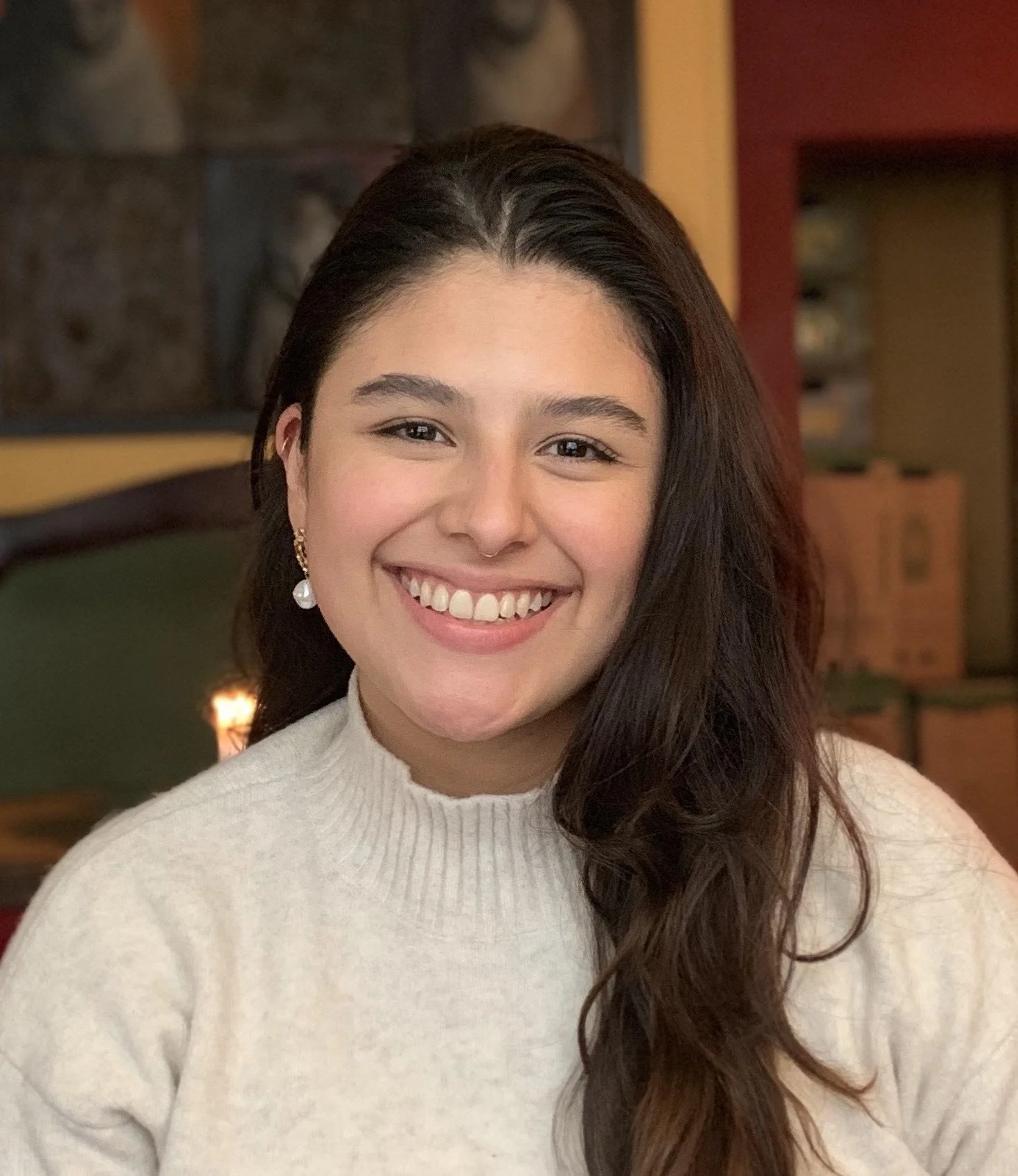
Author
Karen Torres
LSE Social Policy
It was very meaningful to get the chance to carry out research about my own country, which I have not been able to do throughout my studies at LSE.
My research with Dr Collins aims to challenge dominant discourses that frame producer countries as passive actors in domestic and international drug policy, always yielding to American interests. To analyse the extent of Colombian agency in drug policy, we centred our research around a specific case study: Plan Colombia. Plan Colombia was a multi-billion aid package provided by the United States from 2000-2006. Although the programme’s conception was based on social development, it became a military operation focused on strengthening counterinsurgency and counternarcotics. The majority of the literature on agency and Plan Colombia posits that it was an imposed programme, reflecting the United States’ desire to halt domestic drug consumption and trafficking. My role as research assistant was to find – if existing - literature that challenged the assumption of American hegemony in Colombian drug policy.
Methodology
In the early stages of the assistantship, I carried out off the record interviews with officials that participated in the implementation of Plan Colombia in Medellín. The purpose of this was to gauge whether it would be feasible to carry out primary research on this topic. Ultimately, we decided to shift to a literature-based project instead, as most of the interviewees did not want to go on the record due to the sensitive nature of the information provided and the potential repercussions they could face. Thus, after that point, I shifted my approach towards a literature review on agency and state-building in the context of Plan Colombia.
Through this process, I was able to create a literary roadmap for the article. First, I provided a lineage of Colombian drug policy and key actors from 1948 until 2000. Then, I divided the literature on agency in Plan Colombia into three sections: proponents of Colombian passiveness, proponents of mutual negotiation and proponents of full Colombian agency.
I found the discourse of Colombian passiveness to feature heavily in studies of US Foreign Policy Analysis, Human Rights and Security Studies. In contrast, arguments for agency were most common amongst Colombian academics writing about state-building. According to this literature, the Colombian government, through "Janus-facedness", actively determined the type and timing of aid received to strategically advance its own agenda. In a time of an economic and sovereignty crisis, the Colombian government had to displace its goals onto an international structure so as to prevent imminent state failure.
Results and some Conclusions
By adopting a state-building lens, we were able to confirm our hypothesis of Colombian agency in drug policy. Rather than reinforcing a conventional view on American dominance, my research revealed the complex and multi-levelled nature of Colombian agency in Plan Colombia, featuring strategic decisions for state rebuilding purposes. These findings prompted us into the second part of our project: an analysis of a potential pattern of Colombian displacement of drug policy onto the international arena, specifically in the context of UNGASS in 2016. Dr Collins and I are hoping to turn this research into an article that contributes to the literature on state-building and policy displacement in the context of international drug policy.
I am immensely grateful to the US centre for supporting this experience – as a Social Policy and Politics student, I was able to expand my academic scope and do research relating to concepts in international relations and foreign policy. Additionally, it was very meaningful to get the chance to carry out research about my own country, which I have not been able to do throughout my studies at LSE. This research assistantship has been extremely enriching and working with Dr Collins, an expert in his field, has been an invaluable opportunity.
Please note that this report gives the views and findings of the Undergraduate Research Assistant, and may not necessarily reflect those of their faculty supervisor, the US Centre or the London School of Economics.