

Books

Selected recent books authored, co-authored or edited by Department of Sociology faculty.
Born to Rule: The Making and Remaking of the British Elite
Aaron Reeves, Sam Friedman (Harvard University Press, 2024)
A uniquely data-rich analysis of the British elite from the Victorian era to today: who gets in, how they get there, what they like and look like, where they go to school, and what politics they perpetuate.
Watch this video exploring their research on the British elite.
The Golden Passport: Global Mobility for Millionaires
Kristin Surak (Harvard University Press, 2023)
Through six years of fieldwork on four continents, Kristin Surak discovered how the initially dubious sale of passports has transformed into a full-blown citizenship industry that thrives on global inequalities.
Watch this videoexploring Kristin Surak's research on golden passports.
Citizenship and Residence Sales: Rethinking the Boundaries of Belonging
Edited by Kristin Surak and Dimitry Kochenov (Cambridge University Press, 2023)
This book offers a multidisciplinary exploration of both citizenship and residence by investment on a global scale.

Model Cases: On Canonical Research Objects and Sites
Monika Krause (University of Chicago Press, 2021)
In Model Cases, Monika Krause asks about the concrete material research objects behind shared conversations about classes of objects, periods, and regions in the social sciences and humanities.

The Return of Inequality: Social Change and the Weight of the Past
Mike Savage (Harvard University Press, 2021)
The economic facts of inequality are clear. The rich have been pulling away from the rest of us for years, and the super-rich have been pulling away from the rich. In The Return of Inequality, Mike Savage pushes back, explaining inequality’s profound deleterious effects on the shape of societies.
The Migrant's Paradox: Street Livelihoods and Marginal Citizenship in Britain
Suzanne Hall (University of Minnesota Press, 2021)
In this richly observed account of migrant shopkeepers in five cities in the United Kingdom, Suzanne Hall examines the brutal contradictions of sovereignty and capitalism in the formation of street livelihoods in the urban margins.
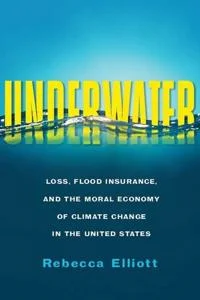
Underwater: Loss, Flood Insurance, and the Moral Economy of Climate Change in the United States
Rebecca Elliott (Columbia University Press, 2021)
Rebecca Elliott explores how families, communities, and governments confront problems of loss as the climate changes. She offers the first in-depth account of the politics and social effects of the U.S. National Flood Insurance Program (NFIP).

Anticolonial Afterlives in Egypt: The Politics of Hegemony
Sara Salem (Cambridge University Press, 2020)
"This important and elegant book contributes a significant reading of post-independence Egyptian political history in terms of the rise and fall of Nasserist hegemony." — John Chalcraft, London School of Economics and Political Science

Politics of Waiting: Workfare, Post-Soviet Austerity, and the Ethics of Freedom
Liene Ozoliņa (Manchester University Press, 2019)
"In this sensitive and perceptive ethnography, Liene Ozolina uses the mundane, and often absurd, practices of training and motivation programs for the unemployed to explore how ordinary Latvians interpret their own selves, history and future."—Thomas Blom Hansen, Professor of Anthropology, Stanford University
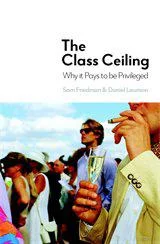
The Class Ceiling: Why it Pays to be Privileged.
Sam Friedman and Daniel Laurison (Policy Press, 2019)
Politicians continually tell us that anyone can get ahead. But is that really true? This important book takes readers behind the closed doors of elite employers to reveal how class affects who gets to the top.

For the Love of Humanity: The World Tribunal on Iraq
Ayça Çubukçu (University of Pennsylvania Press, 2018)
"Mixing ethnographic material on the conduct of the World Tribunal on Iraq with analysis grounded in political theory and international law, Ayça Çubukçu's outstanding book offers thought-provoking arguments alongside first-hand reflections on the WTI's deliberations." — Stephen Hopgood, University of London
Social Theory Now
Edited by Claudio Benzecry, Monika Krause and Isaac Reed (University of Chicago Press, 2017)
Provides a strategic window onto social theory based on current research, examining trends in classical traditions and the cutting edge of more recent approaches.
Read a review of Social Theory Now: LSE Review of Books June 2018

Regulatory Crisis: Negotiating the Consequences of Risk, Disasters and Crises
Bridget Hutter and Sally Lloyd-Bostock (Cambridge University Press, 2017)
Using a new concept - 'regulatory crisis' - this book examines how major crises may or may not affect regulation.

The SAGE Handbook of the 21st Century City
Edited by Suzanne Hall and Ricky Burdett (Sage Publishing, 2017)
Focuses on the dynamics and disruptions of the contemporary city in relation to capricious processes of global urbanisation, mutation and resistance. Includes chapters by Mike Savage, Fran Tonkiss and David Madden.

The Sociology of Speed: Digital, Organizational, and Social Temporalities
Edited by Judy Wajcman and Nigel Dodd (Oxford University Press, 2016)
Pulls together and extends the most important theoretical and empirical innovations across the social sciences.

In Defense of Housing: The Politics of Crisis
David Madden and Peter Marcuse (Verso, 2016)
In every major city in the world there is a housing crisis. How did this happen and what can we do about it? The definitive statement on this crisis from leading urban planner Peter Marcuse and sociologist David Madden.
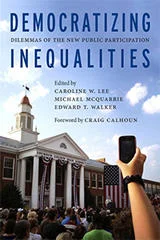
Democratizing Inequalities: Dilemmas of the New Public Participation
Edited by Caroline W. Lee, Michael McQuarrie and Edward T. Walker (New York University Press, 2015)
This collection of essays brings together a diverse range of leading scholars to reveal surprising insights into how dilemmas of the new public participation play out in politics and organizations.
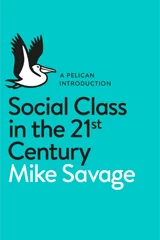
Social Class in the 21st Century
Mike Savage (Penguin, 2015)
In this book Mike Savage and the team of sociologists responsible for the Great British Class Survey look beyond the labels to explore how and why our society is changing and what this means for the people who find themselves in the margins as well as in the centre.