

Call for Papers: Queering Activism in Southeast Asia and its Diasporas
Date and time: 2 – 3 November 2026
Venue: Faculty of Political Science, Chulalongkorn University, Bangkok, Thailand.
Description:
Activism has never been tidy or transparent, but today’s turbulent political landscape makes its contradictions and creative frictions even more salient, demanding a shift in our epistemic and analytical frameworks. Building on Butler’s (1990) and Sedgwick’s (1990) critiques of the naturalisation of identity categories, queer as method refuses to take categories such as gender, sexuality, and race as given, instead asking how they are produced and regulated (Brim and Ghaziani 2016). By queering activism, we propose a methodological and conceptual orientation that unsettles assumptions of activism as the straightforward expression of pre-constituted identities. Instead, queering draws attention to how activism itself participates in constituting and reworking categories such as gender, sexuality, and race. Queering activism also unsettles what counts as politics, making space for practices and political labour that are illegible or invisible, including embodied and affective modes of resistance and fluid coalitional politics. This approach involves being attentive to political subjectivities that do not fit neatly into the liberal Western paradigm, and focusing on vernacular conceptions of rights and resistance (Alatas 2024; Chua 2022; Kjaran and Naeimi 2022; Madhok 2021). Finally, queering activism traces how moral economies and normative frameworks operate within movements themselves and not just as external constraints. For example, activism may privilege particular subjects, thereby reproducing hierarchies within activist spaces and more widely. Such an analytical starting point thus opens space to rethink the political possibilities of resistance, interrogate hierarchies that shape whose claims and labour are recognised as political, and reimagine activist practices beyond the familiar vocabularies of recognition and inclusion. We focus on Southeast Asia and its diasporas not as a stable geographic or analytical category, but as a historically constructed and contested field of study whose layered colonial histories, diverse political formations, and vibrant activist landscapes offer fertile ground for rethinking categories and methods (Peletz 2012; Rodan 2022; Tang and Wijaya 2023).
We welcome proposals for papers that address activism through this lens, whether analysing queer identities and claims, or using queering as a method to rethink movements and campaigns, within Southeast Asia and among its diasporas.
The first workshop for this project took place at the London School of Economics and Political Science on December 4, 2025.
Please email a 300-word abstract and author bio to s.parmanand1@lse.ac.uk by 1 September 2026. You should hear back from us by 7 September. We encourage you to submit in advance of the deadline. Please note that most presentations are expected to happen in person, with some allowances for online participation. We expect to circulate papers (roughly 4,000 – 8,000 words) amongst workshop participants by the 3rd week of October 2026.
We have set aside a small budget to help make participation more accessible. This can include support for travel, childcare, or other access needs. While we will not be able to cover any long-haul travel, we will do our best to allocate funds where they can make the greatest difference. If you'd like to be considered for support, please let us know when submitting your abstract.
About the workshop chairs
Dr. Sharmila Parmanand is an Assistant Professor in Gender, Development and Globalisation at the LSE Department of Gender Studies and Associate Academic at the Saw Swee Hock Southeast Asia Centre.
Prof. Meredith Weiss is a professor of political science at the Rockefeller College of Public Affairs and Policy at the University at Albany, State University of New York (SUNY) and founding director of the SUNY/CUNY Southeast Asia Consortium.
References
Alatas, S.F., 2024. The coloniality of knowledge and the autonomous knowledge tradition. Sociology Compass, 18(8): p.e13256.
Brim, M. and Ghaziani, A., 2016. Introduction: queer methods. WSQ: Women's Studies Quarterly, 44(3): 14-27.
Butler, J. 1990. Gender Trouble: Feminism and the Subversion of Identity. Routledge.
Chua, L.J., 2022. The politics of rights and Southeast Asia. Cambridge University Press.
Kjaran, J.I. and Naeimi, M. 2022. Queer social movements and activism in Indonesia and Malaysia. Palgrave Macmillan.
Madhok, S. 2021. Vernacular rights cultures: the politics of origins, human rights and gendered struggles for justice. Cambridge University Press.
Peletz, M.G., 2012. Gender, sexuality, and the state in Southeast Asia. The Journal of Asian Studies, 71(4): 895-917.
Rodan, G., 2022. Civil society in Southeast Asia: Power struggles and political regimes. Cambridge University Press.
Sedgwick, E. K. 1990. Epistemology of the closet. University of California Press.
Tang, S. and Wijaya, H.J., 2023. Queer Southeast Asia: Itineraries, stopovers, and delays. In Queer Southeast Asia. Routledge, 1-14.
This workshop is funded by the London School of Economics and Political Science Global Research Fund. It is co-hosted by the LSE Department of Gender Studies, LSE Saw Swee Hock Southeast Asia Centre, and Chulalongkorn University Department of Government and the Faculty of Political Science.
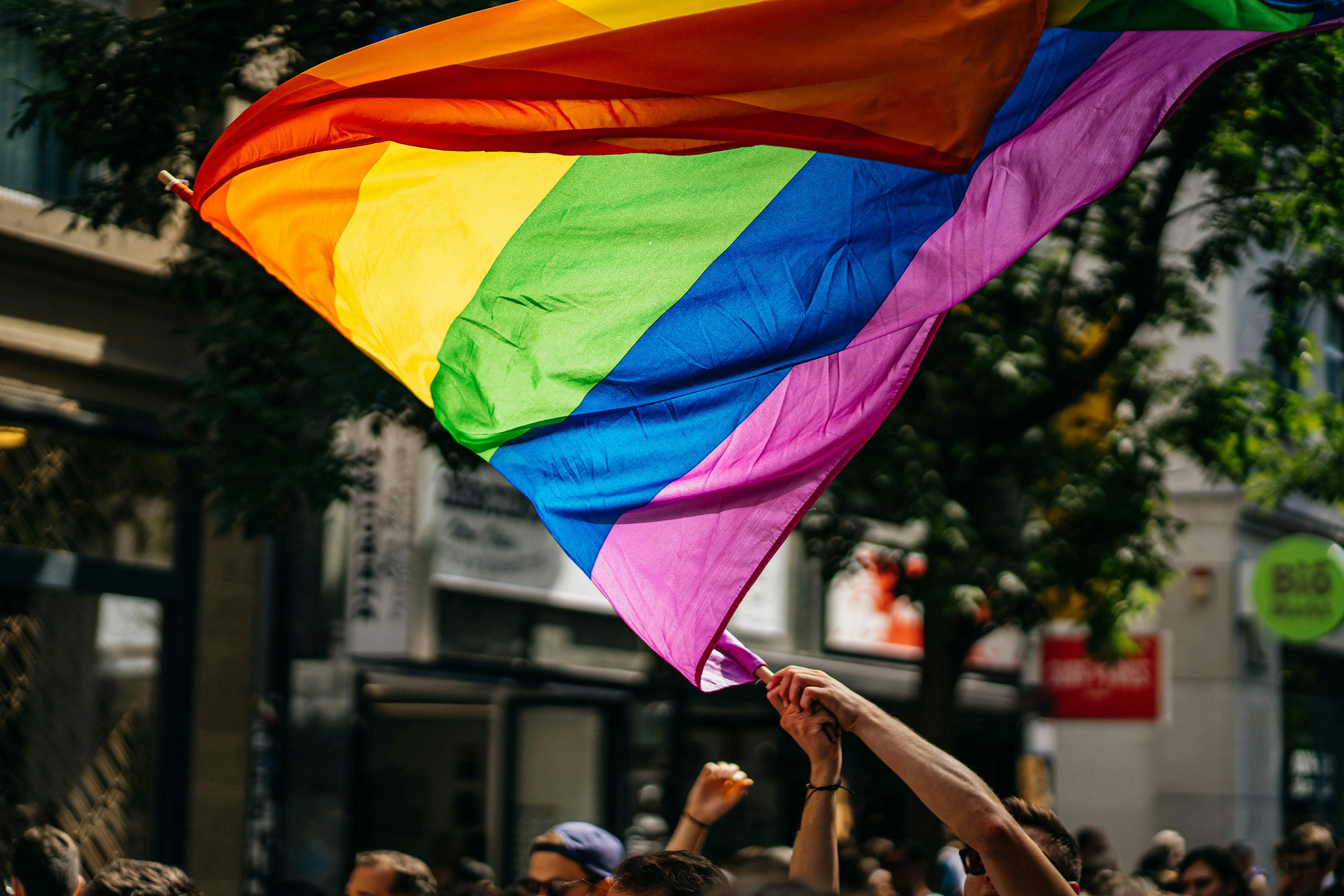
*Photo by Raphael Renter | @raphi_rawr on Unsplash