

An Interdisciplinary Approach to Empowering Resilience in Jakarta Sinking City
Speakers


Chair

Jakarta, one of the world’s fastest-sinking cities, faces escalating risks from land subsidence and flooding, posing urgent challenges for urban resilience.
This talk presents insights from our Sinking City project, a British Academy-funded interdisciplinary project that brings together data scientists, social scientists, artists, and local communities to explore the social production, lived experience, and anticipated risks of environmental threats. We reflect on the methodological and conceptual contributions of this collaboration, which advances inclusive approaches to urban resilience.
First, we examine the creation of urban models, predictions, and simulations amid imperfect datasets and rapid technological developments, including emerging urban AI tools. These reflections highlight both the potential and limitations of data-driven approaches in contexts of uncertainty. Second, we discuss the role of artistic collaboration in shaping alternative imaginaries of Jakarta’s future, emphasizing how creative practices can foster dialogue and civic engagement. Finally, we interrogate the socio-political imbalances embedded in planning and decision-making processes, which complicate efforts to design equitable and transparent resilience strategies.
The project underscores the importance of decision-support systems and civic activism—such as hackathons—as mechanisms for democratizing urban modelling and informing policy development. By integrating technical, social, and creative perspectives, our project demonstrates how interdisciplinary approaches can empower resilience and contribute to more inclusive pathways for urban adaptation.
Speaker & chair biographies
Dr Emma Colven is an urban geographer and Lecturer in Risk, Environment and Society in the Department of Geography at King’s College London. Her research explores the politics of adaptation and resilience, the uneven geographies of speculative urban development, and digital political ecologies. She received her PhD in Geography from UCLA in 2018. Her research has been published in the Annals of the American Association of Geographers, Environment and Planning A: Economy and Space, Environment and Planning C: Society and Space, and Urban Geography, and cited in The Economist.
Dr Zara Shabrina is an Associate Professor in Spatial Data Science at King’s College London. Her research specialises in the development and application of computational methods for urban analytics and predictive modelling, drawing on large-scale geospatial, textual, and visual data. Her research methodologically utilises artificial intelligence, including machine/deep learning, natural language processing, and general spatio-temporal models, to address critical urban challenges, particularly those related to platform urbanism and climate sustainability. Her work seeks to advance the understanding of complex urban processes and to inform planning and policy development, with an empirical focus on the United Kingdom and Indonesia.
Prof. John Sidel is Director of the Saw Swee Hock Southeast Asia Centre, and the Sir Patrick Gillam Professor of International and Comparative Politics at the London School of Economics and Political Science (LSE).
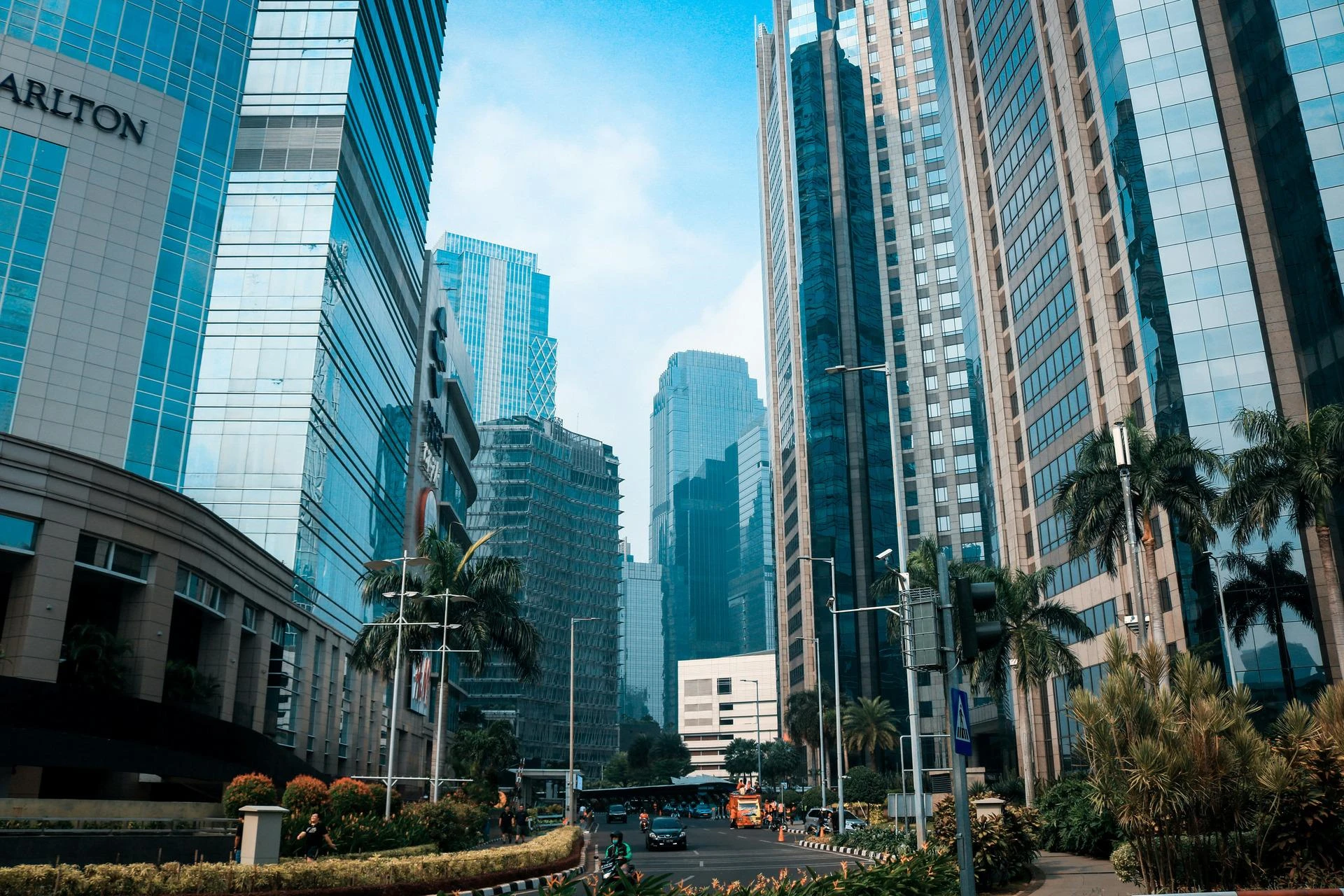
*Banner photo by Muhammad Rizki on Unsplash
LSE holds a wide range of events, covering many of the most controversial issues of the day, and speakers at our events may express views that cause offence. The views expressed by speakers at LSE events do not reflect the position or views of the London School of Economics and Political Science.