

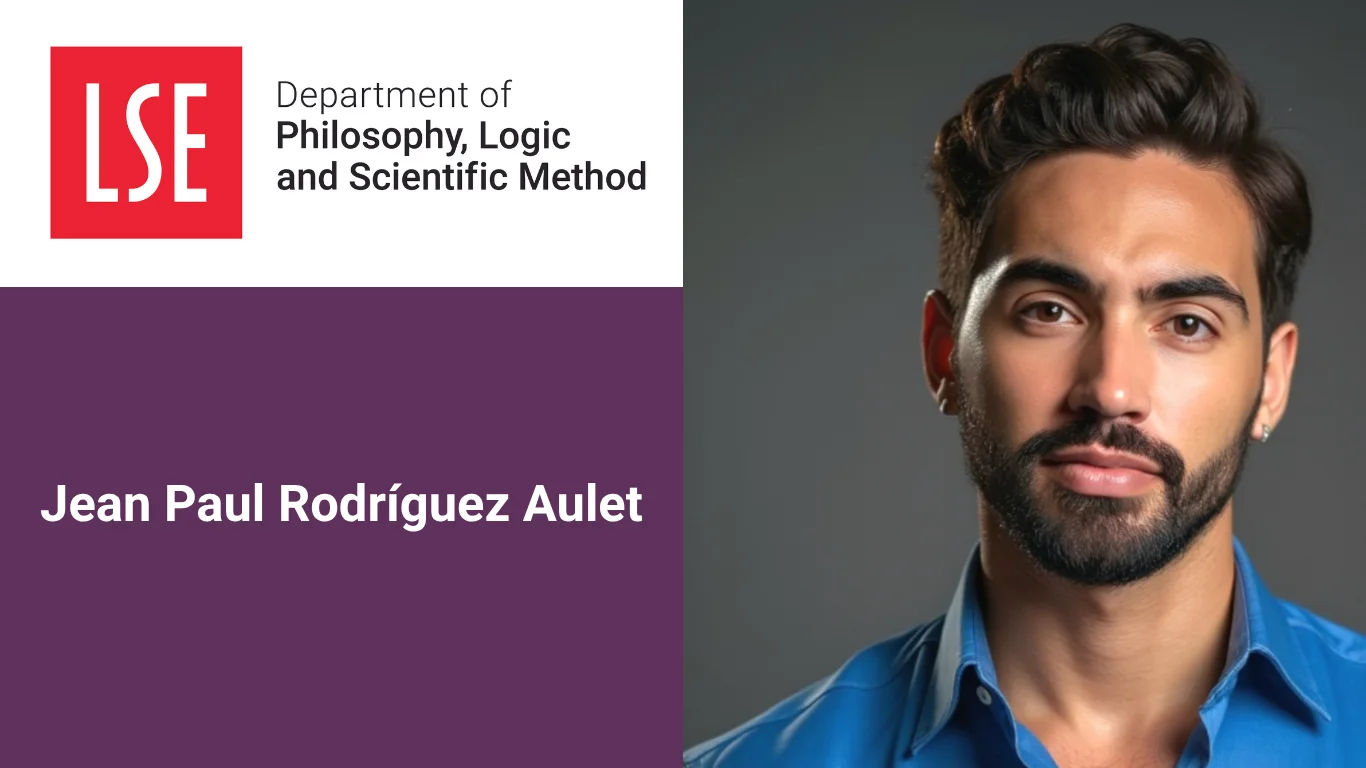
Jean Paul Rodríguez Aulet (MSc Philosophy of Science)

Why did you choose LSE and the programme?
As a student coming from a background in biology and medicine, it took me several months of researching departments to find one that could match my needs and interests. The Philosophy of Science MSc programme at LSE offered an unmatched opportunity for someone like me. Beyond the excitement of living in London and the perks that come with studying in one of the best philosophy departments in the world, LSE promotes a form of philosophical scholarship which is continuous with the sciences and empirically informed. As a hybrid scientist and interdisciplinary researcher my priority was to find a place where my sort of dual identity would be welcomed, and that is precisely what I found here.
Which aspects of your studies were the most beneficial for your professional as well as personal development?
I came to LSE with two main goals that were both personal and professional in nature. First, I wanted to challenge the fundamental notions I had about science and how they shaped my vision of the world. Second, I wanted to re-enter the academic landscape with a richer perspective and insert myself in the contemporary debates about science and technology. The variety of coursework, the quality of the instructors, and the extracurricular opportunities that I got to experience, all contributed to my success in achieving these goals. Beyond this, the degree of internationality and the richness of characters that I found in my cohort were unexpected aspects of my experience at LSE that surely added value to my residency here—both at the personal and professional level. If I would have to pick one thing to highlight in terms of career-oriented benefits from studying here, it would be the ridiculous amount of networking opportunities that we have on campus. Every week you can have intimate encounters with industry leaders, politicians, economists, scientists, philosophers, philanthropists, entrepreneurs, Nobel Laurets, you name it!
What is your fondest memory of your time here?
I don't think I can choose one memory as my fondest. I constantly replay my favorite lectures and seminars in my head. The Philosophy of Science course is one I'm particularly fond of. Extending the seminars to the pub with both students and professors has been a highlight in my academic career. Never have I had my social and academic lives intertwined in such an effortless and natural way. The environment here is special in that sense. Beyond campus, though, London offers all that one is willing to ask of her. The limits of your experiences here are set by your imagination and ambition.
Why would you recommend studying at LSE and the Philosophy department in particular?
Have I not sold the experience yet? If you get an offer, and you have the means to come to London, take that leap. The School is recognized globally, and the department stands as one of its best assets. Beyond the prestige and ranking, the opportunities for personal and professional growth are ubiquitous here.
The connections that you make here, the knowledge you acquire, and the experience that you gain will shape you for the better.
The combination of everything that I have mentioned is what sets LSE and the department apart from other options. I have to say I'm biased to the Philosophy of Science programme being the best of its kind, but all the other options the department has to offer are also quite brilliant. If you're looking to do analytical philosophy in any of its flavors, you simply cannot go wrong by coming here.
Your LSE experience in your own words.
LSE will forever hold a special place in my life. It's the institution that opened its doors to this lost soul that thought that pivoting into a different field midcareer was a good idea. I'm going to sound like a broken record, but this is my 4th degree; I've been studying my whole life, and I've never been to a place so welcoming of diversity and interdisciplinary. Here I've been encouraged to be myself, to ask the difficult and uncomfortable questions, and to not settle for external limitations. I've been given the tools and confidence to continue forging my own path and to do so brilliantly. Not for a single moment I felt burdened by work, in fact studying felt more like play. Every discussion was a pleasure; every intellectual interaction was exhilarating. I truly leave happier, wiser and with a better outlook of the uncertainty that follows.