

About
Assistant Professorial Research Fellow.
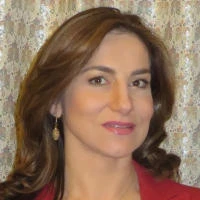
Dr Reem Turkmani is an Assistant Professorial Research Fellow at LSE IDEAS and the LSE Middle East Centre. She is a multidisciplinary scholar whose research spans conflict, governance, and political economy, with a focus on how legitimate bottom-up governance and civicness are constructed and contested in authoritarian and conflict contexts, with a particular focus on the Middle East. Her work adopts a historically grounded approach, situating contemporary conflict dynamics and civic arrangements within their longer-term political, social, and institutional trajectories.
Trained originally in theoretical astrophysics, she brings a systems-based and empirically rigorous approach to the study of complex political environments. She conceptualises conflict settings as sites where multiple dimensions of the "polycrisis" intersect, developing analytical frameworks that capture the interplay between geopolitical dynamics, local drivers, economic structures, and environmental pressures, alongside innovative methodologies for research in active conflict settings. Her contributions have been recognised through major awards, including the 2023 RSE Mary Somerville Medal for outstanding collaborative research.
Dr Turkmani currently serves as Principal Investigator of the Legitimacy and Civicness in the Arab World research programme, funded by Carnegie Corporation of New York, and as Research Director of the Syria Research Programme within PeaceRep, directing research on peace processes, local governance, and political settlements in Syria, funded by FCDO.
Her published work includes research on local agreements, the political economy of war economies and sanctions, civil society participation in peace processes, constitutional politics in the Arab world, and health system legitimacy under fragmented governance. She has co-edited three special issues, including one in Peacebuilding on local agreements and one on Civic States in the Arab world.
Her work bridges theory and practice. She has played a central role in designing mechanisms for civil society and women's participation in UN-led peace processes, including co-founding the Women's Advisory Board to the UN Special Envoy for Syria and contributing to the establishment of the Syrian Civil Society Support Room. This practice-based engagement has directly informed her conceptual work on civil society as constitutive of political order and legitimacy in conflict-affected contexts. She has a strong track record of competitive research funding, including three grants from Carnegie Corporation and other international funders.
She serves on the LSE Middle East Centre Academic Committee, the ESRC Peer Review College, the editorial board of Hikama Journal for Public Administration and Public Policy, and as a College Member of the scientific board of Arabica, the Arabic Encyclopaedia.
Dr Turkmani's research has had demonstrable influence on international policy. She is regularly invited to advise governments, the United Nations, and multilateral institutions on Syria and the broader Middle East. She has briefed UK government ministers and officials on conflict dynamics and resilience, served as a regular adviser to the European Union and member states, and briefed UN senior officials and Special Envoys on peace process design and civil society inclusion. Her political economy findings contributed to a shift in EU funding strategy towards increased support for civil society inside Syria, and her governance research has shaped UNDP approaches to early recovery programming. Her work on local economies and MSMEs has influenced UK and EU policy discussions on private sector development in conflict settings. She has provided formal expert testimony to the UK Parliamentary Foreign Affairs and Defence Select Committees on four occasions, and has served as an expert witness in UK courts on cases relating to terrorism and the Syrian conflict.
She is widely recognised as a leading expert on Syria and the Middle East, and is regularly interviewed by major international media outlets including CNN (Amanpour), the BBC (Newsnight, Woman's Hour, BBC News), Al Jazeera, Sky News, and Democracy Now.
Prior to joining LSE, Dr Turkmani was a Dorothy Hodgkin Research Fellow of the Royal Society at Imperial College London, where she published extensively in theoretical astrophysics. Her scientific background continues to shape her empirical approach and use of data and technology in conflict research. She pioneered new methods of data collection in active conflict zones, co-developed the Crowd-Seeding Conflict and Peace Events (CCPE) methodology, and built the open platform mappingsyria.com, as well as a unique archive of local agreements in Syria.
Beyond her academic and policy work, she co-founded 1+1, an Arabic-language civic media platform promoting inclusive dialogue and civic values. She has also led a programme on the history of Arabic-Islamic science and its contribution to the Scientific Revolution, which underpinned international exhibitions at the Royal Society in London and the Museum of Islamic Art in Doha, as well as contributions to the 1001 Inventions and Cosmos and Culture exhibitions. In 2015 she was named among the top twenty most influential women in science in the Islamic World by Muslim Science magazine.
Research
Academic publications in social science:
Turkmani, R., Rangelov, I., Zioubi, Z., Al Khalil, M., Mehchy, Z., & Gharibah, M. (2026). Civic Ecosystem Responses to Compound Crisis: Evidence from Syria. Disasters Journal, Accepted.
Academic publications in Astrophysics:
14 peer reviewed scientific publications in theoretical Astrophysics between 2002 and 2012 that received 473 citations. It is available at Harvard’s ADS database at this link.
Policy Publications & Working Papers:
Turkmani, R., Mehchy, Z., & Gharibah, M. (2026). Value chain development in Syria to promote economic benefits and Social cohesion (UNDP and PeaceRep Report, New York: United Nations Development Programme, https://peacerep.org/publication/value-chain-development-in-syria/
Adhikari, A., Beaujouan, J., Benson-Strohmayer, M., Cooper, L., Darkovich, A., Epple, A., Gharibah, M., Gueudet, S., Kaldor, M., Majid, M., Theros, Turkmani, R., & Weigand, F. (2026). Civic Network Research: A New Methodology for Conducting Ethical and Policy-relevant Peace and Conflict Research (PeaceRep: The Peace and Conflict Resolution Evidence Platform, Issue. U. o. Edinburgh. https://doi.org/10.7488/era/7122
Alkhalil, M., & Turkmani, R. (2026). Democracy as Protection in Conflict Zones: The Case of the Civic-Driven Governance of Idlib Health Directorate. . LSE Middle East Center Paper Series, Accepted.
Turkmani, R. (2024, 19/4/2024). Civic vs Madani: The Story of Two Perspectives. https://blogs.lse.ac.uk/mec/2024/04/19/civic-vs-madani-the-story-of-two-perspectives/
Mehchy, Z., Turkmani, R., & Gharibah, M. (2023). The Role of MSMEs in Syria in Poverty Reduction and Peacebuilding: Challenges and Opportunities (PeaceRep Interim Transition Series, Issue. https://peacerep.org/publication/role-of-msmes-in-syria-poverty-reduction-and-peacebuilding/
Turkmani, R., Mehchy, Z., & Gharibah, M. (2022). Building resilience in Syria: assessing fragilities and strengthening positive coping mechanisms (PeaceRep Interim Transition Series, Issue. http://eprints.lse.ac.uk/117395/
Kaldor, M., Theros, M., & Turkmani, R. (2021). War Versus Peace Logics at Local levels; findings from the Conflict Research Programme on Local Agreements and Community Level Mediation (Conlict Research Programme reports, Issue. https://eprints.lse.ac.uk/112593/
Mehchy, Z., & Turkmani, R. (2021). Understanding the impact of sanctions on the political dynamics in Syria (Conflict Research Proogramme reports, Issue. http://eprints.lse.ac.uk/108412/
Draji, I., & Turkmani, R. (2020). The question of religion in the Syrian Constitutions: historical and comparative review (Legitimacy and citizenship in the Arab, Working papers series, Issue. http://eprints.lse.ac.uk/103660/
Turkmani, R., Gharibah, M., & Mehchy, Z. (2020). COVID-19 in Syria: policy options (LSE Conflict Research Programme Policy Memo, Issue. http://eprints.lse.ac.uk/105823/
Mehchy, Z., & Turkmani, R. (2020). Forecasting the scenarios for COVID-19 in Syria with an SIR model (till the end of August 2020) (Conflict Research Programme reports, Issue. http://eprints.lse.ac.uk/105869/
Turkmani, R., & Mehchy, Z. (2020). New Consumer Price Index estimates for Syria reveal further economic deterioration and alarming levels of humanitarian need (Conflict Research Programme reports, Issue. http://eprints.lse.ac.uk/103280/
Youssef, M., Turkmani, R., & Gharibah, M. (2019). Progress in the wrong direction: the 2018 Local Council Elections in Syria (Conflict Research Programme reports, Issue. http://eprints.lse.ac.uk/100171/
Saffour, H., Turkmani, R., & Gharibah, M. (2019). An analysis of commonalities and divergences of Syrian constitutional papers since 2011, (Conflict Research Programme reports, Issue. http://eprints.lse.ac.uk/102253/
Turkmani, R. (2019). Devolution of power or decentralisation of oppression in Syria? Conflict Research Programme Blog. http://eprints.lse.ac.uk/102033/
Turkmani, R. (2019). Realism vs realism; Syrian Civil society participation in the constitutional process (Conflict Research Programme policy memos, Issue. http://eprints.lse.ac.uk/103661/
Turkmani, R., & Saffour, H. (2019). Syrian visions: mapping Syrian constitutional papers since 2011 (Conflict Research Programme reports, Issue. http://eprints.lse.ac.uk/102252/
Turkmani, R., & Theros, M. (2019). A process in its own right: the Syrian Civil Society Support Room (Conflict Research Programme reports, Issue. http://eprints.lse.ac.uk/101034/
Turkmani, R., Theros, M., & Hadaya, S. (2019). Political economy and governance in Syria report (Conflict Research Programme reports, Issue. http://eprints.lse.ac.uk/100732/
Solana, J., Kaldor, M., Selchow, S., & Turkmani, R. (2016). From Hybrid Peace to Human Security: Rethinking EU Strategy towards Conflict (The Berlin Report of the Human Security Study Group,, Issue. https://library.fes.de/pdf-files/bueros/london/12373.pdf
Turkmani, R., & Haid, M. (2016). The role of the EU in the Syrian conflict (Security in Transition, Issue. https://brussels.fes.de/fileadmin/public/editorfiles/events/Maerz_2016/FES_LSE_Syria_Turkmani_Haid_2016_02_23.pdf
Turkmani, R. (2015). ISIL, JAN and the war economy in Syri, Working papers, http://bit.ly/1K1pwgo
Turkmani, R., Kaldor, M., Ali, A., & Bojicic-Dzelilovic, V. (2015). Countering the logic of the war economy in Syria. In: LSE Research Online. http://eprints.lse.ac.uk/64574/
Turkmani, R., Kaldor, M., Elhamwi, W., Ayo, J., & Hariri, N. (2014). Hungry for Peace: positives and pitfalls of local truces and ceasefires in Syria. https://researchonline.lse.ac.uk/id/eprint/118112/1/Turkmani_et_al_Hungry_for_peace_Syria_published.pdf
Publications in the history of Arabic Islamic science
Arabick Roots book and catalogue, published by 1001 Inventions, 2012
Arabic Roots of the Scientific Revolution, Muslim Heritage, July 2011
Arabick Roots book at the Royal Society, published by The Royal Society, 2011
Exhibitions
- Arabick Roots, Museum of Islamic Art, Doha, curator and content writer 2012-2013
- Arabick Roots, The Royal Society, London, curator and content writer, 2011
- Arabick Roots online exhibition, curator and content writer
- 1001 Inventions exhibition (NYC, London, Vienna Doha, Amman), content contributor, 2009-2017
- Cosmos and Culture exhibition at the Science Museum in London, curated an Islamic instruments tools set within the exhibition and designed related multimedia. 2009-2017