


Connect
About
Michael W. Scott is Professor of Anthropology at the LSE and Head of Department (2025-2028). He holds a PhD and MA in Anthropology from the University of Chicago and an MA (Hons) in Sociology from the University of Glasgow. Before joining the LSE in 2001, he taught for several years in the Master of Arts Program in the Social Sciences (MAPSS) at the University of Chicago.
His research in Solomon Islands and Papua New Guinea has been funded by the Wenner-Gren Foundation, the ESRC, and the AHRC. Scott is a two-time recipient (in 2008 and 2021) of the Australian Anthropological Society’s Article Prize. In addition to several keynote lectures, he has delivered the 2024 William B. Fagg Lecture, the 2018 Fredrik Barth Memorial Lecture, and the 2014 Edwin Smith Memorial Lecture. In 2014, he was interviewed for the blog ‘Savage Minds’ (now ‘Anthrodendum’) on the theme ‘Ontology and wonder’. Between 2008 and 2019, he co-organised the Melanesia Research Seminar (MRS) with Dr Lissant Bolton at the British Museum.
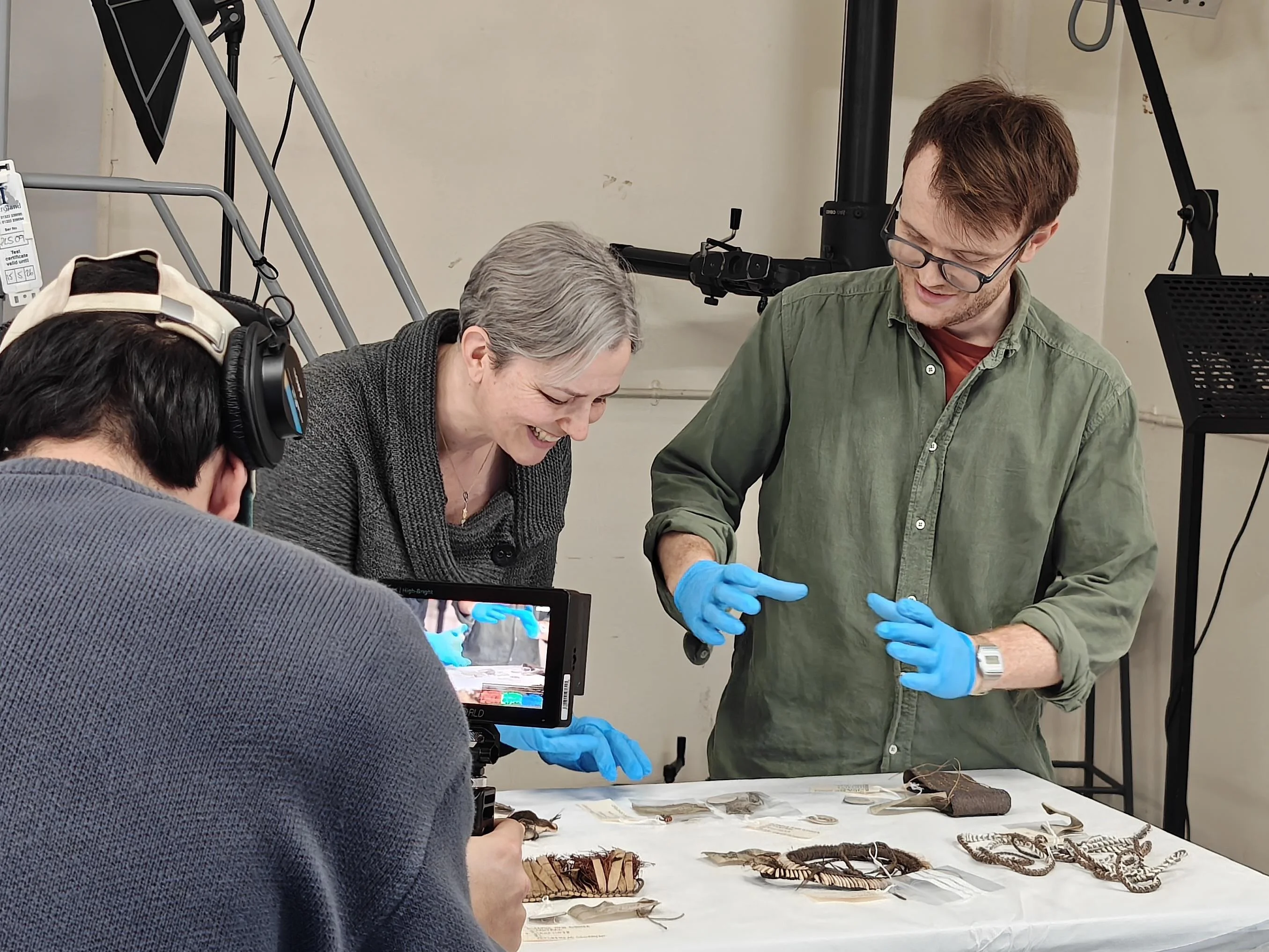
Currently, he is Project Lead for the AHRC-funded research project, ‘Nambawan Piska Bilong Papua New Guinea / Papua New Guinea’s First Films: Connecting Moving Images from 1904 to Descendant Communities Today’. His teaching includes courses on anthropological theory and ethnography; the anthropology of religion; the anthropology of Melanesia; the anthropology of art and poetics; and anthropological approaches to questions of being (ontology).
Expertise
Oceania; Melanesia; ontology; cosmology; wonder; religion; Christianity; missionaries and mission history; personhood, sociality, and relatedness; land/human-land relations; mythmaking; comparison; reflexive anthropology; anthropology and surrealism
Research
I am an anthropologist who is interested in exploring questions of being (ontology), wonder, religion, and comparison. My area of research is Oceania with a focus on Melanesia. Since 1992 I have conducted several periods of fieldwork in the nation-state of Solomon Islands in the southwest Pacific. The people with whom I've worked, the Arosi, live mainly on the island of Makira. Currently, I am Project Lead for an AHRC-funded project on Papua New Guinea's first films.
My research and writing address four main themes:
Anthropological approaches to questions of being: My 2007 monograph The Severed Snake proposed an ‘analytical turn to ontology’ in anthropology. It was part of a cluster of publications that together announced a new agenda: the need for anthropologists to attend to the different modes and models of being that shape different lived worlds. A distinguishing feature of my work has been developing theoretical insights through close analysis of ethnographic data.
In The Severed Snake and several related publications, I examine the secretive dynamics of competing land claims among the Arosi of the island of Makira, Solomon Islands. I found that members of competing matrilineages were quietly emplacing themselves as the exclusive landholders of their coastal villages. I explore how overlapping matrilineal points of view on what appears to be the same terrain generates simmering land disputes that emerge in the open only rarely. Focusing on the ways in which Arosi understand their matrilineages to be the bearers of discrete categorical essences (constituting what I called a ‘poly-ontology’) prompted me to offer reflexive and critical perspectives on some enduring assumptions in the literature on Melanesia and in the ‘ontological turn’, pushing against tendencies to read all indigenous contexts as simply ‘relational’ or ‘animistic’.
Anthropological approaches to wonder: I am particularly interested in how people compose and are puzzled by their worlds, and in the role of wonder, fascination, surprise, and perplexity in processes of ontological transformation. When I conducted a second major period of fieldwork on Makira, I encountered widespread fascination with what people call 'the underground'—a secret, extraordinarily powerful military-urban complex said to exist beneath the island. My work on wonder was born out of my efforts to understand how and why Makirans experience and cultivate a mood of wonder about ‘the underground’. This strand of my work has contributed to the emerging anthropological interest in ‘wonder’ more broadly, extending the analysis beyond the southwest Pacific to examine how wonder operates elsewhere, including within anthropology itself. See, for example, my 2016 open access article ‘To be Makiran is to see like Mr Parrot’, which asks why and how some Makirans portray themselves as wondrous beings able to see without being seen, like the green singing parrot.
Anthropological approaches to religion: Emerging from my teaching of the Anthropology of Religion and my engagement with debates within anthropology, philosophy, and posthuman humanities more broadly, I have sought to develop a theory of posthuman religion. See my 2024 open access article ‘Religence’, which explores how the concept of ‘religion’ might be transformed if we consider non-humans to be engaged in religious activity.
My work has also helped to shape the anthropological study of Christianity. Based on fieldwork with Anglican, Evangelical, and Seventh-day Adventist Christians in Solomon Islands, I have theorized what I term 'ethno-theology'—the forms through which indigenous people reproduce and transform Christianity. Additionally, my historical research on missions in the Solomons, including archival work and interviews with clergy and retired missionaries, demonstrates the importance of attending to the contingent particularities of conversion and ongoing transformations of Christianity. I have called for and offered anthropological analyses of Christianity that are historically, biblically, and theologically informed. See, for example, my 2021 open access article ‘How the Missionary got his Mana’, which reveals how name exchange practices lie behind claims that the Anglican missionary Charles E. Fox (1878-1977) possessed magical powers.
Anthropological approaches to comparison: From my early work on ‘ignorance’ to more recent work on mythology, my approach is constitutively comparative. I have innovated comparative approaches and techniques that juxtapose contemporary Makira with central Africa, Polynesia, medieval Europe, ancient Greece, and mid-twentieth century European surrealism, demonstrating how comparative analysis can illuminate fundamental questions about cosmology, models of chaos and order, myth-making, the life of artefacts, and social formations (such as ethnic identities) across radically different contexts and historical periods. See, for example, my 2022 open access chapter, ‘Boniface and Bede in the Pacific’, which explores historical and contemporary nexuses between the Pacific and early medieval Britain.

Nambawan Piska Bilong Papua New Guinea / Papua New Guinea's First Films: Connecting Moving Images from 1904 to Descendant Communities Today: This project—Nambawan Piksa (First Films)—focuses on the first known moving images in Papua New Guinea (PNG): twelve reels of film footage that record twenty dances. These films were made in 1904 by the Daniels Ethnographical Expedition to British New Guinea, organized by LSE anthropologist Charles G. Seligmann (1873-1940). Today these reels are held by the British Film Institute and have never been officially shared with communities in PNG. The Nambawan Piksa project will finally bring the films together with communities in which descendants of the people featured in them now live.
I lead this three-year project, which began in September 2025 and is funded by the Arts and Humanities Research Council (AHRC). To learn about the project, please visit the project website.
Teaching
TEACHING
My teaching includes courses on anthropological theory and ethnography; the anthropology of religion; the anthropology of Melanesia; the anthropology of art and poetics; and anthropological approaches to questions of being (ontology).
PhD SUPERVISION
I welcome supervision of doctoral research on a range of topics, including anthropological and indigenous ontologies and cosmologies; wonder and enchantment; Christianity, missionaries, and mission history; human-nonhuman relations, especially human-land relations; Melanesian ethnography; comparative anthropology; mythmaking and ethnogenesis; personhood, sociality, and relatedness.