

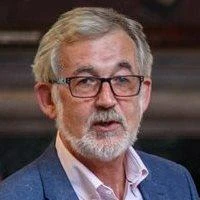
Professor George Gaskell
Connect
About
"We insisted that any competent social scientist (our aim for PhD and MSc students) should be knowledgeable in both the quantitative and qualitative social science research traditions, for without such a competence how can one bring a critical eye to the literature?"
- Professor George Gaskell reflects on the importance of research methods as part of the Department of Methodology's 30th Anniversary celebrations. Read the full close-up with Methodology faculty.
George Gaskell BSc PhD, C.Psychol, Fellow AcSS. Emeritus Professor of Social Psychology and Research Methodology.
George joined the School in 1971. His career at the School includes the Department of Social Psychology; establishing and co-directing the Methodology Institute (now Department); Vice Chair of the Appointments Committee; and Pro-director of Planning and Resources. He also introduced LSE’s flagship interdisciplinary course for first year students, LSE100.
Outside LSE, he has been a member of committees serving the European Food Standards Authority, the UK Food Standards Agency, the Royal Society, the European Commission’s Science and Society Committee, and the Economic and Social Research Council’s Evaluation Committee.
He is a Fellow of the Academy of Social Sciences and was awarded the Gago Medal in 2018 for contributions to European Science Policy
Research interests
Behavioural science; science in society; social and ethical implications of the life sciences, and quantitative and qualitative research methods.
Research
George Gaskell’s research interests fall under the rubric of societal psychology, an approach developed with the late Professor Hilde Himmelweit, which argues that a neglected focus in social psychology is the study of social phenomena and cultural forces that both shape, and in turn are shaped by, people's outlooks and actions.
George worked with Professor Martin Bauer developing the innovative ’toblerone model’ of social representations, and editing ‘Qualitative Researching with Text, Image and Sound: A Practical Handbook’ (2000), which provides a comprehensive and accessible introduction to a broad range of research methods with the objective of clarifying procedures, good practice and public accountability – now translated into Portuguese, Hebrew and Chinese.
He was Scientific Director in Studies for the European Commission’s Behavioural Science Framework on the following topics: Consumer protection in investment and pensions; Transparency in online platforms; Environmental footprints; Marketing to children through social media; Online gambling and adequate measures for the protection of consumers of gambling services; Tobacco labelling and packaging; and CO2 Car Labelling options and consumer information.
His current research, drawing on social representations theory, focuses on science, technology and society, in particular the issues of risk and trust; how values influence people’s opinions about technological innovation, and the governance of science and technology. He led the series of Eurobarometer surveys on ‘Biotechnology and the Life Sciences’ for DG Research, and was the coordinator and principal investigator for the European funded projects ‘Life Sciences in European Society’ (LSES); ‘Neuro-enhancement: Responsible Research and Innovation (NERRI), and ‘Sensitive Technologies and European Public Ethics (STEPE).