

The PBS PhD journey: insights and advice from Dr Alyssa Pandolfo
What’s it like to undertake a PhD in the Department of Psychological and Behavioural Science (PBS) at LSE? Dr Alyssa Pandolfo, who was recently awarded her PhD for her thesis “Safety listening: Conceptualizing and assessing responses to safety voice in organizations”, offers her perspective on the journey, challenges and opportunities, and shares her top tips for future PhD candidates.
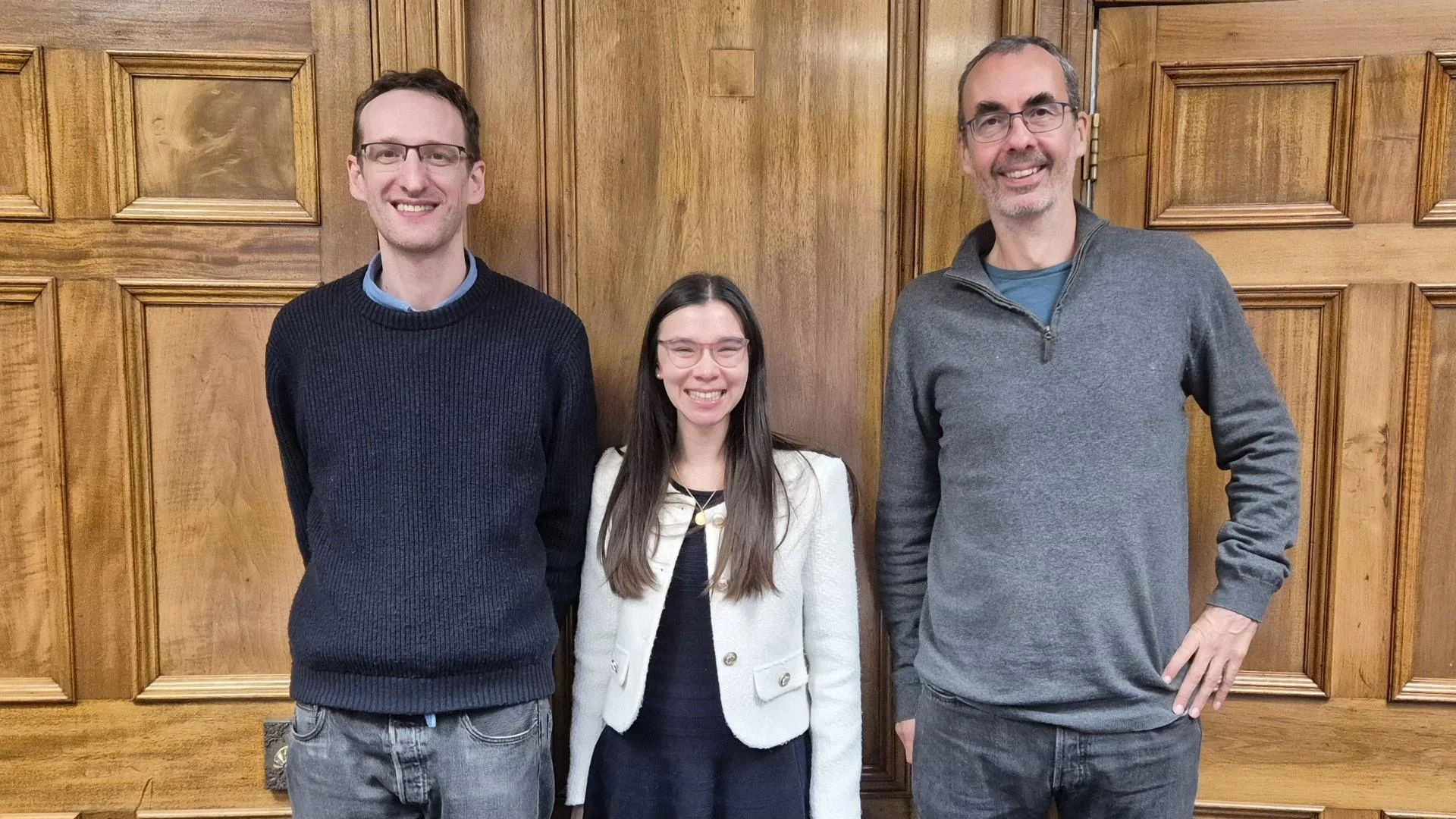
Alyssa’s PhD establishes the concept of ‘safety listening’, examining how people respond to safety concerns. Her doctoral thesis comprised four academic articles where she analysed safety listening in flightdeck transcripts of conversations between air traffic controllers, pilots, and other staff before aviation incidents. During her PhD, she published six articles (three of which were from her thesis) and presented her work at eight conferences. Her viva voce examiners described the PhD as “immaculate”.
Alyssa’s journey in PBS started with an MSc in Organisational and Social Psychology, which she completed in 2018. During her MSc, Alyssa developed an interest in 'safety voice', the act of raising concerns about hazards or unsafe conditions in organisations, and focused her dissertation on this topic. After her MSc, Alyssa gained further experience as a research assistant at UCL before returning to LSE in 2021 to embark on her PhD.
The application process
Before applying for the PhD, Alyssa engaged in several discussions with her prospective supervisor, Dr Tom Reader, who had also supervised her MSc dissertation. Since completing her MSc studies at LSE, it had become evident to Alyssa that, even when people were speaking up about hazardous conditions, they were not always listened to.
Alyssa said: “It’s generally assumed in the literature that people will always respond properly and adequately, but in real life that’s not the case”.
This gap in the literature on ‘safety listening’, ie, how people respond to raised safety concerns, became the focus of Alyssa’s PhD proposal and subsequent thesis.
In her application, Alyssa proposed four studies for her thesis: a systematic review of the existing literature, an investigation of the antecedents and predictors of safety listening (which ultimately became her fourth study), the development of a typology, and the creation of a formal tool based on this typology.
Working with supervisors
Alyssa was jointly supervised by Dr Tom Reader and Professor Alex Gillespie. In addition to discussing her PhD with Tom before submitting the application, Alyssa also contacted former PhD students of Tom and Alex to get a sense of what to expect from the relationship.
“Speaking to former PhD students gave me a lot of confidence to say ‘Yes, great – let’s do this!’”, said Alyssa.
Throughout her PhD, Alyssa would have bi-weekly meetings with her supervisors. Additionally, in her third year the supervisors introduced lab meetings every other week. These were meetings with the CRRU Lab, a group of PhD and post-doc researchers in PBS that work closely with Tom and Alex.
Alyssa particularly valued her supervisors and their approach: “Tom and Alex offered so many opportunities to me and the other people in the lab through recommending conferences, funding, research, assistance”, she said.
Her supervisors also encouraged Alyssa to submit her research for publication as soon as it was ready, so she could benefit from constructive feedback. She targeted each paper to a specific journal and, if necessary, revised her work for submission elsewhere. Alyssa completed her PhD by publication, a route in which the thesis is composed of published or publishable papers rather than a single monograph. This approach meant that much of her work had already undergone peer review, reinforcing the academic rigour and credibility of her thesis.
Milestones and navigating challenges
The PhD journey in PBS includes several formal milestones, such as submitting an extended essay during the first year and successfully completing the upgrade viva to progress from the MPhil to PhD track. Key highlights for Alyssa also included submitting papers for publication and attending conferences, including those organised by the European Association of Work and Organizational Psychology and the Society for Industrial and Organizational Psychology.
She cites the ability to pivot as a key skill for navigating challenges in the PhD. One obstacle arose when a partnership with an organisation that was meant to generate a significant portion of her data did not come to fruition. This led her to shift her focus and identify alternative data sources to support her research objectives.
In her initial research, Alyssa observed that most existing literature on safety listening relied heavily on self-report measures. To overcome these limitations, she shifted her focus to examining safety listening as a behaviour, using naturally occurring data. She utilised flightdeck conversation transcripts, initially planning to directly compare aviation crashes and near misses. However, as few near misses were captured, she revised her outcome variables to differentiate between fatal and non-fatal incidents, as well as the extent of plane damage. This ability to adapt and respond to changing demands remained essential throughout the PhD.
To manage her workload, Alyssa made a conscious effort to minimise ‘half-work’, such as sitting at her computer without making meaningful progress. If she felt she wasn’t being productive, she would take a break to do something else and try again a little later. Alyssa also learned to prioritise and to say no to things that, although interesting, would not significantly bring her research forward. “If it’s not a big yes, it’s probably a no”, she said when asked how she prioritised interesting offers.
Alyssa’s supervisors praised her approach. “Alyssa’s unwavering persistence in pursuing, prioritising, and ultimately establishing ‘safety listening’ as a concept, enabled her to produce a fantastic and focused PhD”, said Alex.
Tom agreed: "Alyssa really has been the model PhD student: not only brilliant to work with, but incredibly talented at developing ideas and practical tools that can make a difference”, he said.
Support and opportunities
Alyssa received an LSE PhD Studentship, which enabled her to accept her offer. Additionally, she obtained support from the LSE PhD Data Collection Fund and the LSE Postgraduate Travel Fund, which helped with research and conference costs, respectively. During her studies, Alyssa was in contact with LSE Careers to discuss potential career options after her degree – a relationship that she found highly beneficial.
In addition to LSE’s fantastic public events programme, Alyssa also enjoyed events hosted by the PhD Academy and LSE LIFE, as well as termly PBS Early Careers Researcher sessions hosted by Dr Jens Koed Madsen. Another highlight was the weekly LSE lunchtime concerts in the Shaw Library.
Tips for prospective PhD students
Alyssa has four key recommendations for anyone considering pursuing a PhD:
- Firstly, choose your supervisor carefully: Ensure they are both an expert in your field and someone you can work with well. Speak to their current or former supervisees to gauge their approach and supportiveness.
- Secondly, select a topic you are passionate about. You will be working on it for several years, so it should genuinely hold your interest.
- Thirdly, and linked to the second point, pursue research with a real-world impact. Knowing your work makes a tangible difference can be motivating during challenging periods of your PhD.
“With my topic, I thought ‘I’m going to improve safety’”, said Alyssa. “And that was nice as a motivator, because invariably there’s going to be times in your PhD when you’re not feeling particularly passionate about your topic”.
- Finally, consider your funding options. Think about whether you will self-fund or apply for scholarships, as financial security can alleviate significant pressure during your studies.
“Getting a studentship was fantastic and although I worked every year during my PhD, it took a lot of pressure off financially”, said Alyssa.
Outside of academic life, Alyssa recommends making the most of being in London. “Go and see things”, she said. “There’s so much to do here. Lots of museums are free as a student, and you can get a student art pass as well, that gives you free or reduced entry to loads of exhibitions”.
Next steps
Alyssa’s PhD has already resulted in three published papers, with a fourth and fifth in preparation. So, what’s next for her? She is currently teaching on the MSc Organisational and Social Psychology in the Department of Psychological and Behavioural while exploring her options. Her overarching aim is to be an applied academic and to further cement safety listening as a de facto concept in the organisational psychology literature. With her track record, it’s clear that whichever path she takes, she will continue to make a significant impact.
Published papers
You can access the three published papers from Alyssa's PhD here:
Pandolfo, A. M., Reader, T. W., & Gillespie, A. (2025). Safety listening in high‑risk situations: A qualitative analysis of responses to safety voice in aviation. Risk Analysis, 00, 1–24. https://doi.org/10.1111/risa.70106
Pandolfo, A. M., Reader, T. W., & Gillespie, A. (2024). Safety listening in organizations: An integrated conceptual review. Organizational Psychology Review, 1–32. https://doi.org/10.1177/20413866241245276
Pandolfo, A. M., Reader, T. W., & Gillespie, A. (2025). The Ecological Assessment of Responses to Speaking‑up tool: Development and reliability testing of a method for coding safety listening behavior in naturalistic conversations. Frontiers in Public Health, 13, 1652250. https://doi.org/10.3389/fpubh.2025.1652250