

Indira Akoijam
MSc Social and Public Communication
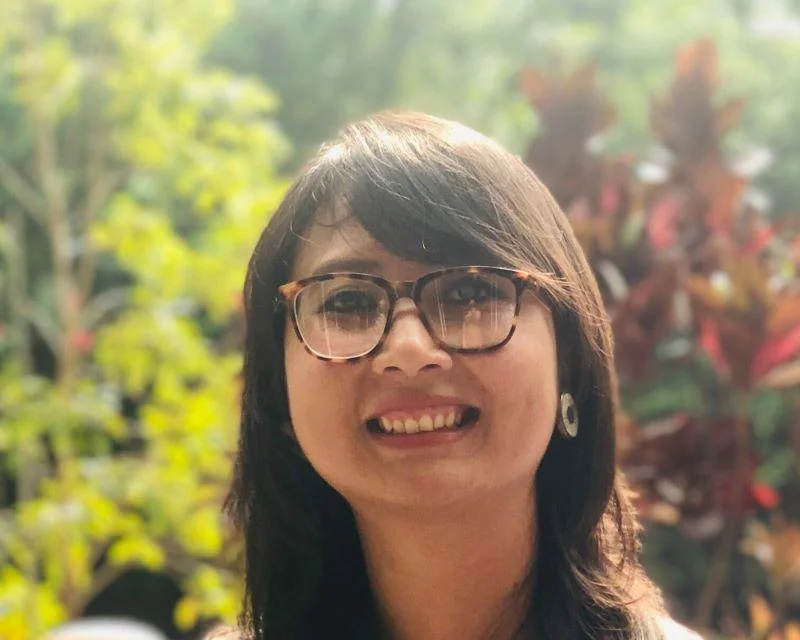
Indira Akoijam is a communications professional with experience across non-profit organisations and creative agencies, using storytelling, strategy, and advocacy to drive social impact. She has led regional communication initiatives, translating complex technical and policy work into clear, accessible narratives for diverse audiences and has worked for well known organisations such as WWF.
In 2023, Indira took a sabbatical to pursue an MSc in Social and Public Communication at LSE’s Department of Psychological and Behavioural Science, a career milestone she considers one of her most defining moments. During her time at LSE, she also contributed as student staff, working with the Student Marketing Team as a blogger and supporting the Denning Learning Café. She values continuous learning, cross-cultural collaboration, and applying behavioural science insights to influence policy, practice, and public understanding.
The analytical rigour and practical approach of the programme have helped me translate complex, technical issues into clear narratives that resonate with diverse stakeholders, from policymakers to the public.
What is your current job title, and what does the role entail?
I currently lead communications for Asia at CLASP, where I develop and manage regional communication strategies across the region. I work closely with program, policy, and technical teams to translate complex energy-efficiency work into stories and materials for policymakers, partners, and broader audiences. My role includes content development, media relations, and supporting advocacy efforts that advance energy-efficient appliance solutions across the region.
Tell us about your career journey since graduating from LSE.
Since graduating from LSE, my career has focused on using communication as a tool for social impact. I’ve worked across both non-profit organisations and creative agencies, which has given me a broad perspective on how storytelling, strategy, and advocacy come together to drive change. This mix of experiences has shaped how I approach my current role as Asia Communications Lead at CLASP. I’ve been motivated by the same goal: using thoughtful communication to support climate action, equity, and real-world impact.
There was also a brief period early on when navigating a difficult job market made the transition more challenging, but it helped me gain clarity on the kind of work I wanted to pursue and reinforced my commitment to impact-driven communications.
How has the programme you studied at LSE helped your career since you graduated?
The programme gave me a strong foundation in strategic communication, critical thinking, and audience-centred storytelling. It helped me understand how communication operates within political, social, and policy contexts. This has been especially valuable in my career since graduating, where I work at the intersection of policy, climate action, and public engagement. The analytical rigour and practical approach of the programme have helped me translate complex, technical issues into clear narratives that resonate with diverse stakeholders, from policymakers to the public.
What’s the best piece of career advice you’ve received?
One of the best pieces of career advice I’ve received is to focus on building skills and perspective. Early on, that helped me stay grounded during uncertain phases and make choices aligned with the kind of impact I wanted to have, rather than short-term labels. That advice has stayed with me and continues to shape how I approach my work — prioritising learning, collaboration, and purpose over speed. I also have two degrees in communications now, but one of the most important lessons I’ve learned is that formal education is only the starting point. Continuous learning through work, collaboration, and staying curious has been essential to growing in this field.
What’s the greatest challenge you’ve had to overcome?
One of the greatest challenges I faced was navigating the transition after graduating from LSE. The job market was particularly difficult at the time, and finding the right role took longer than expected. While challenging, that period pushed me to stay resilient, sharpen my skills, and gain clarity on the kind of work I wanted to do.
Share with us your fondest memory of the Department of Psychological and Behavioural Science.
As a mature student, I especially valued the space to bring real-world experience into academic discussions and to learn alongside peers from diverse backgrounds. The conversations, both inside and outside the classroom were thoughtful, and deeply respectful, making the learning experience feel collaborative rather than competitive. What stands out most is the quality of discussion in seminars. The professors were incredibly supportive and approachable, always encouraging curiosity. Being able to draw on professional experience while engaging with behavioural science theory made the learning experience especially rewarding.
I made friends from across the world, learned from their experiences, and am still in touch with many of them, which made my time at the department truly special.
If you're a PBS alum and would like to share your experience, please get in touch at pbs.alumni@lse.ac.uk.