

LSE student named in Forbes 30 Under 30 Europe list
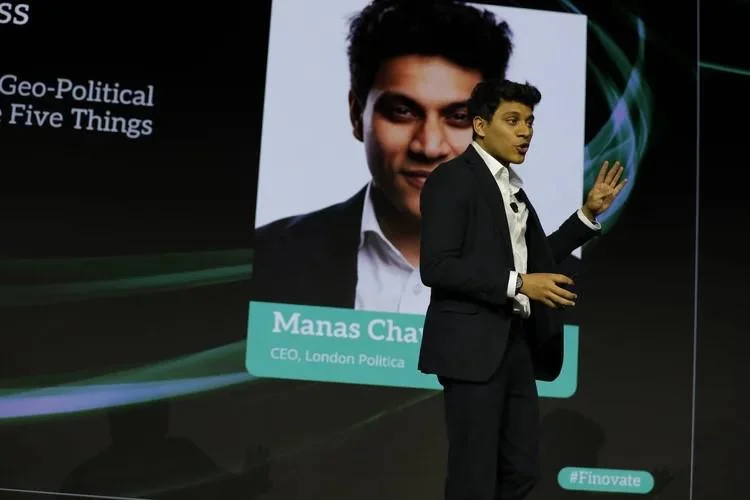
LSE PhD candidate Manas Chawla has been named in the 2026 Forbes 30 Under 30 Europe list in the Social Impact category.
Chawla is an MPhil/PhD candidate in the Department of International Relations at LSE. His doctoral research examines the geopolitics of artificial intelligence, with a focus on how emerging technologies are reshaping power, security and global governance.
The Forbes recognition highlights Chawla’s work as founder of London Politica, a geopolitical risk advisory firm that supports NGOs, international organisations and human rights agencies operating in conflict zones and volatile environments. Founded in 2021 while Chawla was still a student, the organisation aims to make high-quality political risk analysis more accessible to organisations working in complex settings.
Chawla previously completed a BSc in International Relations at LSE before undertaking a Master’s in Global Governance and Diplomacy at the University of Oxford.
Commenting on being named in the Forbes 30 Under 30 Europe list, Manas said: "I am deeply honoured to be named to the Forbes 30 Under 30 Europe list. For me, this recognition is really a reflection of the extraordinary team and community behind London Politica, and of a simple idea: that the tools of geopolitical risk intelligence should not only be used to protect capital, but also to protect lives. I hope this recognition helps bring more attention to the importance of making high-quality political risk analysis accessible to organisations working in the world’s most fragile and complex environments."
Reflecting on his experience at LSE, Manas said: "LSE has been central to both my intellectual and entrepreneurial journey. London Politica began while I was studying for my BSc in International Relations at LSE, and many of the ideas behind it were shaped in the classrooms, debates and conversations I had here. The School gave me the intellectual foundation to think seriously about power, conflict and global order, but also the confidence to apply those ideas beyond academia. Returning to LSE as a PhD candidate has made that connection even more meaningful, allowing me to deepen my academic work on the geopolitics of artificial intelligence while continuing to build an organisation that was born out of the LSE community."