

Four LSE academics elected as Fellows of the Academy of Social Sciences
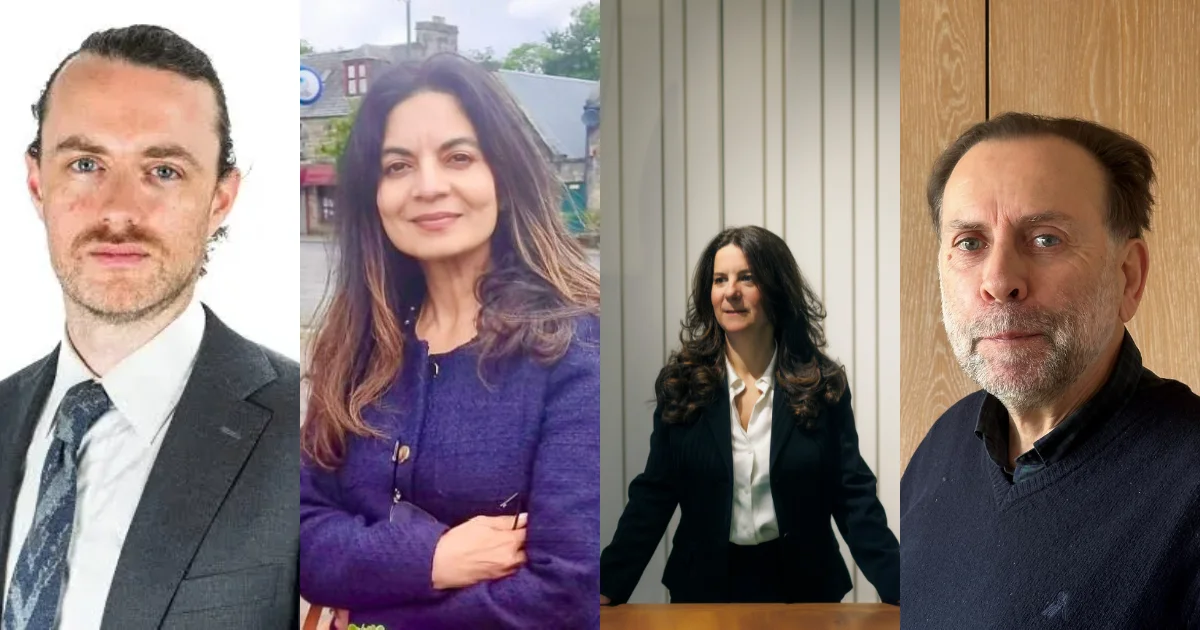
Four LSE academics have become Fellows of the Academy of Social Sciences.
Professor Neil Cummins, Professor Sumi Madhok, Professor Almudena Sevilla and Professor Martin Westlake are among 74 Fellows who have been elected to the Academy this spring.
The Academy’s Fellowship comprises 1,700 leading social scientists from academia, the public, private and third sectors. All Academy Fellows are elected for their excellence in their fields and their substantial contributions to social science for public benefit. Selection is through an independent peer review which recognises their excellence and impact.
Neil Cummins, Professor of Economic History in the Department of Economic History, was elected to the Academy for his work on economic history, modern economic and demographic behaviour and social mobility.
Commenting on his nomination, Professor Cummins said: “It is a great honour to be elected a Fellow of the Academy of Social Sciences. My research is about life, love and death . . . all the trivialities. Across economic history, economics and demography, I build large-scale datasets to understand how inequality, social mobility and population change evolve over centuries. My work traces the persistence of elites from the Norman Conquest to the present day, uses aristocratic genealogies to study longevity over the very long run, and draws on wills and probate records to reveal hidden wealth and inequalities by ethnicity. My current research explores how belief in God and romantic affection have changed over time, and what these shifts tell us about behavioural change and the emergence of the modern world.”
Sumi Madhok, Professor of Political Theory and Gender Studies in the Department of Gender Studies, was elected to the Academy for her work on International and Feminist Political Theory.
Commenting on her nomination Professor Madhok said: "It’s an honour to receive the fellowship of the Academy of the Social Sciences. I am a feminist political theorist by training into which I’ve built in a self-taught ethnographic sensibility. This methodological orientation enables me to not only engage in interdisciplinary theoretical, political and philosophical thinking on human rights, agency and global justice but also with international human rights law, development and transnational social movements from non-standard background contexts. Importantly, it allows me to centrally contribute to setting a new epistemic agenda for the social sciences focused on knowledge production from most of the world."
Almudena Sevilla, Professor of Economics in the Department of Social Policy was elected to the Academy in recognition of her contributions to advancing equal opportunities in education and gender.
Commenting on her nomination, Professor Sevilla said: “It is a great honour to be elected a Fellow of the Academy of Social Sciences. My research examines the institutional and social foundations of equal opportunity.
Educational inequality and gender gaps are not simply the result of individual choices; they reflect the deeper structures that organise economic and social life. I study how family environments, social norms, and labour market institutions interact to shape the distribution of skills, aspirations, and economic power. These forces influence who has access to opportunity, whose talents are developed, and how inequality persists across generations.
Sustained social progress depends on building institutions that broaden access to education and enable both women and men to realise their potential. Understanding the origins of unequal opportunities — and the mechanisms through which they are reproduced — is essential for understanding long-run economic development and social mobility.
The Academy’s commitment to rigorous social science reflects the idea that durable progress requires a clear understanding of the structures that govern our societies. I am honoured to contribute to that endeavour.”
Martin Westlake, a Visiting Professor in Practice in the European Institute, was elected to the Academy for his work on British and European Union politics and institutions.
Commenting on his nomination, Professor Westlake said, "It is a privilege, pleasure and honour to have been elected a Fellow of the Academy of Social Sciences after being nominated by the University Association for Contemporary European Studies (UACES). Now, more than ever, there is a need to foster practical knowledge about the European Union and to encourage common understanding."
Professor Westlake jointly organises and chairs a postgraduate seminar at the EI (now in its fifteenth year) entitled ‘The European Union in Practice; Politics and Power in the Brussels System’. His co-chair is fellow Visiting Professor in Practice Anthony Teasdale, FAcSS. Professor Westlake is also a Visiting Professor at the College of Europe in Bruges.
Read the press release here.