Travelling with Gramsci: Capital and the Afterlives of Empire in Egypt and the Middle East
Speaker


Listen to the podcast of this event here
Stuart Hall once wrote that we mustn’t use Gramsci like ‘an Old Testament prophet who, at the correct moment, will offer us the consoling and appropriate quotation.’ Instead, we must ‘think’ our problems in a Gramscian way. What would it mean to ‘think’ some of the problems facing Egypt and the broader Middle East in such a way, and what are some of the challenges and productive encounters this might produce? This talk looks at how Gramsci has ‘travelled’ to the Middle East, and what made this travel possible. In particular, Sara Salem traces some of the ways in which Gramsci’s concepts have been thought with in contexts such as Egypt, and argues that the productive debates that have emerged around this suggest a continuing usefulness of Gramsci for scholars of the region. More importantly, Salem also argues that the particularities of capitalism in the colony and postcolony pose important challenges to prominent interpretations of Gramsci’s work. She suggests that thinking about Gramsci through ‘traveling theory’ allows for both productive conversations as well as challenges to Eurocentric accounts of Marxist theory, and sheds light on some of the afterlives of empire in the Middle East.
Sara Salem (@saramsalem) is Assistant Professor in the Department of Sociology at LSE. Her main research interests include political sociology, postcolonial studies, Marxist theory, feminist theory, and global histories of empire and imperialism. Salem is an editor at the journal Historical Materialism.
John Chalcraft is Professor of Middle East History and Politics in the Department of Government at LSE and leads the Social Movements and Popular Mobilisation in the MENA Research Netwrok.
Join the conversation on Twitter using #LSEEgypt
The LSE Middle East Centre (@LSEMiddleEast) builds on LSE's long engagement with the Middle East and North Africa and provides a central hub for the wide range of research on the region carried out at LSE.
Join the MEC mailing listto keep up to date with our latest events, publications, news updates and podcasts.
Keep up to date with the latest MEC podcasts by following us on Soundcloud.
You can also find our latest interviews and videos on YouTube.
If you are planning to attend this event and would like details on how to get here and what time to arrive, as well as on accessibility and special requirements, please refer to LSE Events FAQ. LSE aims to ensure that people have equal access to these public events, but please contact the event’s organiser as far as possible in advance if you have any access requirements, so that arrangements, where possible, can be made. If the event is ticketed, please ensure you get in touch in advance of the ticket release date. Access Guides to all our venues can be viewed online.
LSE holds a wide range of events, covering many of the most controversial issues of the day, and speakers at our events may express views that cause offence. The views expressed by speakers at LSE events do not reflect the position or views of The London School of Economics and Political Science.
From time to time there are changes to event details so we strongly recommend checking back on this listing on the day of the event if you plan to attend.
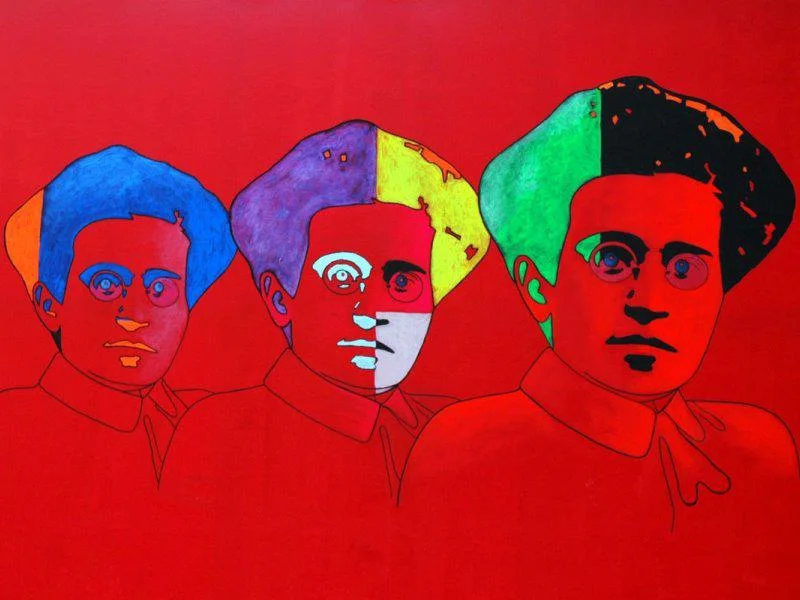
Image: Antonio Gramsci by
. Source:
LSE holds a wide range of events, covering many of the most controversial issues of the day, and speakers at our events may express views that cause offence. The views expressed by speakers at LSE events do not reflect the position or views of the London School of Economics and Political Science.
Subscribe to the LSE Events newsletter