

Transforming Policy Outcomes: Methodology Researcher attends 10 Downing Street
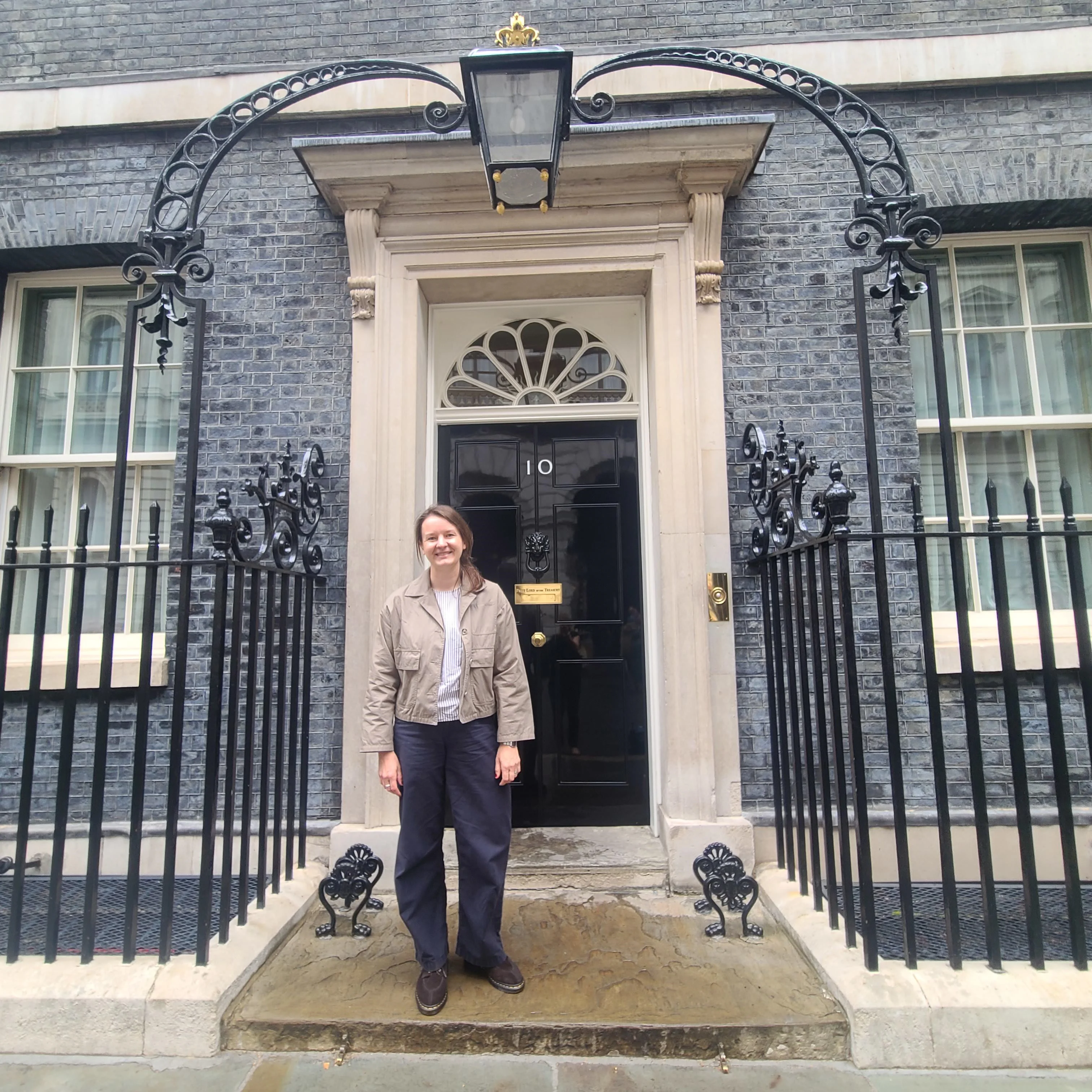
On Wednesday 17 June, British Academy Postdoctoral Fellow Dr Kate Summers was invited to a Thought Leadership Session at Number 10 Downing Street.
The session, titled 'Transforming Policy Outcomes: The Role of Participation and Lived Experience in UK Government', brought together cross-government senior civil servants, academic experts, and civil society to explore how participation and lived experience can be more systematically embedded in government work.
Kate spoke to us about why she was invited to Downing Street, and how it relates to her research.
What is your research about?
"My work develops qualitative and participatory methods to examine aspects of the working-age benefits system in the UK. My main current project involves working with a group of disabled people and people with long term health conditions to understand their experiences and views of the UK benefits system over time.
"An important element of my work involves thinking about how direct experience (in this case of receiving benefits) is a form of knowledge and evidence. This 'lived experience' knowledge gives us unique types of insight into how policy is experienced, how it functions, and ultimately how it can be improved."
Why were you invited to No.10, what did the visit involve?
"From 2024-2025 I was an academic secondee to the Department for Work and Pensions, and from then have continued working in an advisory role on how participatory approaches can be used in the Department.
"At their centre, participatory approaches involve sharing power and decision making, and so this opens up a series of knotty questions about how and when government can do this successfully with those directly affected by the policies they deliver, or with the wider public. The No. 10 event was a cross-government workshop, bringing together policymakers and external people like me, to think about how these approaches can be better embedded across government."
What impact do you hope the day will have?
I thought it was really promising that there is attention and energy being given to these issues at a central, cross-government level.
"In the policy areas I am familiar with, there are some really high-profile recent examples of participatory policymaking initiatives, including the Child Poverty Strategy and the Timms Review of Personal Independence Payment. I hope the day marks a more general shift towards recognising the value of these approaches and methods.
Ultimately these sorts of approaches, when done well, lead to better designed policy and greater trust and understanding between citizens and policymakers."
Did you enjoy it?
"Yes I did, although I was also thinking about my participants who I work with, and the ways in which they feel very much unseen and frustrated (or worse) by the policy systems they navigate. I hope I can continue to make small inroads into changing that.
I should also probably be cooler about this, but it is exciting to walk up the staircase with all the portraits and photographs of previous prime ministers."
What are your next steps for your research?
"Last month I completed the last empirical component of my current project, which involved running online workshops with my participants to think about policy solutions. I'm in a data analysis and writing up phase now. Part of this currently involves thinking through how eligibility for social security benefits is experienced from the perspective of disabled claimants, and also thinking about what I have been able to 'access' with the approach I've taken compared to more traditional research methods."
You can read more about Kate's ongoing research and others in the Department of Methodology, on the department's People pages.