

DiSTO Kuwait
Country context
- Kuwait ranks 56th in the world for human development (UNDP)
- According to the World Economic Forum, Kuwait ranks 1st worldwide for mobile coverage, 2nd in cell and broadband subscriptions and 14th for home computers
- Mobile penetration rates are estimated as high as 240% and internet land coverage is 100%, according to the Central Authority for Information Technology
- Despite its high levels of digital penetration, and one of the world’s highest per capita Gross National Incomes (GNI) (World Bank), the 2019 World Economic Forumranks Kuwait as only the 54thmost competitive country
- With an expatriate population of approximately 70% (Central Statistics Bureau) and high levels of income inequality, the DiSTO Kuwait project will explore relationships between these extreme offline conditions and the population’s online outcomes
Projects in Kuwait
DiSTO Kuwait comprises of two projects
- Digital resilience in Kuwait (2026 - present)
- The initial project which adapted the DiSTO methodology to the Kuwaiti context (2018 - 2022)
Digital resilience in Kuwait
This study takes place against the backdrop of the Gulf conflict, which created a crisis in Kuwaitis’ access to education, work, and government services, as well as in their physical and psychological well-being.
The digital transformation of society, including through Artificial Intelligence, can offer a way for people to not just survive but continue living. Although resilience has been widely studied, existing frameworks fail to capture how the digitisation of services and the use of Information and Communication Technologies (ICTs) can translate into adaptive outcomes amid crisis-related disruptions of daily life. This project studies digital resilience amongst Kuwaitis.
The study will employ a multistage research design to develop, validate and apply the Digital Resilience in Crisis Indicator (DRCI) in accordance with established procedures for scale design (Helsper, et al, 2021). The multistage process consists of four phases: conceptual development and item generation; item refinement through cognitive validation; pilot testing; and large-scale hypothesis testing across 3 countries, incorporating cross-cultural and cross-country validation approaches.
The study will later use the DCRI and apply it to Qatari and Sudanese contexts, enabling comparison between countries experiencing conflict and strengthening the indicator's global applicability, validity, reliability and relevance. This will position Kuwait based researchers and institutions as leaders in research in this emerging high impact area.
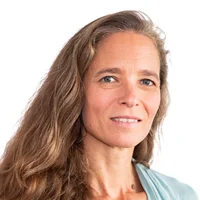
Professor Ellen Helsper
Dr. Ellen Helsper is Professor of Digital Inequalities in the Department of Media and Communications at LSE. Her current research interests include the links between social and digital inequalities; mediated interpersonal communication; participatory immersive digital spaces (VR, ER); and quantitative and qualitative methodological developments in media and communications research. She is the global coordinator of From Digital Skills to Tangible Outcomes Projects (DiSTO) as well as the Resisting Inequalities through a Global Arts Network project. She is on the management board of the Digital Future for Children centre (DFC) and she consults widely for intergovernmental organisations such as the UN, national and regional governments, industry and the non-profit sector.
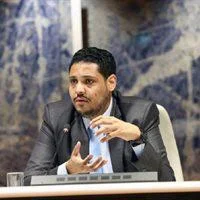
Dr. Omer Gibreel
Dr. Omer Gibreel is an Assistant Professor at Gulf University for Science and Technology (GUST) in Kuwait. He previously served as Dean of the College of Administrative Sciences and as an Assistant Professor at the National University of Sudan. He has also served as a Mentor for the Clinton Global Initiative University, focusing on sustainable systems and innovation. A Fulbright Scholar, Dr. Gibreel received Improvement in Pursuit of Academic Excellence,” presented by President Bill Clinton. His work has been published in leading journals, including Electronic Commerce Research and Applications, Information Development, Journal of Innovation & Knowledge, Sustainability, and the Journal of Medical Internet Research, and presented at major international conferences such as PACIS and ICISS.
DiSTO Kuwait initial project
The DiSTO Kuwait project comprises the adaptation, validation and implementation of DiSTO’s methodology and framework to the Kuwaiti context, including the development of an Arabic version of its key scales. DiSTO Kuwait's long-term ambition is to collect national-level data using these modified tools to inform local academic and policy discussions. The project also aims to contribute to broader inter-country comparisons by providing data from Kuwait to larger evaluations of global media conditions and social changes.
The project has been developed within two studies: (1) exploratory research which tested preliminary questions and (2) the full study, informed by the findings obtained through the exploratory exercise.
Overview
This first stage involved work on a preliminary subset of DiSTO questions and exploratory cognitive interviews. A special emphasis was given to the methodological challenges of adapting DiSTO’s global tools to local conditions within a Middle Eastern country.
Project activities
- A visiting fellowship in collaboration with the London School of Economics and Political Science during which DiSTO’s measurement tools were adapted and translated (including back translation) for testing and validating in Kuwait.
- 32 cognitive interviews in both Arabic and English were conducted with selected respondents to determine the applicability and their varied understandings of the primary questionnaire. This vital qualitative data showed cultural specificities of engagement with digital media across a range of different socio-demographic groups.
- The evaluation of the state of international and domestic ICT data about Kuwait, aiming to identify potential gaps that could be addressed with greater information about digital media use and their outcomes (i.e. the contributions from DiSTO data).
Support
The visiting fellowship for Dr Fahed Al-Sumait was granted by the LSE Kuwait Programme, funded by the Kuwait Foundation for the Advancement of Sciences.
Overview
This project represents the first application of the DiSTO methodology to an Arab context, thereby making inroads into the Middle East region where both income and digital inequalities are extreme and digitisation is taking place at a rapid pace.
Project activities
- Questionnaire adaptation, translation and validation
- Pilot testing and scale refinements, done through pilot surveys with individuals representative of the population
- Cognitive interviews
- Data collection from a national sample of individuals representing the Kuwaiti population (citizens and expats)
Funding Support
This project is funded by the Middle East Centre at the London School of Economics and Political Science.
- Al-Sumait, F & Navarro, C. (2023). Kuwait's Enduring Digital Divide. Socio-Demographic Characteristics Relative to ICT Access, Skills, and Outcomes. LSE Middle East Centre Paper Series.
- Closing the Digital Divide: a Key Step Toward a Knowledge-based Economy. KFAS Magazine July-September 2023.
- Al-Sumait, F., Helsper, E. J., & Rahali, M. (2023). Adapting global methodologies to digital inequalities research in a multicultural Arab environment. Convergence, 29(4). https://doi.org/10.1177/13548565231174594
- Al-Sumait, F., Helsper, E.J., Navarro, C. Al-Saif, N., & Raut, N. (2022). Kuwait’s Digital Inequalities Report. From Digital Skills to Tangible Outcomes project report.
- Al-Sumait, F., (2022). Inequalities: The Persistent Obstacle to Kuwait’s Digital Transformation. The London School of Economics Middle East Centre. Available at
- Al-Sumait, F., Helsper, E. & Rahali, M. (2022) Exploring (and Contesting) the Reproduction of Technological Imperialism: Adapting Digital Inequalities Research to a Multicultural Arab Environment." British Society of Middle East Studies Conference. St. Andrews, Scotland.
- Al-Sumait, F., Helsper, E., Navarro, C., Al-Saif, N., & Raut, N. (2022). "Transitioning from Tankers to Tablets? Assessing Inequalities in Kuwait's Digital Readiness." Research Seminar. Middle East Centre, London School of Economics and Political Science.
- Al-Sumait, F. "Evaluating Kuwait’s Digital Ecosystem: A Corresponding Fields Model for digital Exclusion." The Middle East Studies Association Conference. New Orleans, LA. 2019
- Al-Sumait, F. (2018). From Tankers to Tablets: Is Kuwait Ready for a Digital Evolution? The London School of Economics Middle East Centre.
Dr. Fahed Al-Sumait is an Assistant Professor at the Gulf University for Science and Technology and Co-Pi on the DiSTO-Kuwait research project. His research background is in Communication studies.
Nouf Al Saif is the Research Associate for the DiSTO project in Kuwait, where she is also a Teaching Assistant in the Department of Mass Communication and Media at the Gulf University for Science and Technology.
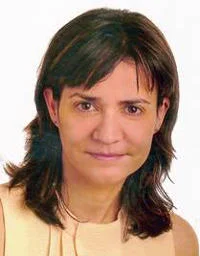
Cristina Navarro is an Associate Professor of communication at Gulf University for Science and Technology in Kuwait. Her research interests include online public relations, social media communication, professionalism leadership and PR competencies, knowledge and skills.