

Historic LSE Health Figures: Pioneers in health policy
LSE Health’s legacy is built on the contributions of visionary scholars whose work transformed health policy, public health, and social welfare in the UK and globally over the past thirty years. This page honours their achievements and the milestones that reflect their enduring influence.
Richard Titmuss
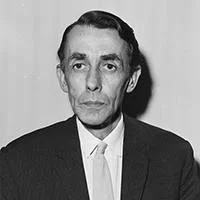
Founding Professor of Social Administration at LSE (1950–1973)
Richard Titmuss was one of the most influential social policy thinkers of the 20th century. Appointed LSE’s first Professor of Social Administration in 1950, he effectively founded the academic discipline of social policy in Britain. His work shaped the post-war welfare state and introduced enduring concepts such as the “social division of welfare”, which revealed how state, occupational, and fiscal welfare interact to reinforce inequality.
One of Titmuss’s most celebrated works, The Gift Relationship (1970), compared blood donation systems in the UK and US, arguing that altruistic, voluntary donation was both morally superior and economically more effective than market-based models. He was also a key contributor to the Guillebaud Committee (1953–56), which demonstrated that the NHS was underfunded and highly efficient.
1950 – Appointed LSE’s first Professor of Social Administration
1950 – Published Problems of Social Policy, a foundational text on wartime and post-war welfare
1956 – Contributed to the Guillebaud Committee on NHS costs
1970 – Published The Gift Relationship: From Human Blood to Social Policy
1973 – Passed away, leaving a legacy that shaped modern social policy
Brian Abel-Smith
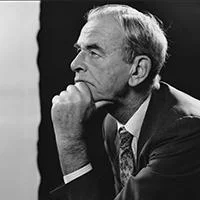
Health Economist and Global Policy Advisor
Brian Abel-Smith was a pioneering health economist whose work influenced health financing and social welfare policy across continents. He co-authored The Poor and the Poorest (1965) with Peter Townsend, which revealed persistent poverty in Britain and helped launch the Child Poverty Action Group.
He was a key advisor to Labour governments and contributed to major reforms including the Resource Allocation Working Party and the Black Report on health inequalities 6. Internationally, Abel-Smith advised over 80 countries and played a central role in the WHO’s Health for All by the Year 2000 strategy, serving as senior advisor to Director-General Halfdan Mahler from 1983–86.
1956 – Co-authored NHS cost analysis for the Guillebaud Committee
1965 – Co-authored The Poor and the Poorest
1970s–1980s – Advised WHO and over 80 countries on health financing
1983–1986 – Senior advisor to WHO’s Health for All strategy
1996 – Passed away, leaving a global legacy in health economics
Julian Le Grand

Richard Titmuss Professor of Social Policy
Julian Le Grand is one of the UK’s most influential social policy thinkers. Appointed Richard Titmuss Professor in 1993, he has been instrumental in designing reforms that introduced choice and competition into public services. His ideas led to the creation of the Pupil Premium and the Child Trust Fund, aimed at reducing inequality. In 2003, he was seconded to 10 Downing Street as a senior advisor to Prime Minister Tony Blair, where he helped implement incentive-based reforms in the NHS. His books Motivation, Agency and Public Policy and The Other Invisible Hand remain central texts in public policy debates.
1993 – Appointed Richard Titmuss Professor of Social Policy
2003 – Seconded to 10 Downing Street as senior advisor
2003 – Published Motivation, Agency and Public Policy
2007 – Published The Other Invisible Hand
Peter Townsend
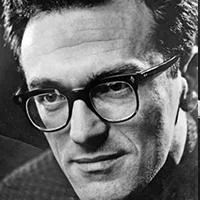
Professor of International Social Policy at LSE (until 2009)
Peter Townsend was a leading sociologist and campaigner whose work transformed understandings of poverty and inequality. He developed the Theory of Relative Deprivation, redefining poverty as exclusion from customary living standards. Townsend co-founded the Child Poverty Action Group (1965) and the Disability Alliance, and remained an active advocate for social justice. His work on health inequalities, ageing, and disability shaped both academic discourse and policy reform.
1965 – Co-founded the Child Poverty Action Group
1974 – Co-founded the Disability Alliance 1979 – Published Poverty in the United Kingdom, a landmark study
2009 – Passed away while serving as Professor of International Social Policy at LSE
Walter Holland
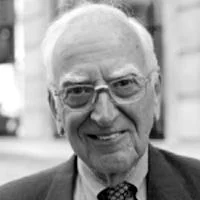
Visiting Professor of Public Health Medicine at LSE (1995–2018)
Walter Holland was a towering figure in public health and epidemiology. A doctor by training, he founded the Department of Clinical Epidemiology and Social Medicine and the Health Services Research Unit at St Thomas’s Hospital. His work on avoidable mortality and evidence-based policy helped redefine public health priorities in the UK and Europe. Holland forged strong ties with LSE social scientists, including Titmuss and Abel-Smith, and later joined LSE as Visiting Professor. His legacy is honoured through two annual student prizes on the Global Health MSc.
1964 – Founded Department of Clinical Epidemiology and Social Medicine
1968 – Established Health Services Research Unit at St Thomas’s
1995 – Appointed Visiting Professor at LSE
1991 – Led European Community Atlas of Avoidable Mortality
2018 – Passed away while serving at LSE