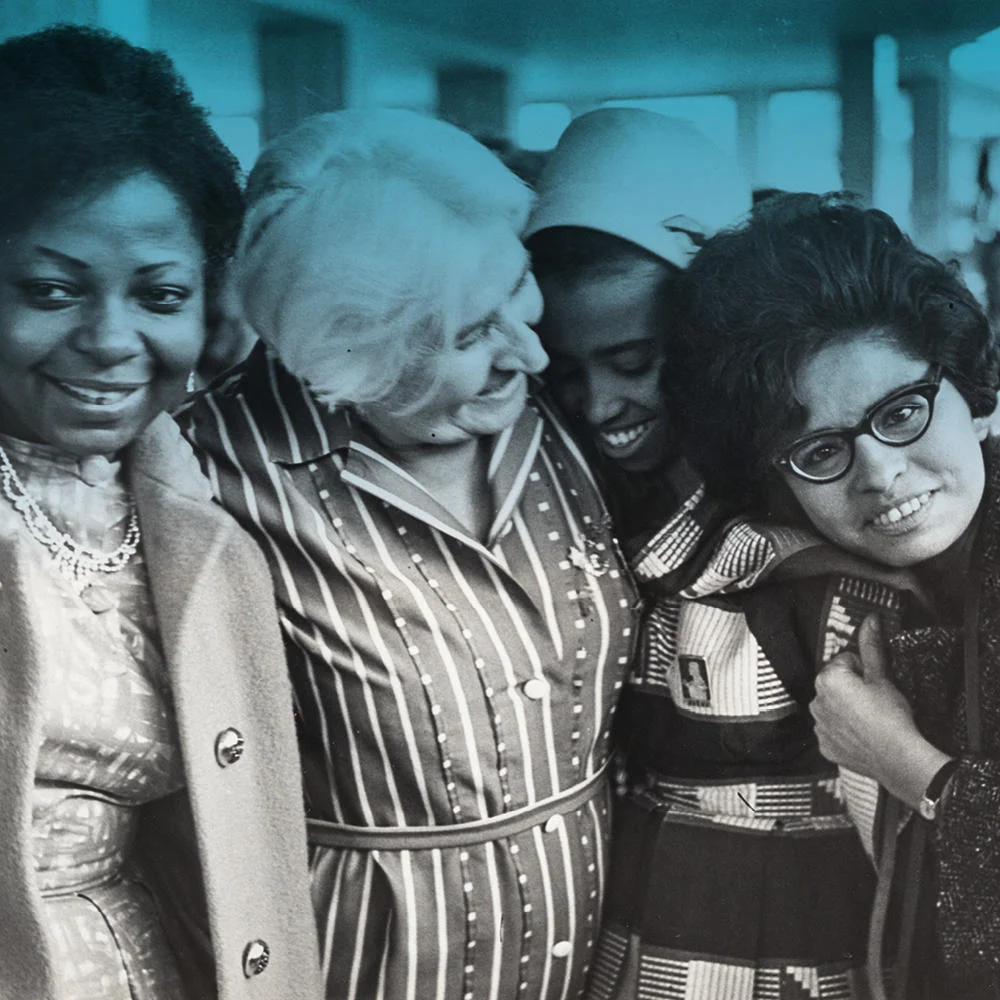
Women's suffrage
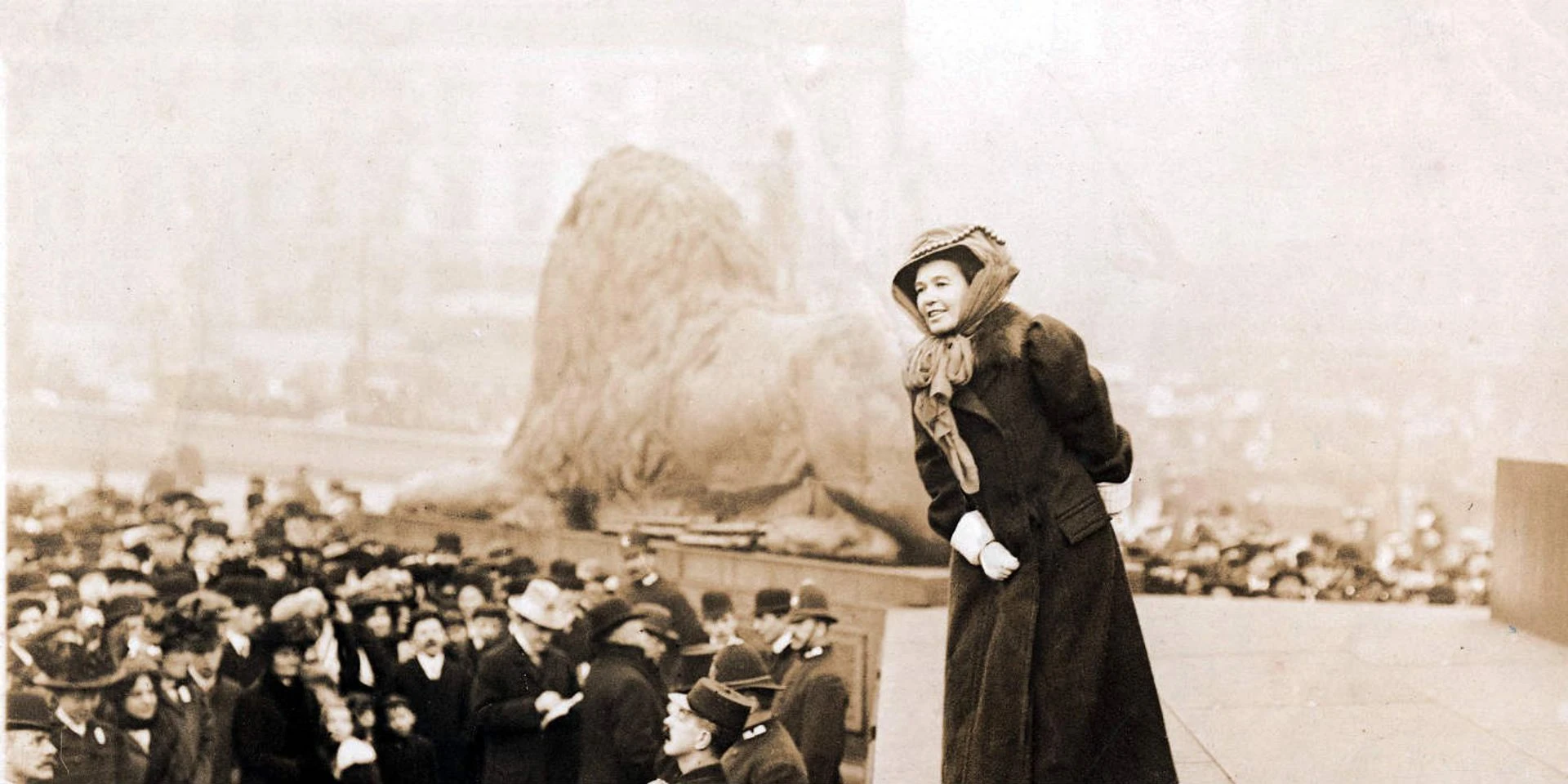
"The first humble beginnings of an agitation..." Helen Taylor, 1866
Background
Our collections contain primary source material relating to the campaign for women’s suffrage. Much of this collection forms part of The Women’s Library, whose roots are founded in the suffrage movement. This collection includes personal papers of suffragists and suffragettes, records of many different suffrage organisations and the newspapers, journals and pamphlets published by these organisations. There are also badges, postcards, posters, banners and other 3D objects on this subject.
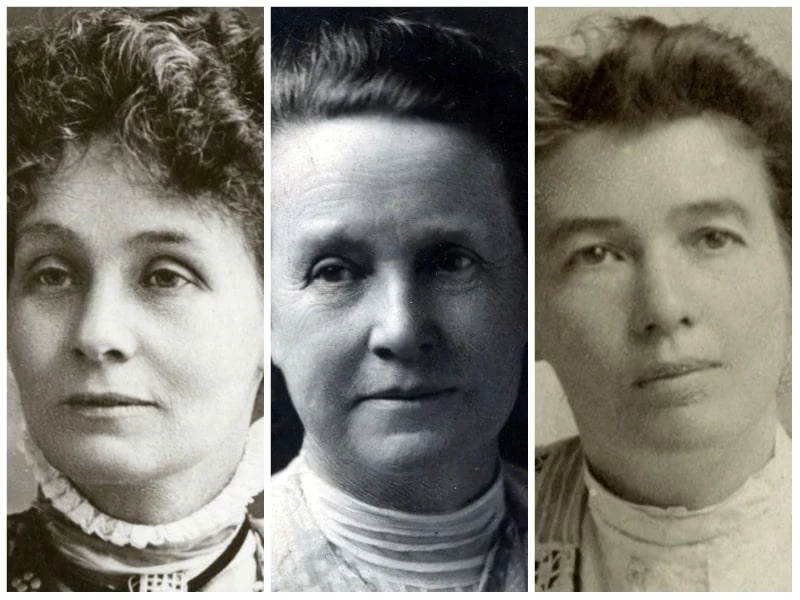
How to search
You can find material on this topic by searching for a person’s name, by organisation, by event eg 'Black Friday', or by keyword such as anti-suffrage, emancipation, franchise, suffrage, suffragette, suffragist, in these catalogues:
View lists of further resources covering:
Digital material
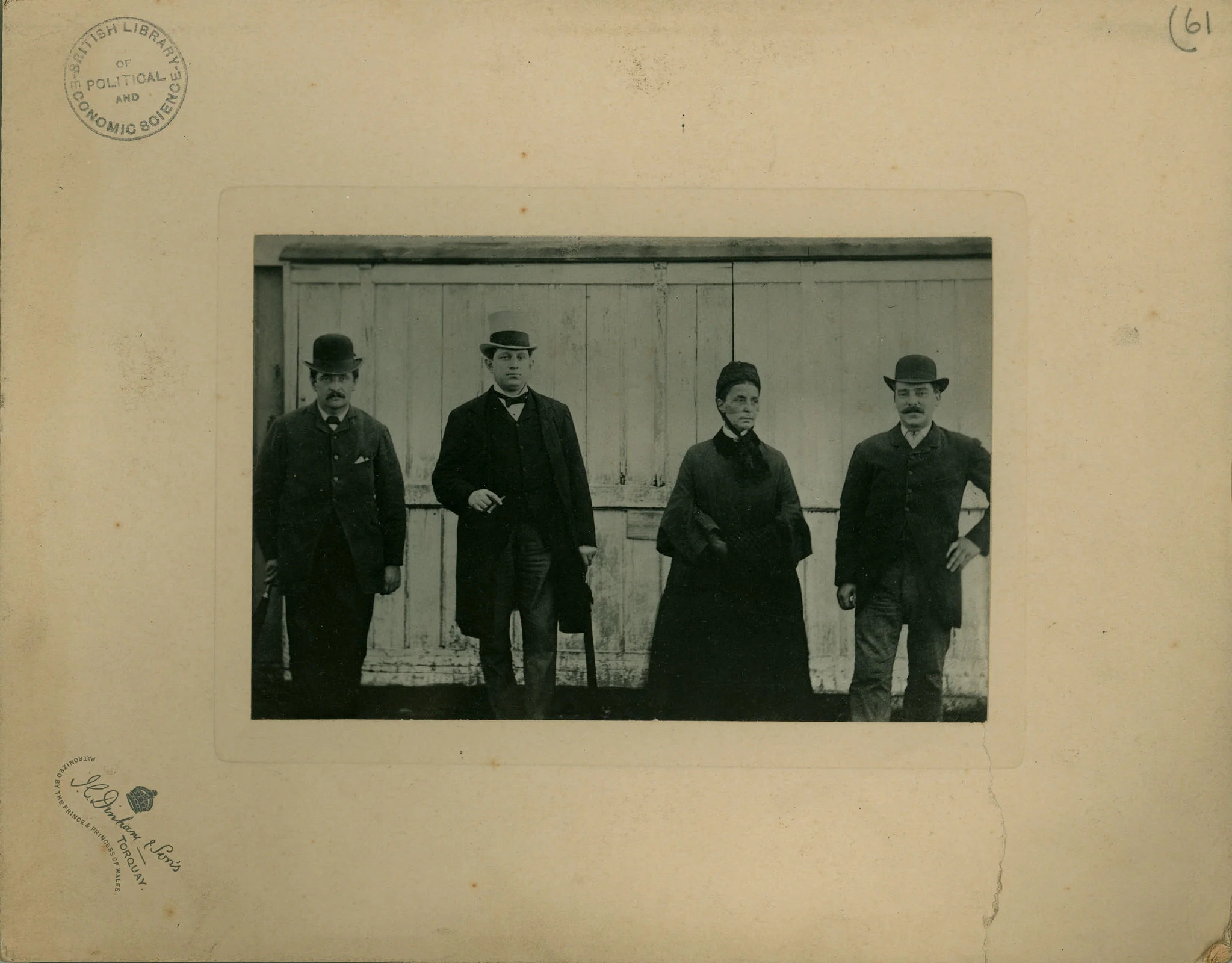
Mill-Taylor collection contains correspondence between John Stuart Mill and Helen Taylor with the main suffrage campaigners relating to the first massed women’s suffrage petition to Parliament in 1866.
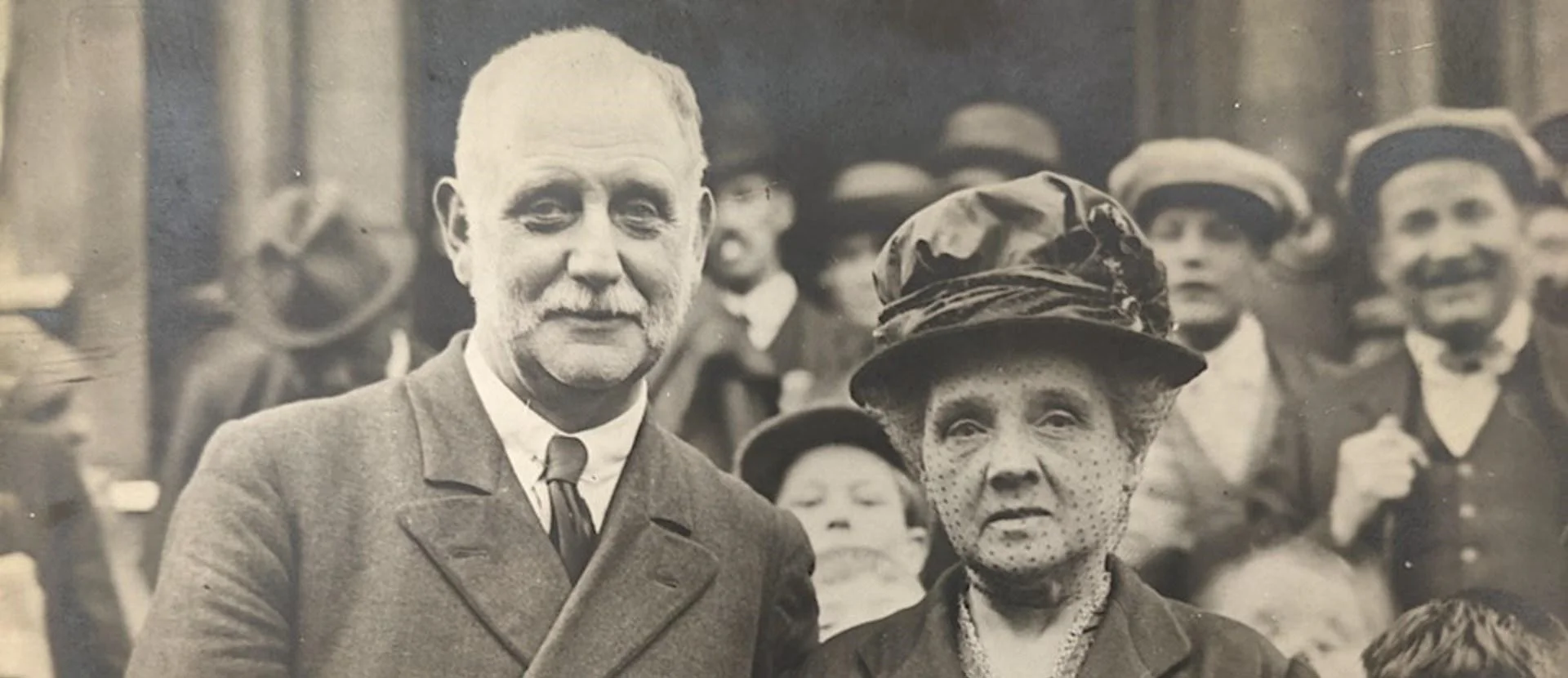
George Lansbury was a Labour MP who became borough councillor in Poplar in 1903 and Leader of the Labour Party in 1931 to 1935. He was a supporter of the women’s suffrage campaign. His archive contains letters from Emmeline, Christabel and Sylvia Pankhurst.
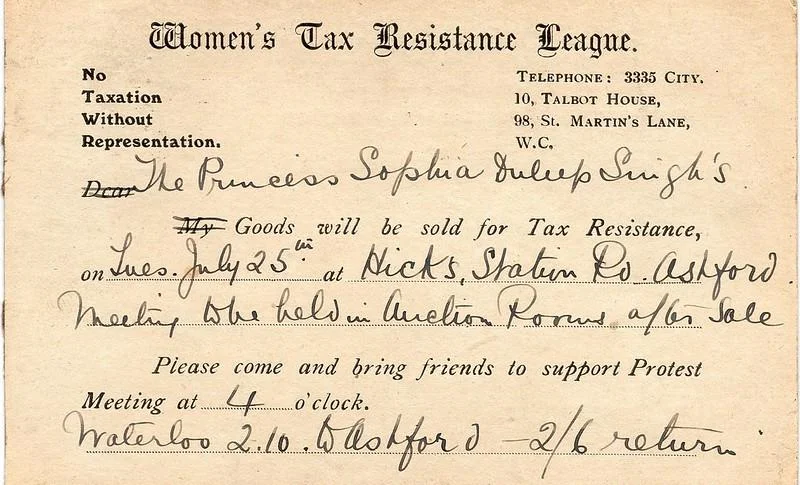
Read about the campaigning of many different suffrage organisations from their newspapers, pamphlets and annual reports, eg. Men’s League for Women’s Suffrage, the Church League for Women’s Suffrage, Women’s Tax Resistance League.
Read the letters of suffrage campaigners such as Emmeline Pankhurst, Millicent Garrett Fawcett, Charlotte Despard.
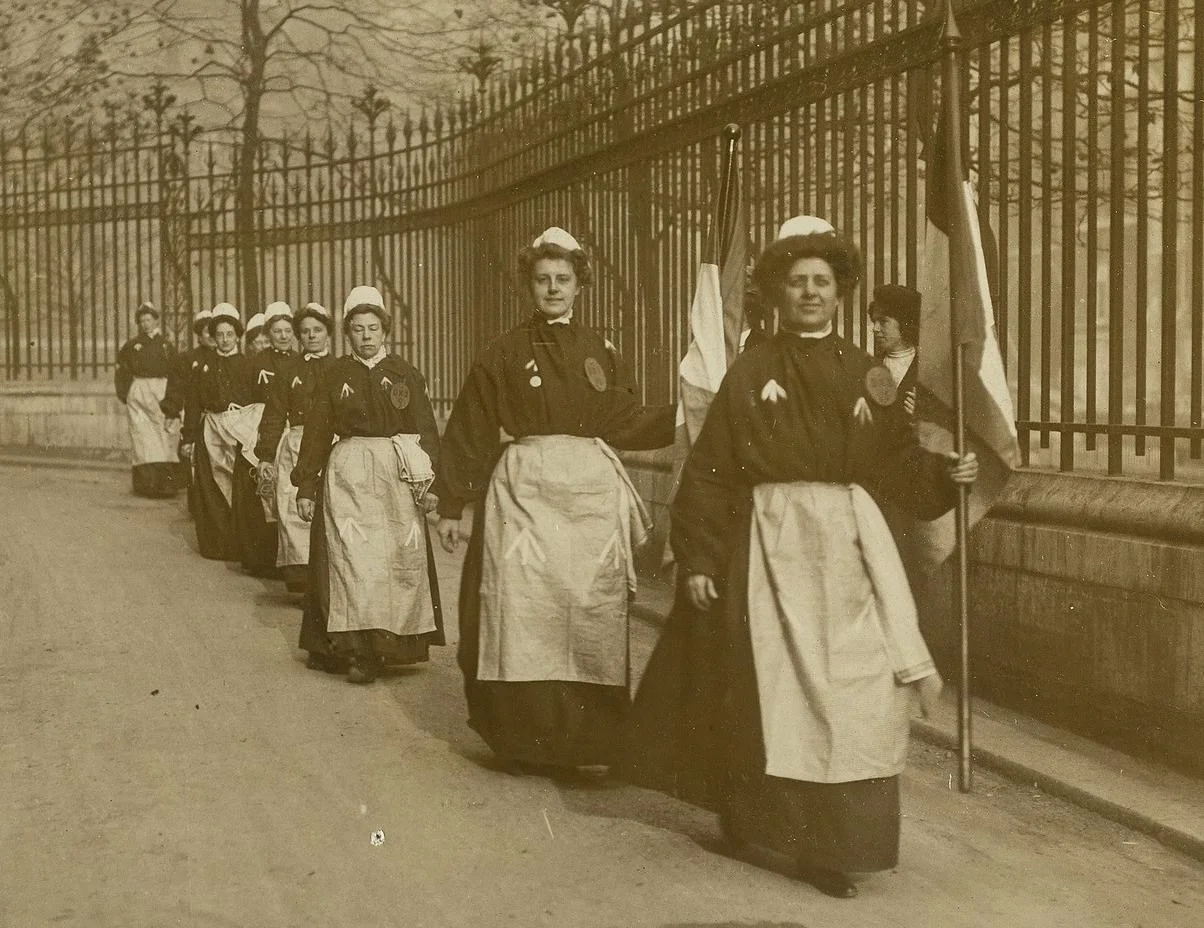
High resolution images are ready for download from Flickr.
Mary Lowndes was a stained-glass artist and founded the Artists’ Suffrage League in 1907.
- View her design album – containing over 212 designs for suffrage banners, badges, and posters.
- View the suffrage banners
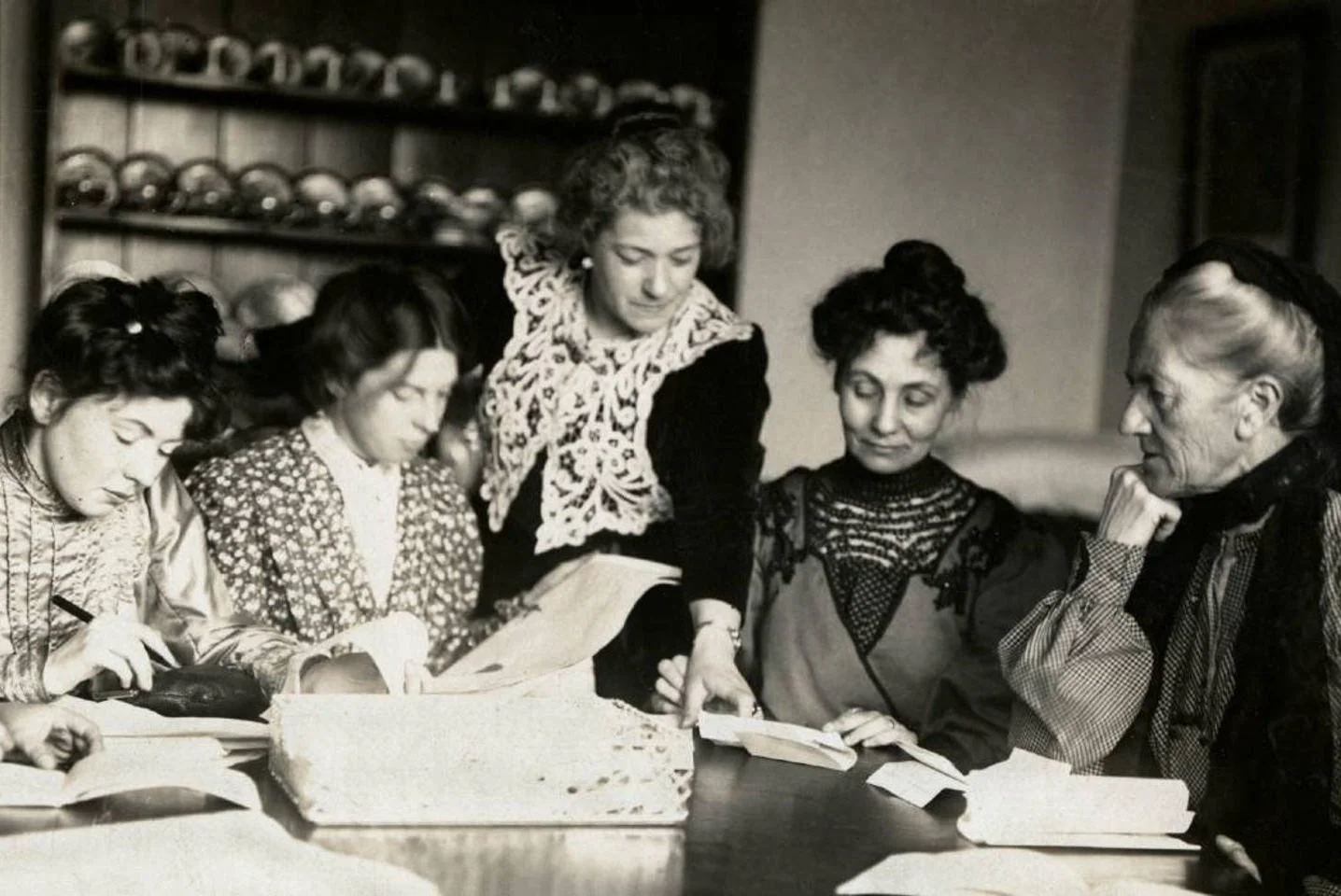
In the 1970s, Brian Harrison carried out oral histories with suffrage campaigners.
Online exhibitions
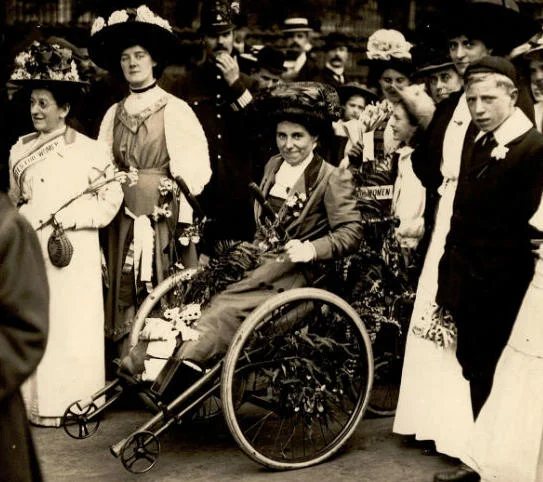
Rosa May Billinghurst took part in suffrage demonstrations in her tricycle.
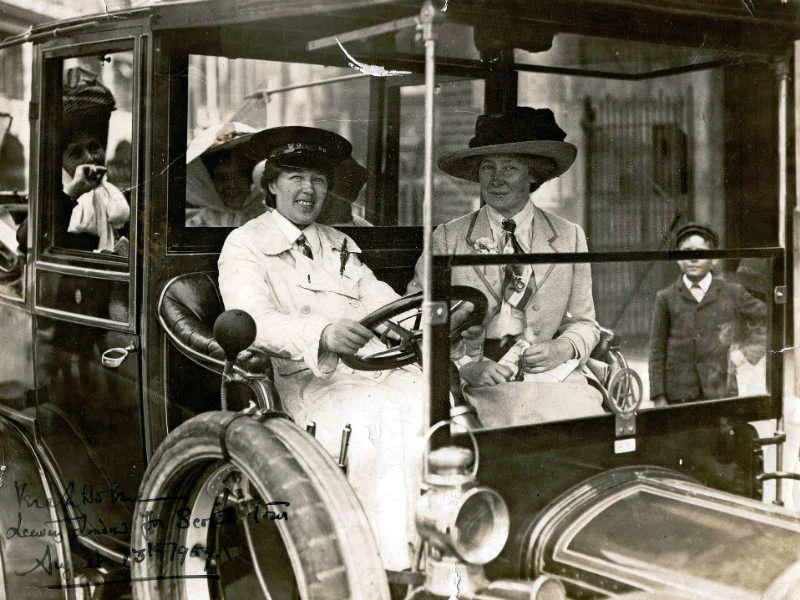
Vera ‘Jack’ Holme was an actor, suffragette and chauffeur to the Pankhursts. During the First World War, she was an ambulance driver for the Scottish Women's Hospital in Serbia.
Videos
Rachel Holmes talks about the art and activism of Sylvia Pankhurst.
Jane Robinson talks about the women’s suffrage pilgrimage of 1913.
Sumita Mukherjee on Indian suffragettes, female identities and transnational networks.
Listen to clips from interviews with those involved in the suffrage campaign.
Blogs
The offices of the Women's Social and Political Union (WSPU), the suffragette organisation led by Emmeline Pankhurst, were at Clement’s Inn from 1906 until 1913. This was the London home of Emmeline and Frederick Pethick-Lawrence who also financed and edited Votes for Women, the newspaper of the WSPU. The site is now occupied by Pethick-Lawrence House.
Find out more about LSE and suffrage in these blogs:
- Alice Paul – a suffragette from LSE
- Alice Clark – a suffragist from LSE
- Clement’s Inn – the first home of the Women’s Social and Political Union in London
- 24 Women at LSE in 1918
- Suffragettes and LSE’s early neighbours
Get involved?
We are interested in what you find in the archives. If you’d like to know more, or would like to share your research, we want to hear from you. Get in touch.
LSE and the suffrage movement
LSE was at the heart of suffrage activity between 1906 and 1914. To mark the historical link between LSE and suffrage, the Towers on campus have been renamed Pankhurst House, Fawcett House and Pethick-Lawrence House after three important suffrage campaigners and their specific connections to LSE.
The offices of the Women's Social and Political Union (WSPU), the suffragette organisation led by Emmeline Pankhurst, were on the site now occupied by the former Tower 3. This was the London home of Emmeline and Frederick Pethick-Lawrence who also financed and edited Votes for Women, the newspaper of the WSPU.
LSE is the custodian of the Women's Library, which has its roots in the suffrage movement. The Women's Library also holds the papers of Millicent Garrett Fawcett and of the Fawcett Society. Millicent Garrett Fawcett was a suffragist and women's rights campaigner who made it her lifetime's work to secure for women the right to vote.
Further information
If you need specific help with any of the collections mentioned here get in touch with our Curator for Equality, Rights and Citizenship, Gillian Murphy.
The Women's Library at 100