

LSE hosts conversation on the future of education in Europe
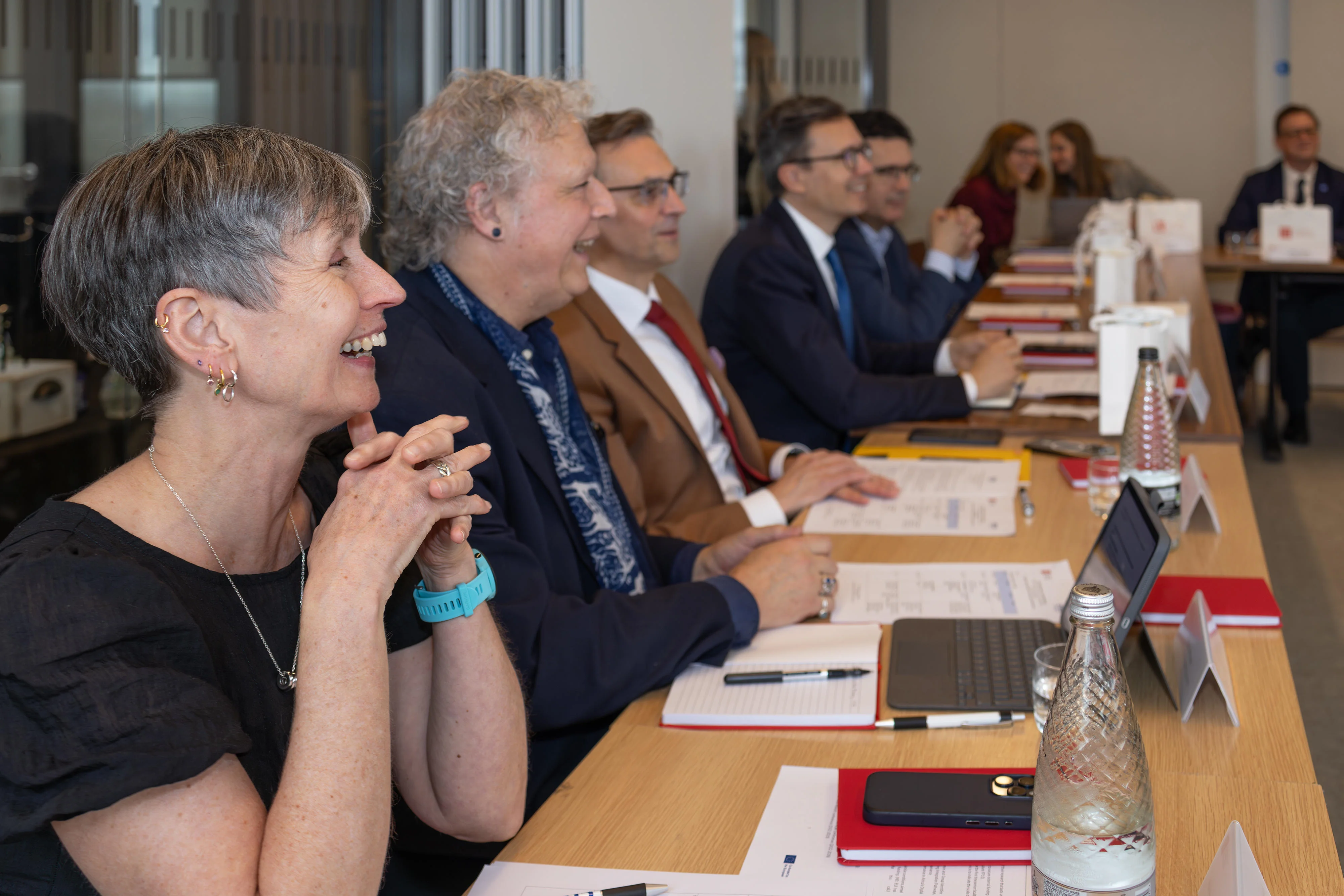
On 11-12 June, LSE hosted the 2026 CIVICA Presidents’ Committee Meeting, bringing ten leaders together from Europe’s most prestigious social science universities.
Taking place annually at a different university in the Alliance, this meeting focuses on the CIVICA priorities in research, education and democratic engagement across the continent for the next year.
The cohort of visiting Presidents and Rectors includes Professor Francesco Billari (Bocconi University), Professor Carsten Q. Schneider (CEU), Professor Patrizia Nanz (EUI), Professor Manuel Muñiz Villa (IE University), Professor Luis Vassy (Sciences Po), Professor Piotr Wachowiak (SGH Warsaw School of Economics), and Professor Remus Pricopie (SNSPA), as well as Professor Thurid Hustedt and Professor Laurence Romani, senior leadership representatives from the Hertie School and the Stockholm School of Economics, respectively. The senior leaders were joined by members of the CIVICA Steering Committee, including the CIVICA Executive Director, Aurélien Krejbich.
LSE President and Vice Chancellor, Professor Larry Kramer, began the meeting with a welcome to the Alliance leaders. In his opening remarks, Professor Kramer affirmed that “being a part of CIVICA means a huge amount to LSE,” with the Alliance providing opportunities for student and staff mobility, collaborative research for faculty and knowledge exchange of best practice in teaching. Professor Kramer also maintained that despite the unique challenges posed to social sciences universities, our institutions are needed now more than ever to approach global challenges.

LSE's involvement in CIVICA
CIVICA—the European University of Social Sciences—unites 10 leading European Universities that specialise in the social sciences, humanities, business management and public policy. Together, the Alliance is made up of 72,000 students and PhDs, as well as 13,000 academic staff, united in our joint commitment to transnational collaboration in education, research, innovation and civic engagement.
LSE joined CIVICA as a full member in June 2020, marking a pledge to stronger European futures through research and teaching in the social sciences, humanities and arts. Since then, LSE staff, students and researchers have participated in several flagship initiatives, including collaborative research on democracy, digital innovation, and European civic engagement.

Looking at the future of CIVICA
Throughout the meeting, participants discussed future trajectories for collaborative research, the role of universities in the age of artificial intelligence and the distinct offerings of social science universities to the higher education sector.
Professor Thurid Hustedt, Dean of Graduate Programmes representing the Hertie School, shared her takeaways from the meeting, stating: “We had extremely valuable and interesting discussions over the past two days. In particular, we spoke about very relevant and strategic questions for higher education institutions in Europe and beyond. Our reflections enable us to shape the future of CIVICA and our collaborations.”
LSE’s Professor Susana Mourato, Vice President and Pro-Vice Chancellor (Research), highlighted significant outcomes from the meeting, sharing: “The Presidents agreed to deepen the exchange of intelligence and best practice, strengthen collaboration on policy engagement, and explore opportunities for joint advocacy at the European level. Together, we will ensure that the distinctive contribution of social sciences is recognised in debates about AI, innovation, competitiveness and societal resilience.”
LSE was delighted to host leadership from the CIVICA Alliance for two days of robust discussion about future priorities and looks forward to actioning the ideas generated at this meeting.
Want to stay up to date with LSE’s International Strategy and Academic Partnerships team? Be the first to know about international projects by subscribing to our newsletter.
Credit: Marina Arcady