

Exploring the Energy Economics of Artificial Intelligence

A collaborative workshop between an academic from LSE’s Department of Geography and Environment and the KDI School of Public Policy and Management (KDI School) ignites conversation surrounding the systemic impacts of Artificial Intelligence (AI) on energy demand and power infrastructure.
Powering AI: Energy, Labor, and Data Center Economy was a platform for Dr Min-kyeong (Min) Cha, an LSE Fellow in Energy Economics and Policy, to share her expertise in the societal and market implications of AI in relation to energy markets and power infrastructure.
Hosted at the KDI School in South Korea and supported by their Sustainable Development Lab (led by Director Professor Yeong Jae Kim), the workshop brought together experts from LSE, KDI School, Georgia Institute of Technology, University of Oxford, Politecnico di Milano, and Seoul National University of Science and Technology, providing a multidisciplinary knowledge exchange. The workshop covered multiple themes throughout the day, including the employment effects of data centres, using multi-agent reinforcement learning to identify electricity markets, and the future of data infrastructure.
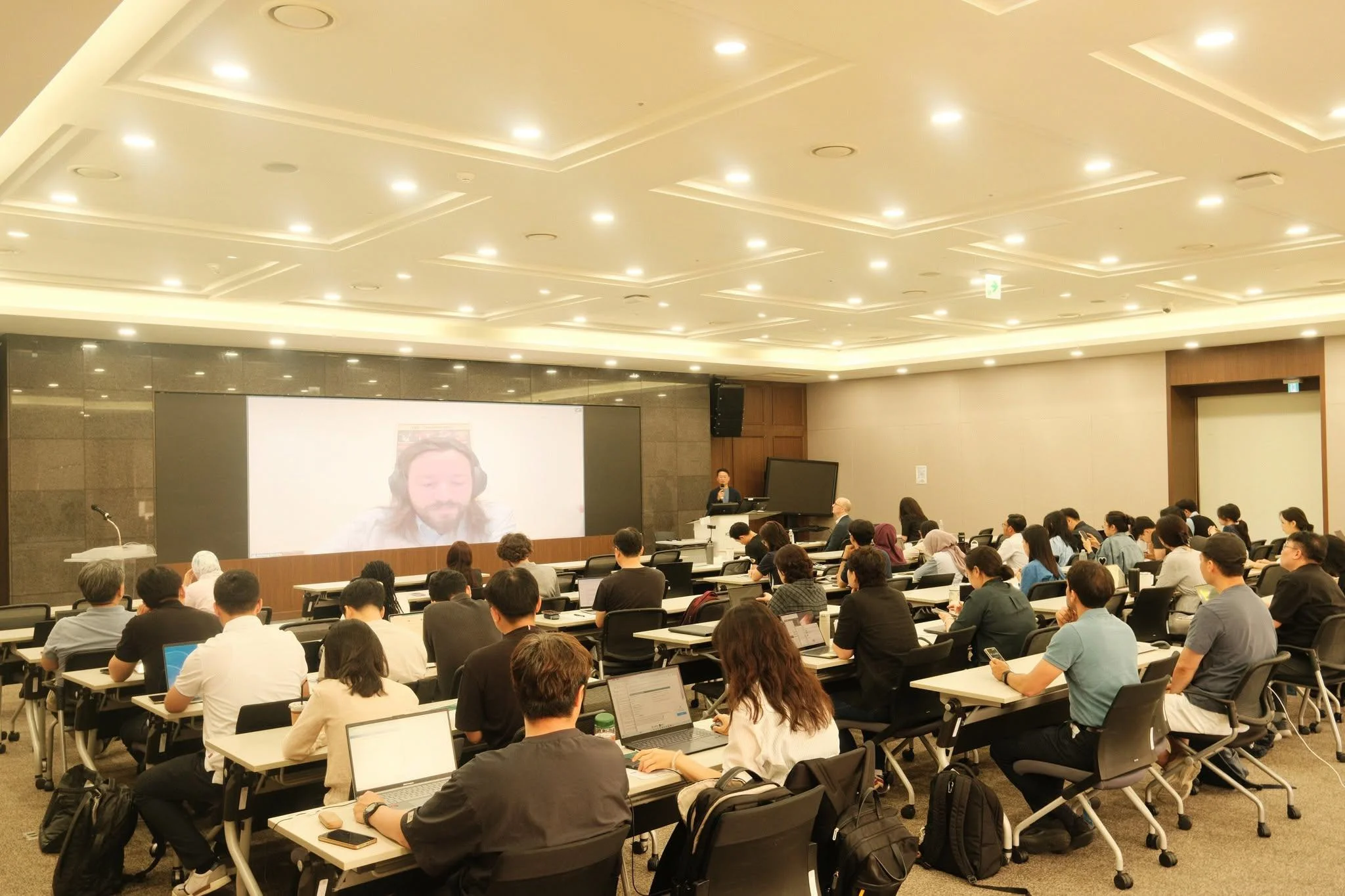
In the keynote session, Professor Anthony Harding (Georgia Institute of Technology) and Professor Charlie Wilson (University of Oxford) discussed how AI will shape various aspects of our lives, examining its effects across different scales from economic productivity and modes of goods and services production to overall energy demand.
In the following session, Professor Yeong Jae Kim (KDI School) explored how data centre construction reshapes local industries, while Professor Changkeun Lee (KDI School) examined how workers incorporate AI through augmentation and automation, discussing the time savings generated and their second-order effect on organisations.
In the final session, Mr. Javier González-Ruiz (Politecnico di Milano) and Ms. Hyunju Lee (KDI School) presented applications of AI in energy research, including the use of machine learning to model long-term electricity market or identify data centres from satellite imagery, while Professor Seong Eun Kim (Seoul National University of Science and Technology) addressed how next-generation AI data centres, which are expected to be more power-dense and larger in scale, will affect the environment, energy consumption and beyond.
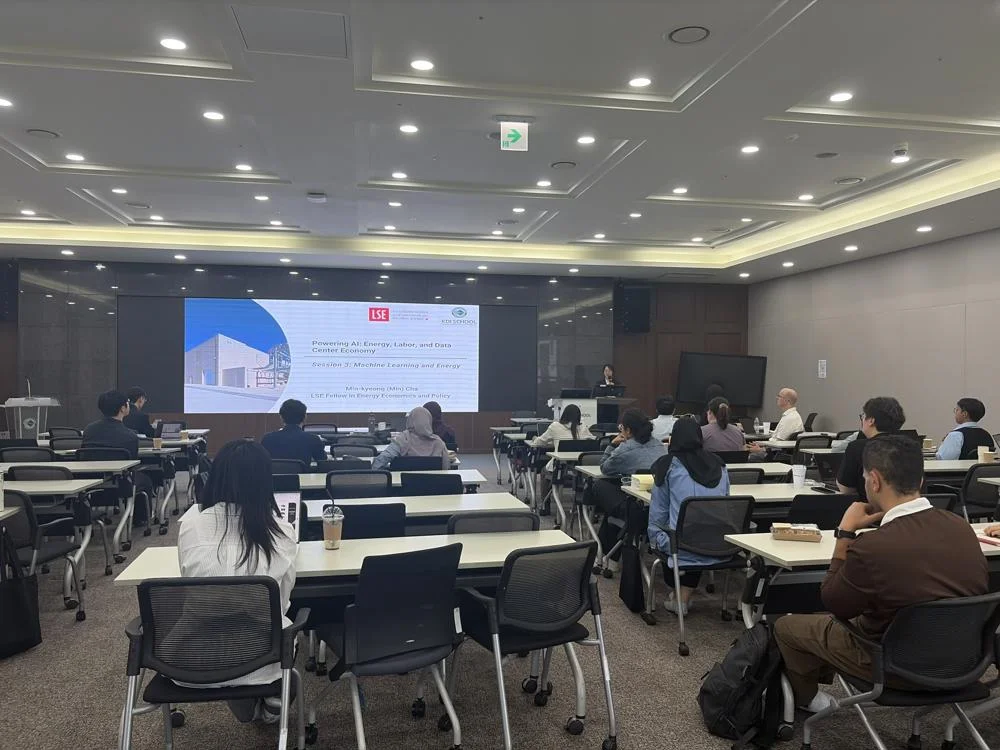
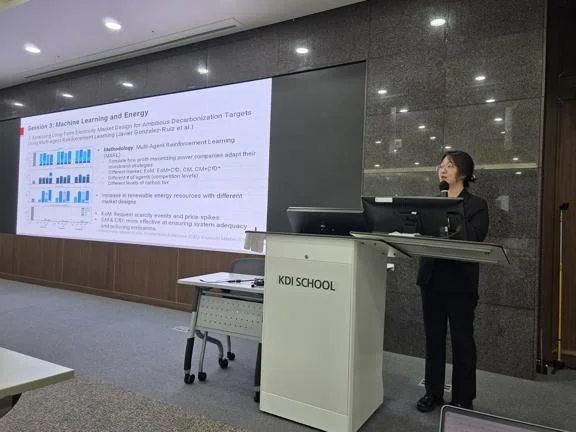
Dr Cha (LSE) facilitated conversation between participants as a discussant for the sessions related to machine learning and energy. Dr Cha reflected, “Overall, the workshop fostered rich discussion and offered a broad perspective on how AI is reshaping society across dimensions of environment, energy, industry, and workplaces. It laid valuable groundwork for future research on AI and energy, and provided an excellent opportunity for researchers across fields to connect and exchange ideas.”
Dr Cha’s event collaborator, Professor Yeong Jae Kim (KDI School), found the event to advance momentum in conversations related to the energy economics of AI, sharing: "It was an absolute privilege to co-host a workshop with LSE. I look forward to future opportunities to collaborate again!"
Dr Cha’s involvement in the collaboration was funded through the LSE Global Research Fund, a funding scheme that helps researchers connect globally, establish or strengthen research links, and enable collaborative activity.
Want to stay up to date with LSE’s International Strategy and Academic Partnerships team? Be the first to know about international projects by subscribing to our newsletter.
Photo Credit: KDI School