

Public events
Upcoming public events

In conversation with Reni Eddo-Lodge
Co-hosted with LSE Students' Union
Thursday 8 October 2026, 6.30pm - 8.00pm. In-person and online public event. LSE campus (venue TBC to ticketholders).Speaker:
Reni Eddo-Lodge, Journalist, Author, and PodcasterChair:
Professor Larry Kramer, President and Vice Chancellor of LSEJoin us for this special event with award winning journalist, author, and podcaster Reni Eddo-Lodge to celebrate Black History Month. Reni Eddo-Lodge's debut nonfiction book, Why I’m No Longer Talking to White People About Race, was published in June 2017 to critical acclaim and spent more than 52 weeks in the Sunday Times bestseller list. In 2020, she made history by becoming the first Black British author to have written the number one selling book in the UK book charts.
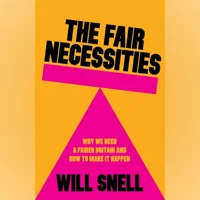
Why we need a fairer Britain
Wednesday 14 October 2026, 6.30 to 8.00pm. In-person and online public event. Pankhurst House, Room G.01, LSE campus.Speakers:
Will Snell, Founding Chief Executive, Fairness Foundation
Professor Aaron Reeves, Professor of Sociology, Department of Sociology, LSE
Sarah Kerr, Hallsworth Research Fellow, University of Manchester, and Narratives and Policy Lead in the Transforming Wealth Lab, Joseph Rowntree FoundationChair:
Professor Armine Ishkanian, Professor of Social Policy, Department of Social Policy and Excecutive Director, Atlantic Fellows for Social and Economic Equity, LSEBritain is grossly unfair, disfigured by a broken social contract and unsustainable levels of inequality. How can we build a more equal country? In The Fair Necessities, Will Snell argues that unfair inequality undermines everything from faith in government to economic growth, yet a fairer country is within reach. Drawing on cutting-edge research and interviews with public figures, the book sets out the moral, political and policy cases for tackling inequality and explains how to build a broad, cross-party consensus for a fairer society.
Bringing together leading experts from academia, policy, and civil society, this event will examine how inequality lies at the heart of our problems in contemporary Britain. Our speakers will explore what a genuinely fair society might look like — from the reform of public services and the tax system to housing, work, and opportunity — and ask what it will take to make it happen.
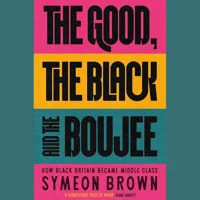
The good, the black and the boujee: how black Britain became middle class
Tuesday 20 October 2026, 6.30 to 8.00pm. In-person and online public event. Hong Kong Theatre, Clement House, LSE Campus.Speakers:
Symeon Brown, Home Affairs Correspondent, Channel 4 News
Dr Clive Chijioke Nwonka, Associate Professor in Film, Culture and Society, School of European Languages, Culture and Society and Visiting Senior Fellow, LSE III
Baroness Lola Young of Hornsey, Member of the House of Lords and Chancellor of the University of NottinghamChair:
Professor Naila Kabeer, Emeritus Professor of Gender and Development, LSE Department of International DevelopmentA landmark portrait of modern Britain, The Good, the Black and the Boujee is a critical reckoning with the pursuit of ‘black excellence’. From broadcasters and lawyers to content creators, actors and politicians, black professionals appear to have become leaders of Britain’s most visible, profitable and culture-defining industries. Yet educated black professionals say racism is entrenched and rising to the top has never been harder.
Symeon Brown unravels the web of class and gender that shapes black Britain today, reconciling cultural and political conversations surrounding black British identity with the present reality. Whether dissecting the preference of educated black women to be single, the rise of black Conservative power brokers, or how the assimilation of black elites masks the barriers facing the black working class, Brown renders visible the psychological and material cost of class aspiration. This event will explore how race, capital and identity entwine – and what is lost, gained and discovered through social mobility.
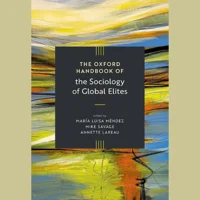
The sociology of elite power today: introducing the Oxford Handbook of the Sociology of Global Elites
Co-hosted with LSE Department of Sociology
Thursday 22 October 2026, 6.30 to 8.00pm. In-person and online public event. Hong Kong Theatre, Clement House, LSE campus.Speakers:
Professor Will Davies, Professor of Politics, Goldsmiths University of London
Caroline Knowles, Honorary Professor, School of Society and Environment, Queen Mary University of London
Professor María-Luisa Mendez, Professor, Institute of Urban and Territorial Studies, Pontifical Catholic University of Chile; Director of the Nucleus Millennium Insecurity and Urban Cohesion (NUMIC)
Professor Mike Savage, Professorial Research Fellow, LSE International Inequalities Institute
Professor Annette Lareau, Professor (emeritus), Department of Sociology, University of PennsylvaniaChair:
Professor Aaron Reeves, Professor of Sociology, LSEThis event will bring a range of eminent speakers together to reflect on the nature of elite power in the 2020s. The panel will highlight cutting-edge scholarship recently published in the Oxford Handbook of the Sociology of Global Elites. A key focus will be on the challenge that elites pose to democratic political regimes, and what elites do to control multiple spheres from the shape of cities to regional politics. Students, academic researchers and wider public audiences who are concerned about elites and changing forms of power today will find the event of great interest. No prior knowledge of the Handbook is expected.
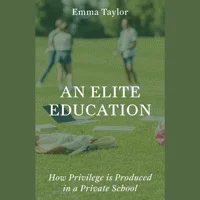
How do Britain’s private schools reproduce privilege?
Co-hosted by LSE Department of Sociology
Wednesday 28 October 2026, 6.30 to 8.00pm. In-person and online public event. Auditorium, Centre Building, LSE Campus.Speakers:
Tiwa Adebayo, Journalist, Bloomberg News
Professor Annette Lareau, Emeritus Professor, Department of Sociology, University of Pennsylvania
Professor Lee Elliot Major, Professor of Social Mobility, University of Exeter and Associate, Centre for Economic Performance, LSE
Dr Emma Taylor, Lecturer in Education, King’s Academy, King’s College LondonChair:
Professor Mike Savage, Professorial Research Fellow, LSE IIIIt is no secret that the alumni of Britain’s elite schools remain disproportionately represented in positions of power and influence. But what is it about these institutions that gives their students such a lasting advantage? This event marks the launch of An Elite Education: How Privilege is Produced in a Private School by Emma Taylor.
Drawing on an in-depth ethnography of one of Britain’s most prestigious private schools, Taylor explores how these institutions cultivate the dispositions that propel students into elite universities and professions. Central to the book is the concept of audacity, a carefully nurtured sense of privilege that is often mistaken for merit. Beneath the formal façade of architecture, traditions and rituals lies a complex web of everyday interactions through which students learn to assert themselves without fear of consequence. Bringing together a panel of key scholars and activists in the field, this event will examine how such taken-for-granted dispositions continue to shape access to opportunity and the reproduction of privilege in Britain.

The Harms of Extreme Wealth: Launching the Evidence Review
Co-hosted by the Centre for Analysis of Social Exclusion
Tuesday 3 November 2026, 6.30 to 8.00pm. In-person and online public event. Auditorium, Centre Building, LSE Campus.Speakers:
Tania Burchardt, Associate Director, Centre for Analysis of Social Exclusion (CASE) and Professor, LSE Department of Social Policy
Sunil Kapur, Member of Patriotic Millionaires
Catherine West, MP for Hornsey and Friern BarnetChair:
Professor Francisco H G Ferreira, Amartya Sen Professor of Inequality Studies and Director of the International Inequalities Institute, LSEHow much wealth is too much? Should it be possible for trillionaires to exist? And what are the consequences for the rest of society?
Growing attention is being paid to the idea of an Extreme Wealth Line: a threshold beyond which the concentration of wealth may cause undue harm to democracy, the economy, society and the environment. While it is now widely accepted that extreme wealth concentration can have damaging effects, there is less agreement about the point at which those harms become significant enough to warrant intervention.
This event marks the launch of a new Evidence Review on the Harms of Extreme Wealth. Bringing together insights from the latest research, the review examines what research across political science, economics and sociology tells us about how extreme wealth causes harm, and whether the evidence identifies ‘tipping points’ that could inform the setting of an Extreme Wealth Line.
Addressing the adverse consequences of inequality
John Hills Memorial Lecture
Wednesday 25 November 2026, 6.30 to 8.00pm. In-person and online public event. Sheikh Zayed Theatre, LSE Cheng Kin Ku Building.Speaker:
Professor Sir Richard Blundell, David Ricardo Chair of Political Economy, UCLChair:
Professor Francisco H G Ferreira, Amartya Sen Professor of Inequality Studies and Director of the International Inequalities Institute, LSEIn many advanced economies, including the UK, progress towards a fairer society appears to have stalled. Deep structural forces – including weak earnings growth, rising wealth divides, regional disparities and declining social mobility – are reshaping life chances and fuelling political discontent. Drawing on the IFS Deaton Review of Inequalities, this lecture examines the dimensions of inequality spanning income, work, wealth, place and health.
It will focus on three key challenges: the entrenched inequalities in wealth and housing between generations and places, the gap in skills and human capital among those with low levels of educational attainment, and the extreme regional divides that are increasingly harmful to both social mobility and productivity. This inaugural John Hills Memorial Lecture argues that tackling these concerns requires going beyond redistribution through the tax and benefit system. It demands a new approach to work, skills, and innovation, with a focus on policies that shape opportunities before inequalities take root.
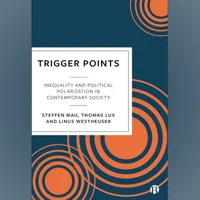
Trigger points: inequality and political polarisation in contemporary society
Tuesday 8 December 2026, 6.30 to 8.00pm. In-person and online public event. Auditorium, Centre Building, LSE Campus.Speakers:
Professor Steffen Mau, Director, Max Planck Institute of Political and Social Science and Professor of Macrosociology, Humboldt-University of Berlin
Dr Sacha Hilhorst, Hallsworth Fellow, University of Manchester
Professor Jonathan Hopkin, Professor of Comparative Politics in the Department of Government at LSEChair:
Professor Naila Kabeer, Emeritus Professor of Gender and Development, Department of International Development, LSEToday’s political debates are fiercely polarised. But looking beyond the headlines, ordinary citizens hold much more nuanced, less divided views. Drawing on rich survey data and group discussions, Trigger Points maps four major areas of conflict: migration, climate change, diversity, and economic justice. Across these conflicts, most citizens take positions that are middle-of-the-road, contradictory, or undecided. It is only certain ‘trigger points' – like gendered pronouns or refugee admissions – that predictably ignite tensions and deep disagreement. Political entrepreneurs know this and weaponize trigger points for their agenda. Yet the real key to contemporary conflicts, the book argues, lies in social inequality.
After examining the key insights from the book, our panel will reflect on the lessons learned for the UK context and what the book’s arguments reveal about inequality, polarisation and public debate in Britain today.
Previous public events
Catch up on all of our past events here.