

Climate Emergency and the Future of Civic Space

The impetus for securitizing climate change is often about prioritizing the issue and galvanizing transformative action for mitigation and adaptation. The reality of securitizing an issue, however, is that it tends to promote militarized and authoritarian responses to address real or perceived existential threats.
This project of research and engagement seeks to foster understanding of the risks of securitizing the climate crisis for the future of civic space and human rights and to identify ways to prevent and mitigate these risks through disruption and innovation.
Drawing on lessons from the war on terror, the first phase of the project modelled three pathways to securitizing the climate crisis - prioritization, militarization, and authoritarianisation – and identified some of the risks they create for human rights and civic space. Our findings and recommendations are elaborated in the report Climate Emergency and the Future of Civic Space: Lessons from the War on Terror.
The current phase of the project draws on the concept of civic ecosystemsto map, analyze, and begin to catalyze the ecosystem of actors, ideas and practices that can address the risks of militarized and authoritarian responses to the climate crisis. It investigates six components of the climate securitization ecosystem:
The aim is to develop an analytical tool and practical resource for activists, funders, epistemic and policy communities that can assist in identifying openings and junctures where disruption of the pathways to securitizing climate change may be possible and innovation may open up alternative pathways.
The project is funded by the Funders Initiative for Civil Society at Global Dialogue and carried out in collaboration with Civic Futures.
- Report Launch 23rd January 2025: Climate Emergency and the Future of Civic Space. Recording available here.
.

Dr. Iavor Rangelov, Principal Investigator
Iavor Rangelov is Research Fellow and Director of the Civic Ecosystems and Social Innovation Programme at the Conflict & Civicness Research Group, LSE IDEAS, and Co-Founder of the Civic Ecosystems Initiative. His current research explores and elevates the role of civic ecosystems and ecosystem thinking in fostering social innovation to address global challenges such as climate change, conflict, and crises.

Dr. Marika Theros, Co-Investigator
Marika Theros is Policy Fellow at the Conflict & Civicness Research Group, LSE IDEAS, Executive Director of the Civic Engagement Project and Co-Founder of the Civic Ecosystems Initiative. Her current research and advocacy apply an ecosystem lens and approach to investigating and catalyzing social change, mobilization and innovation across intersecting global-local scales and challenges.

Dr. Gerd Leipold, Senior Advisor
Gerd Leipold was the Director of Climate Transparency until March 2025. Previously, he served as Executive Director of Greenpeace International (2001-2009) and Director of Greenpeace Germany (1982-1987). He studied physics in Munich and Physical Oceanography at the University of Hamburg. He gained his PhD at the Max Planck Institute for Meteorology in Hamburg, where his PhD advisor was Prof. Klaus Hasselmann, Nobel Prize winner for physics in 2022.
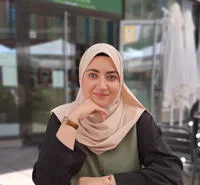
Madihah Karim, Programme Manager
Madihah Karim is Programme Manager of the Conflict and Civicness Research Group at LSE IDEAS. She manages the research group’s policy-oriented projects, overseeing partner relations, financial management, and output delivery for six high impact projects. She holds a Masters in Theory and History of International Relations from the LSE.

Oriane Bui, Research Intern
Oriane Bui is a graduate student at the London School of Economics, pursuing an MSc in Environment and Development. She is passionate about the intersection of human rights and climate change and has experience in advocacy and investigative research.

Firishtah Ghyara, Research Intern
Firishtah Ghyara is a graduate student at the London School of Economics, pursuing an MSc in Geographic Data Science. She is deeply committed to advancing social justice and human rights in the context of the climate crisis. Her work currently focuses on researching civic actors, ideas and practices that push back on securitization of climate change.

Merle Riebandt, Research Intern
Merle Riebandt is a graduate student at the London School of Economics, pursuing an MSc in Environmental Policy and Regulation, and previously studied Political Science at the University of Amsterdam. She has worked on climate transparency with GIZ (Deutsche Gesellschaft für Internationale Zusammenarbeit) and written on climate governance for an environmental NGO. As a climate activist, she is particularly interested in how the increasing securitization of climate change will affect civic spaces.