
GSoS Student Blog: Do Mandatory Climate Disclosures Affect Board Behaviour?
GSoS Student Blog: Do Mandatory Climate Disclosures Affect Board Behaviour? My experience as a research assistant at LSE.
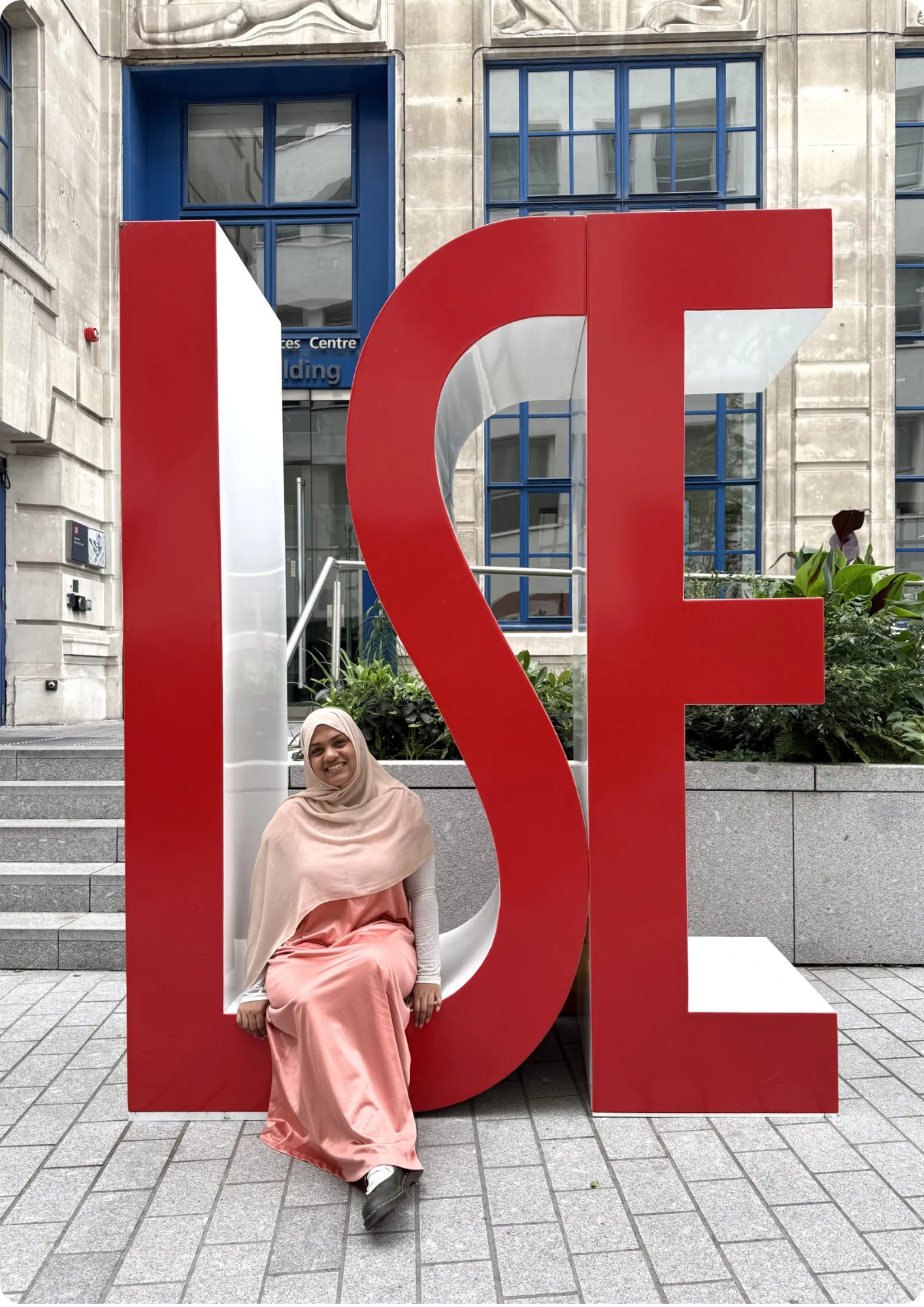
By Raisah Khan, MSc in Culture, Justice and Environment
I’ve often thought to myself: how can policy be utilized effectively to foster sustainability? Living in the United States and working at a USAID contractor during the 2025 Presidential transition, I witnessed government programs meant to support communities, ecosystems, and the climate being dismantled. As the world transitioned into this unprecedented time amidst the ever-present climate crisis, academics, policymakers, and industry professionals alike have sought alternative solutions to addressing sustainability challenges.
Eager to explore this question beyond the classroom, I looked for opportunities to engage with sustainability policy in practice. Through the GSoS Student Newsletter, which highlights sustainability events and opportunities across LSE, I secured a part-time Research Assistant position on the project, Do Mandatory Climate Disclosures Affect Board Behaviour?, under Dr. Simon Whitney, Dr. Richard Perkins, Hilary Eastman, and Professor Tom Gosling. The project explores how regulatory frameworks can drive organisational change, focusing on climate-related financial disclosures and their growing importance in sustainable finance and corporate responsibility.
Over the past four months, I have supported the project while deepening my understanding of the UK and international policy landscape. Along with my co-research assistant Natalie Ho, I utilised NVivo software to qualitatively code the extensive interview data collected by the research team during interviews with key personnel from a variety of companies. We applied a thorough coding framework to analyse how mandatory climate disclosures may drive firms’ climate action. Through this process, our team has been able to elucidate whether mandatory disclosure policies, particularly the TCFD disclosure requirements in the UK, actually help or hinder sustainability.
My role as a research assistant has allowed me to supplement my understanding of larger regulatory systems and apply my qualitative research skills in an important setting—the robust sustainability mechanisms present in the UK and beyond. I have done a deep dive into the key pillars of the TCFD framework and how they may influence internal and external stakeholders in different ways. The qualitative data has allowed me to understand complex perceptions from diverse actors, complemented by the quantitative data and analysis we have gathered to measure and compare the extent of those influences.
I understand that the work done through mandatory disclosures is not exhaustive and exists within a larger ecosystem of measures that must be taken to address the climate crisis. Our project is currently producing a policy briefing for UK and international regulators to provide recommendations for sustainability disclosures moving forward. I hope to see the work we've done contribute to greater sustainability efforts in the UK and beyond.
My degree in LSE’s Department of Anthropology finds its relevance in policy analysis. When considering how people engage with each other and the natural world, it requires attention to diverse groups at all scales. By combining my studies with policy research, I have been able to bring together a bottom-up, anthropological understanding of communities with an analysis of institutions and policy. Exploring different facets of environmental action, has made me attentive to how environmental policy interfaces not only with corporate regulation, but also with the social sciences, anthropology, and Indigenous scholarship. Together, these perspectives have shown me that meaningful progress towards sustainable futures requires both community-led action and systemic change, both of which provide a path towards sustainable futures.
I am incredibly grateful to the Global School of Sustainability for providing me with a scholarship that has enabled me not only to study at LSE, but also to contribute to this research project. Being part of this scholarship cohort has allowed me to connect with like-minded peers, industry professionals, and renowned academics. I have valued the many opportunities to grow and apply my knowledge in interdisciplinary settings, and I hope to continue working in these spaces to help build a more just and sustainable future. All praise is due to God for every step of my journey!