

Reboot development: the economics of a liveable planet
Speakers

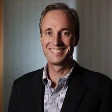
Chair
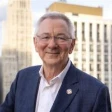
Follow the discussion on the World Bank’s latest report revealing how environmental degradation—through land loss, air and water pollution—affects global growth and human potential.
Event resources
Drawing on new data, the report finds that 90% of the world lives with either degraded land, unhealthy air or water stress which slows growth and hinders economic opportunity. In low-income countries, 80% of people live with all three. The report examines how the loss of forests cuts rainfall, dries soils, and worsens droughts, costing billions of dollars. It identifies the nitrogen paradox where fertilizers boost yields but overuse in some regions harms crops and ecosystems, costing as much as $3.4 trillion annually. And it shows how air and water pollution silently damage health, productivity, and cognition, sapping human potential. However, across all three systems change is possible and worth it.
We will be joined by Richard Damania, lead report author and the World Bank’s Chief Economist, Planet and Martin Raiser the World Bank’s Senior Representative for European Economic Cooperation.’
Meet our speakers and chair
Richard Damania is the Chief Economist of the Sustainable Development Practice Group, effective March 1, 2020. He has held several positions in the World Bank including as Senior Economic Advisor in the Water Practice, Lead Economist in the Africa Region’s Sustainable Development Department, in the South Asia and Latin America and Caribbean Regions of the World Bank.
Mr. Martin Raiser became the World Bank’s Senior Representative for European Economic Cooperation on July 1, 2025. As the World Bank’s Senior Representative for European Economic Cooperation and Head of Office in Paris, he provides strategic leadership to the engagement with the EU institutions and EU member states to enhance sustainable partnerships.
Sir Andrew Steer is Professor in Practice in the Global School of Sustainability at LSE. He is a leader in sustainable development and climate change advocacy. Sir Andrew has served most recently as the founding President and CEO of the Bezos Earth Fund. Previously the President and CEO of World Resources Institute and has held significant positions at the World Bank, including Special Envoy for Climate Change, and was Director General at the former UK Department for International Development (DFID). He has recently been appointed to the role of Chair of the Royal Botanic Gardens, Kew as of February 2026.
More about this event
Launched in 2025, the Global School of Sustainability at LSE (GSoS) is the centre of social science expertise for sustainability impact at LSE. We work in partnerships across the LSE community and beyond to advance pioneering sustainability research and global policy engagement.
Any questions?
If you have a query contact us at GSoS.comms@lse.ac.uk or take a look at the information below.
Additional information
Many speakers at LSE events also write for LSE Blogs, which present research and critical commentary accessibly for a public audience. Follow British Politics and Policy, the Business Review, the Impact Blog, European Politics and Policy and the LSE Review of Books to learn more about the debates our events series present.
If the event is live streamed, automated live captions will be available. Please note that this feature uses Automatic Speech Recognition (ASR) technology, or machine generated transcription and is not 100% accurate.
Photographs are regularly taken at LSE events both by LSE staff and members of the media. Photographs from events taken by LSE staff are often used on LSE's social media accounts.
Please contact us if you would like to request a press seat or have a media query about this event, email GSoS.comms@lse.ac.uk. Please note that press seats are usually allocated at least 24 hours before each event.
We aim to make all LSE events available as a podcast subject to receiving permission from the speaker/s to do this, and subject to no technical problems with the recording of the event. Podcasts are normally available 1 week after the event. Podcasts and videos of past events can be found online.
Follow the Global School of Sustainability on LinkedIn and Bluesky for the latest news and updates.
Event updates and other information about what’s happening at GSoS can be found on the GSoS events page.
Livestreams and archive videos of past public lectures are shared on the LSE YouTube channel while event podcasts can be found on the LSE Player.
If you are planning to attend this event and would like details on how to get here and what time to arrive, as well as on accessibility and special requirements, please email us at GSoS.comms@lse.ac.uk. LSE aims to ensure that people have equal access to these public events, but please contact the events organiser as far as possible in advance if you have any access requirements so that arrangements, where possible, can be made. If the event is ticketed, please ensure you get in touch in advance of the ticket release date. Access Guides to all our venues can be viewed online.
LSE has now introduced wireless for guests and visitors in association with 'The Cloud', also in use at many other locations across the UK. If you are on campus visiting for the day or attending a conference or event, you can connect your device to wireless. See more information and create an account at Join the Cloud.
Visitors from other participating institutions are encouraged to use eduroam. If you are having trouble connecting to eduroam, please contact your home institution for assistance.
The Cloud is only intended for guest and visitor access to wifi. Existing LSE staff and students are encouraged to use eduroam instead.
From time to time there are changes to event details so we strongly recommend that if you plan to attend this event you check back on this listing on the day of the event.
Whilst we are hosting this listing, LSE Events does not take responsibility for the running and administration of this event. While we take responsible measures to ensure that accurate information is given here this event is ultimately the responsibility of the organisation presenting the event.
LSE holds a wide range of events, covering many of the most controversial issues of the day, and speakers at our events may express views that cause offence. The views expressed by speakers at LSE events do not reflect the position or views of the London School of Economics and Political Science.