

Sustainability Public Lecture Series

Explore the complexities of sustainability
Launched in 2024, the Department of Geography and Environment’s ‘Sustainability’ public lecture series explores the complexities of sustainability through a social-science lens.
Drawing on our expertise in environmental economics, biodiversity, climate change, development, environmental justice, political ecology, and sustainable finance, each lecture will deepen your understanding of sustainability and its critical role in shaping our world.
Upcoming events

Can global value chains go green? Trade, investment and the net-zero development challenge
Wednesday 18 November 2026
Speakers: Erik Berglöf, Riccardo Crescenzi, Oliver Harman, Ralph de Haas, Daria Taglioni
Can global trade and investment support economic development while also advancing sustainability? Or is there an inherent trade-off between deeper international integration and environmental goals, one that calls for a more selective approach to globalisation, potentially slowing the pace of development?
Bringing together global leaders from international organisations and leading academic institutions, the discussion considers how countries and regions might use the green transition to build capabilities and support development that is both economically and environmentally sustainable.
Climate, nature and prosperity
Thursday 10 December 2026
Speakers: Geoffrey Heal, Eugenie Dugoua
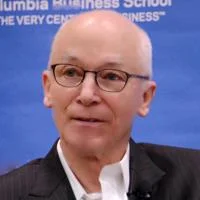
Climate change and biodiversity loss are often treated as separate environmental crises. But both raise a deeper economic question: how should societies value the natural systems on which prosperity depends? In this public lecture, Geoff Heal will draw on his work in environmental and resource economics to explore the links between climate, nature, markets and long-term economic welfare.
The lecture will ask what economics can contribute to some of the central public debates of our time: how to manage natural capital, how to design markets and policies that reflect environmental limits, and how to reconcile economic prosperity with the protection of the natural world.
Past events and podcasts

Cooling a warming India: ecology and equity in our time
Tuesday 12 May 2026
Speaker: Amita Baviskar, Ashoka University
Chair: Hyun Bang Shin, LSEClimate change has made episodes of extreme heat more frequent and intense. As north Indian cities prepare to tackle this crisis, they must contend with systemic vulnerabilities built into the urban environment that privatised, market-led solutions have exacerbated.
This talk will examine housing and work, sleep and sociality, as key aspects of everyday life where strategies to create more equitable and sustainable access to cooling must focus.
A podcast of this event is available to download from Cooling a warming India: ecology and equity in our time
A video of this event is available to watch at Cooling a warming India: ecology and equity in our time

Creative Reuse of Cities
Thursday 19 February 2026
Speaker: Ondrej Chybik
Discussants: Martina Manara, Hyun Bang Shin
Chair: Olmo SilvaThis event will explore how cities can evolve sustainably through creative reuse - reimagining existing spaces to reduce environmental impact while preserving their character, history, and community identity.

Can natural capital be replaced? How the weak versus strong sustainability divide will shape our common future
Tuesday 10 February 2026
Speaker: Eric Neumayer, LSE
This event celebrates the open access publication of the 5th edition of Weak versus Strong Sustainability. First published in 1999, the book has remained a reference point in the debate on sustainable development. Eric Neumayer will discuss how the question of whether natural capital can be substituted by other forms of capital lies at the heart of the controversy.

Is it possible to achieve fair and inclusive prosperity without a green agenda?
Monday 17 February 2025
Speaker: Teresa Ribera, European Commission Executive Vice-President for a Clean, Just and Competitive Transition
Join us for this special event at which European Commission Executive Vice-President Teresa Ribera will take to the stage at LSE. The event offers a unique opportunity to engage with one of Europe's leading policymakers in a conversation that will shape the future of economic and environmental policy.
A podcast of this event is available to download from Is it possible to achieve fair and inclusive prosperity without a green agenda?
A video of this event is available to watch at Is it possible to achieve fair and inclusive prosperity without a green agenda?

Sustainability and Prosperity in the Age of Ecological Scarcity
Monday 3 February 2025
Speaker: Edward B. Barbier
We have entered a new era of increasing ecological scarcity and rising global environmental risks - global warming, land use change and biodiversity loss, freshwater scarcity, and deteriorating oceans and coasts.
Drawing on his book, Scarcity and Frontiers, Edward Barbier argues that how economies choose to exploit natural resources is critical to both their sustainability and prosperity. In past eras, a critical driving force behind global economic development has been the response of society to the scarcity of key natural resources. By raising the cost of exploitation and use, scarcity creates incentives to innovate and substitute. However, economies also avoid scarcity by obtaining and developing new ‘frontiers’ of vital resources. How these two responses play out often determines which economies emerge as leaders.
A podcast of this event is available to download from Sustainability and prosperity in the age of ecological scarcity.
A video of this event is available to watch at Sustainability and prosperity in the age of ecological scarcity.
White Nationalism and GOP Climate Obstruction
Thursday 10 October 2024
Speaker: Laura Pulido
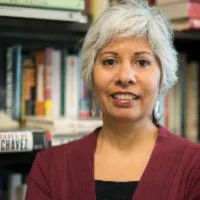
In this talk, Laura Pulido considers the relationship between U.S. white nationalism and the Republican Party’s (GOP) record of climate obstruction.
Though the fossil fuel industry’s campaign of disinformation has been well-documented, less understood are the politicians who do its bidding. While many assume the state is simply implementing the desires of the fossil fuel industry, what is called, regulatory capture, this assumes a nonracial state.
By focusing on three historical moments: the Tea Party movement (2009-15), the Trump Presidency (2015-19), and the War on Wokeness (2021-present), Laura shows how white nationalism supports climate obstruction.
A podcast of this event is available to download here.