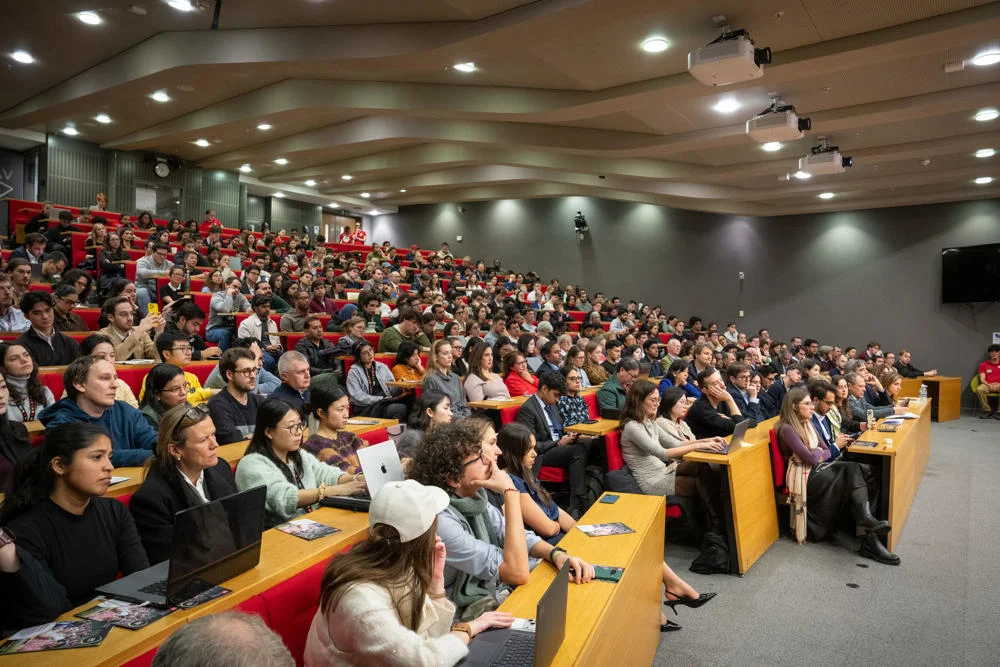

Reversed realities revisited: 30 years of thinking in gender and development
Speakers


30 years ago, Naila Kabeer published Reversed Realities: Gender Hierarchies in Development Thought, which became a landmark study in the scholarship on gender and development. It is widely regarded as a (if not the) key text in the field of Feminist Development Studies. It provided path-breaking perspectives on the politics of development knowledge production, specifically about how excluding feminist knowledge shaped development practice and unequal outcomes.
Several leading thinkers will join us in the fields of feminist economics and development studies to reflect on the legacies of this groundbreaking text and what has changed 30 years on.
Meet our speakers and chair
Andrea Cornwall is Professor of Global Development and Anthropology at King's College London.
Naomi Hossain (@nomhossain) is Global Research Professor in the Department of Development Studies at SOAS.
Naila Kabeer (@N_Kabeer) is Professor of Gender and Development at the Department of Gender Studies and Department of International Development at LSE.
Erin Lentz is an associate professor at the LBJ School of Public Affairs at The University of Texas at Austin. She teaches on research and empirical methods, development policy, gender and development, and food policy. Her research explores food security; early warning systems; gender, nutrition, and agriculture linkages; and U.S. food aid and food assistance policies.
David Lewis is Professor of Anthropology and Development in the Department of International Development at LSE.
More about this event
This event will be available to watch on LSE Live. LSE Live is the new home for our live streams, allowing you to tune in and join the global debate at LSE, wherever you are in the world. If you can't attend live, a video will be made available shortly afterwards on LSE's YouTube channel.
The Department of Geography and Environment (@LSEGeography) is a centre of international academic excellence in economic, urban and development geography, environmental social science and climate change.
The Department of International Development (@LSE_ID) promotes interdisciplinary postgraduate teaching and research on processes of social, political and economic development and change.
Hashtag for this event: #LSEEvents
Podcast & video
A podcast of this event is available to download from Reversed realities revisited: 30 years of thinking in gender and development.
A video of this event is available to watch at Reversed realities revisited: 30 years of thinking in gender and development.
Podcasts and videos of many LSE events can be found at the LSE Public Lectures and Events: podcasts and videos channel
Many speakers at LSE events also write for
, which present research and critical commentary accessibly for a public audience. Follow
, the
, the
,
and the
to learn more about the debates our events series present.
Automated live captions are available at this live event. Please note that this feature uses Automatic Speech Recognition (ASR) technology, or machine generated transcription and is not 100% accurate.
Photographs taken on behalf of LSE are often used on our social media accounts, website and publications. At events, photographs could include broad shots of the audience and lecture theatre, of speakers during the talk, and of audience members as they participate in the Q&A.
If you are photographed participating in an event Q&A but would not like your photograph to be stored for future use, please contact events@lse.ac.uk.
We aim to make all LSE events available as a podcast subject to receiving permission from the speaker/s to do this, and subject to no technical problems with the recording of the event. Podcasts are normally available 1 week after the event.
of past events can be found online.
Follow LSE public events on X for the latest updates on all our events and ticket releases.
Livestreams and archive videos of past lectures are shared on our YouTube channel while event podcasts can be found on the LSE Player.
Event updates and other information about what’s happening at LSE can be found on our Facebook page and for live photos from events and around campus, follow us on Instagram.
Attending our events in-person or online? Join the conversation using #LSEEvents.
If you are planning to attend this event and would like details on how to get here and what time to arrive, as well as on accessibility and special requirements, please refer to
. LSE aims to ensure that people have equal access to these public events, but please contact the events organiser as far as possible in advance if you have any access requirements so that arrangements, where possible, can be made. If the event is ticketed, please ensure you get in touch in advance of the ticket release date.
Access Guides to all our venues can be viewed online
.
LSE has now introduced wireless for guests and visitors in association with 'The Cloud', also in use at many other locations across the UK. If you are on campus visiting for the day or attending a conference or event, you can connect your device to wireless. See more information and create an account at Join the Cloud.
Visitors from other participating institutions are encouraged to use
. If you are having trouble connecting to eduroam, please contact your home institution for assistance.
The Cloud is only intended for guest and visitor access to wifi. Existing LSE staff and students are encouraged to use
instead.
LSE holds a wide range of events, covering many of the most controversial issues of the day, and speakers at our events may express views that cause offence. The views expressed by speakers at LSE events do not reflect the position or views of The London School of Economics and Political Science.
From time to time there are changes to event details so we strongly recommend that if you plan to attend this event you check back on this listing on the day of the event.
LSE holds a wide range of events, covering many of the most controversial issues of the day, and speakers at our events may express views that cause offence. The views expressed by speakers at LSE events do not reflect the position or views of the London School of Economics and Political Science.
Subscribe to the LSE Events newsletter