

Living Palestine: Gender, Settler Colonialism, and Palestinian Political Life
Speaker

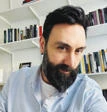
This talk brings together insights from two interrelated works—Palestinian Refugee Women from Syria: Decolonizing the Geopolitics of Displacement and the forthcoming Living Palestine: A Family History from Balfour to Nakba, to explore how Palestinian women experience and narrate political life under conditions of settler colonialism and forced displacement.
Drawing on fieldwork with Palestinian refugee women displaced from Syria to Jordan, the talk examines how structures of anti-Palestinianism, which is embedded in refugee governance, humanitarian aid, and state policies, produce layered forms of violence. These women’s voices reveal how the Nakba continues to shape their everyday lives, not as a past event but as a watershed and persistent political reality.
Through a storytelling methodology, Living Palestine offers an intimate and grounded account of how Palestinian women remember and transmit the political realities of settler colonialism, from the British Mandate period through the forced displacement of 1948/9, and into life in exile across camps in Jordan. These stories are not shared as passive memories of the past, but as active and embodied knowledge systems that challenge dominant narratives and reframe the ways in which we understand Palestinian history and political subjectivity.
By bringing these two works into conversation, the talk foregrounds the power of Palestinian women’s voices in articulating the continuities of settler colonial violence and the possibilities of resistance. It calls for a deeper engagement with intersectionality as a lived method, and for a decolonised reading of both past and present that centres those whose lives have been systematically excluded from formal archives and official histories.
Ticket holders will receive an email with the venue details on the day of the event. Please note that a ticket does not guarantee entry depending on capacity.
Meet our chair and speaker:
Dr Afaf Jabiri is a Palestinian refugee, feminist scholar, and activist whose work bridges academic research with political and grassroots engagement. She is a Senior Lecturer in Global Development at the University of East London, where she co-directs the Centre for Social Justice and Change. Dr. Jabiri brings an interdisciplinary approach that draws on sociology, history, international law, and decolonial feminist theory. Her research focuses on intersectionality, settler colonialism, and women’s political agency, particularly in Palestinian refugee contexts. Her recent book, Palestinian Refugee Women from Syria to Jordan: Decolonising the Geopolitics of Displacement, offers a critical feminist analysis of forced displacement under settler colonial conditions. Her forthcoming book, Living Palestine, uses storytelling as a decolonial method to trace the lives, memories, and political legacies of Palestinian refugee women.
Dr Hakan-Sandal-Wilson is Assistant Professor of Gender, Peace and Security at the Department of Gender Studies. He is a political sociologist whose teaching and research explore how gender and sexuality intersect with democracy, conflict, and ethnic and religious difference. His work focuses on the Middle East and North Africa and is grounded in a commitment to social justice, inclusive democracy, and critical engagement with power. He is also interested in developing research methods and methodologies in dialogue with creative writing and literature.
Many speakers at LSE events also write for LSE Blogs, which present research and critical commentary accessibly for a public audience. Follow LSE British Politics, LSE Business Review, LSE Impact, LSE European Politics and the LSE Review of Books to learn more about the debates our events series present.
If the event is live streamed, automated live captions will be available. Please note that this feature uses Automatic Speech Recognition (ASR) technology, or machine generated transcription and is not 100% accurate.
Photographs are regularly taken at LSE events both by LSE staff and members of the media and events are routinely filmed. Photographs from events taken by LSE staff are often used on LSE's social media accounts, with videos being made available on the LSE Player. If you have any concerns about this please contact the event organiser in advance of the event.
Please contact the Press Office if you would like to request a press seat or have a media query about this event, email LSE.Press.Events@lse.ac.uk. Please note that press seats are usually allocated at least 24 hours before each event.
We aim to make all LSE events available as a podcast subject to receiving permission from the speaker/s to do this, and subject to no technical problems with the recording of the event. Podcasts are normally available 1 week after the event. Podcasts and videos of past events can be found online.
Event updates and other information about what’s happening at LSE can be found on our Facebook page and for live photos from events and around campus, follow us on Instagram.
Livestreams and archive videos of past lectures are shared on our YouTube channel while event podcasts can be found on the LSE Player.
Attending our events in-person or online? Join the conversation using #LSEEvents.
If you are planning to attend this event and would like details on how to get here and what time to arrive, as well as on accessibility and special requirements, please refer to LSE Events FAQ. LSE aims to ensure that people have equal access to these public events, but please contact the events organiser as far as possible in advance if you have any access requirements so that arrangements, where possible, can be made. If the event is ticketed, please ensure you get in touch in advance of the ticket release date. Access Guides to all our venues can be viewed online.
LSE has now introduced wireless for guests and visitors in association with 'The Cloud', also in use at many other locations across the UK. If you are on campus visiting for the day or attending a conference or event, you can connect your device to wireless. See more information and create an account at Join the Cloud.
Visitors from other participating institutions are encouraged to use eduroam. If you are having trouble connecting to eduroam, please contact your home institution for assistance.
The Cloud is only intended for guest and visitor access to wifi. Existing LSE staff and students are encouraged to use eduroam instead.
From time to time there are changes to event details so we strongly recommend that if you plan to attend this event you check back on this listing on the day of the event.
LSE holds a wide range of events, covering many of the most controversial issues of the day, and speakers at our events may express views that cause offence. The views expressed by speakers at LSE events do not reflect the position or views of the London School of Economics and Political Science.