
Two LSE-Fudan alumni return to campus to shed light on the world of think tanks for students
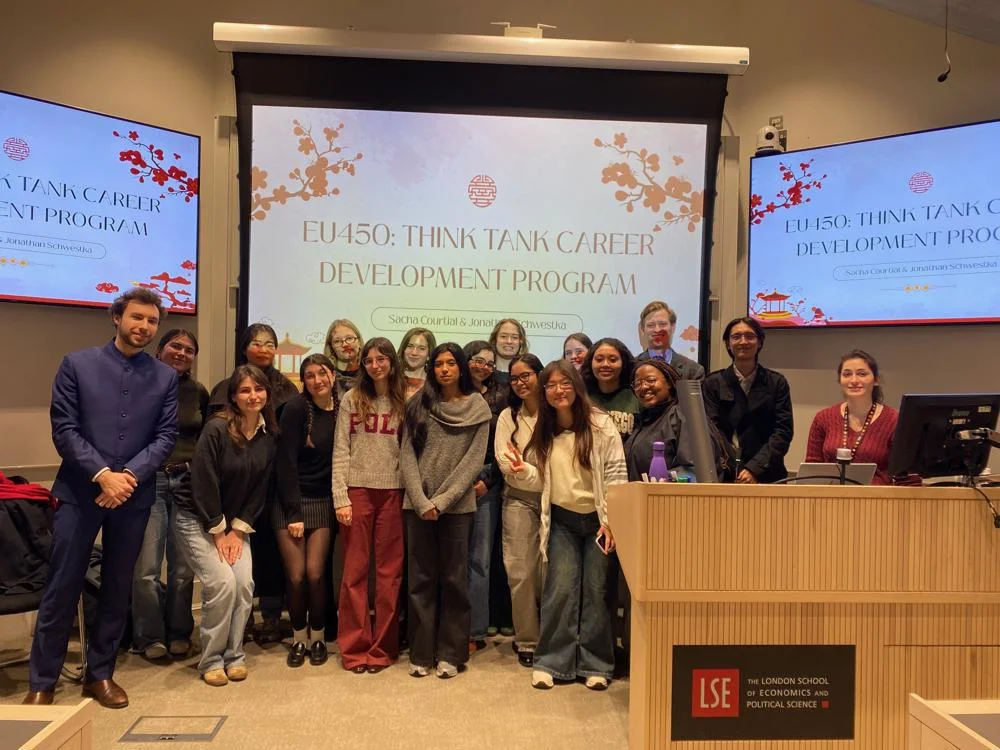
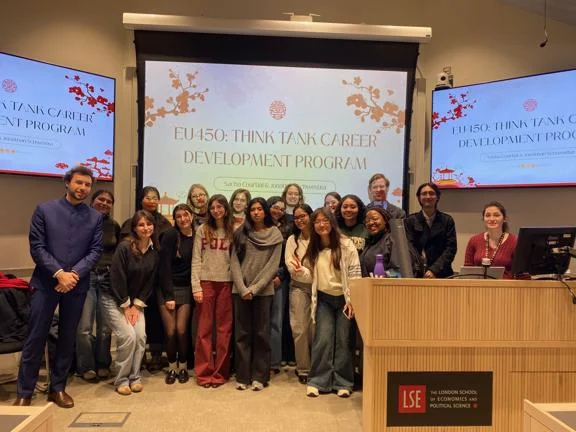
This term, we were thrilled to welcome back two of our Class of 2022 LSE-Fudan alumni, Sacha Courtial and Jonathan Schwestka, to the European Institute to facilitate a brand new EU450 Professional Skills Workshop introducing the world of think tanks and careers in this sector to our current MSc students.
Sacha and Jonathan graduated from our LSE-Fudan Double Degree in the Global Political Economy of China and Europe programme in 2022.
Today, Sacha works as an EU-China Associate Researcher and as Pascal Lamy’s Chief of Staff, the former Director-General of the World Trade Organisation (2005-2013) and former EU Commissioner for Trade (1999-2004), at the Jacques Delors Institute in Paris. Jonathan is an Accredited Parliamentary Assistant at the European Parliament in Brussels. He previously worked as Director for Europe at the Europe Asia Center, a Brussels-based independent non-profit organisation promotion Europe-Asia relations.
We caught up with Sacha and Jonathan while they were back in London - discover our interview below to hear all about their fond memories of LSE and how their degree shaped their careers!

Q: Could you tell us about your time on the LSE-Fudan Double Degree?
Sacha: Having studied Mandarin Chinese mandarin in Beijing in 2019 and I was looking for a double degree that would reflect both my interest on international issues and on China. LSE was the second best in the world on political economy and the most international university in terms of student diversity. Fudan is also in the top three of Chinese universities. The programme was just offering the perfect duality from West to East.
Jonathan: Well, actually my background is quite similar to Sacha’s. I’ve been studying Chinese for many years, spent a year abroad in Beijing, and have long been interested in making China part of my future professional path. After completing my bachelor’s degree at Sciences Po Paris, where I focused on EU politics, I wanted to deepen my understanding of China’s political and economic model. At the same time, I was curious about the UK’s academic approach, which is quite different from the French system, with a stronger emphasis on independent learning and academic research. Finally, I was looking for a programme that would strengthen my career prospects in terms of academic excellence and prestige. In that sense, the LSE–Fudan double degree felt like the perfect fit.
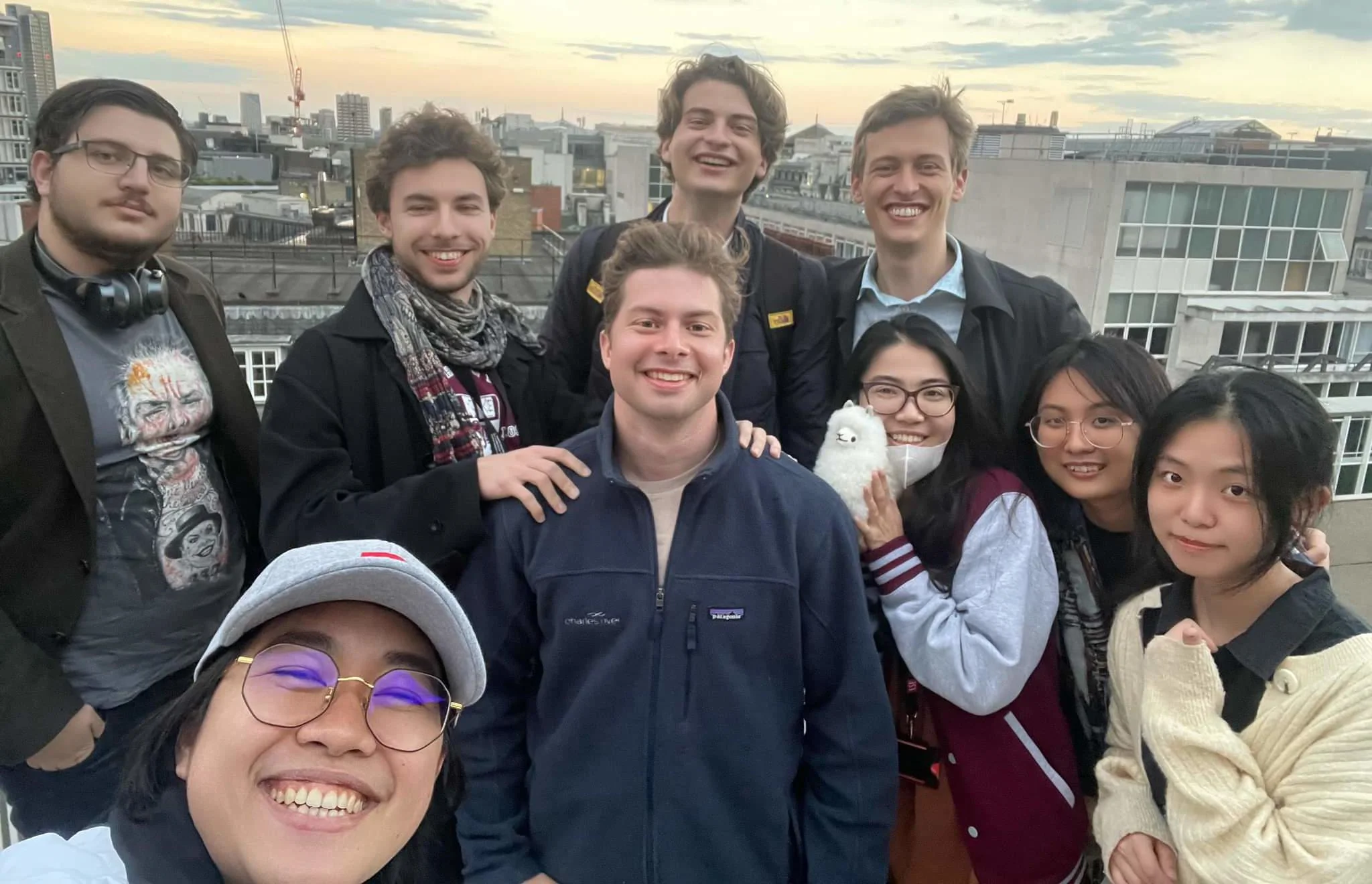
Q: Where are you both working now? How would you say the European Institute has shaped your career journey?
Sacha: Beyond the rigorous linguistic immersion of studying in London, the European Institute provided me with a sophisticated understanding of the European economy. My final dissertation focused on the EU Budget a technical and often underestimated area. This specialisation was the “foot in the door” I needed; it directly led to my traineeship at the European Parliament working on budgetary issues, which eventually paved the way to my current role at the Jacques Delors Institute.
Jonathan: My master’s degree has indeed let me quite directly into my past and current job. After my studies, I started a traineeship with a Member of the European Parliament who worked on China and trade issues. This, in turn, helped me get my next job, working at a Brussels-based NGO focused on EU-China relations, called the Europe-Asia Center. Through this experience, I was able to travel extensively to China and expand my network in both the Brussels and the Chinese policy circles, which then helped me get my current job, being the assistant of another Member of the European Parliament who has also put EU-China relations at the top of his agenda. In short, having expertise in the “Global Political Economy of China and Europe” has been invaluable!
Q: What was one of the highlights of your time at the European Institute?
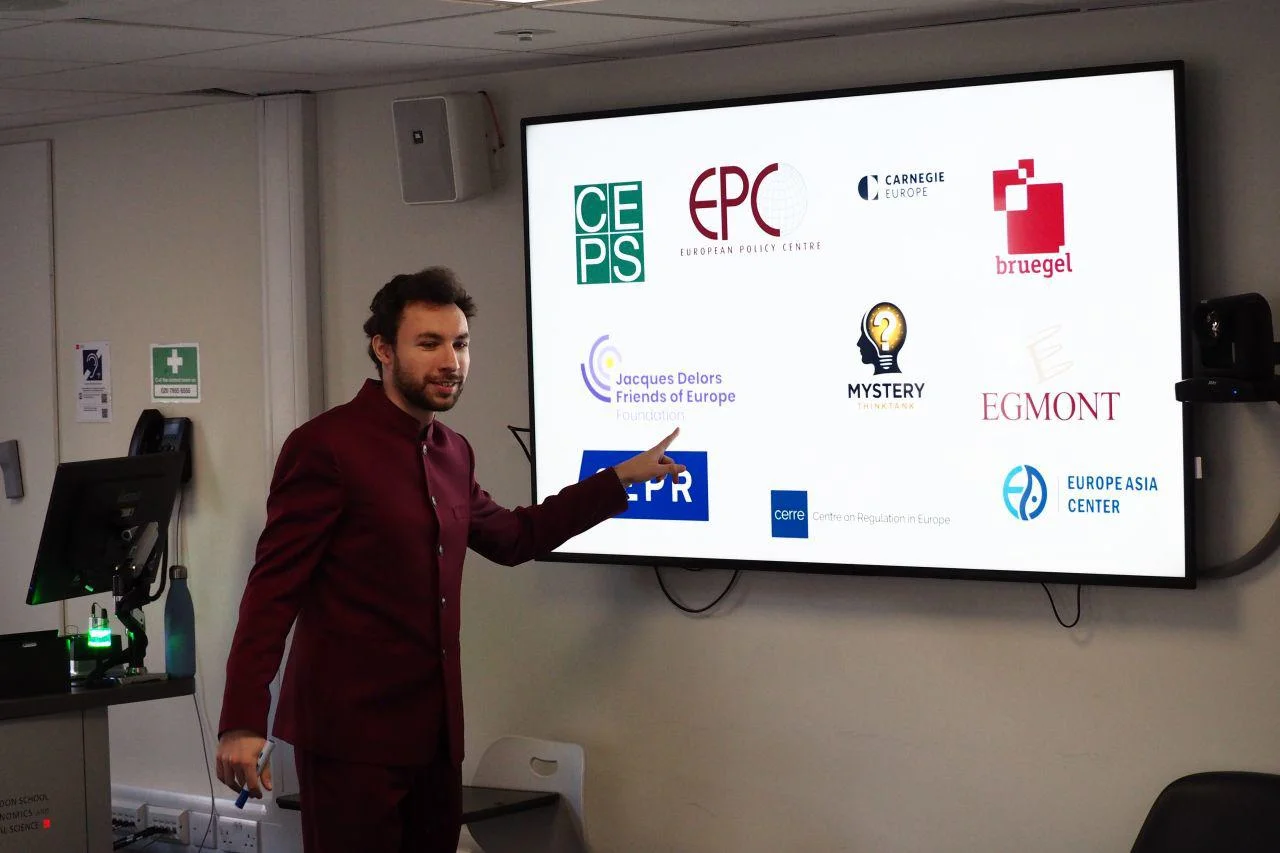
Sacha and Jonathan: The academic curriculum was excellent, but we discovered that the biggest added value was the European Institute’s professional network. I think we did all the EU450 classes possible at the time: learning more about consulting with the Eurasia group, about negotiation with Harvard Kennedy School, about the limits and constraint of development banks with the EBRD, about think tanks with the 89 initiatives (led by the inspiring EI alumnus Dr Michael Cottakis), and even very practical skills with the class on the software Stata.
In an episode of The Office, one of the main protagonists expressed his wish that “there was a way to know you're in 'the good old days', before you've actually left them” - and this is exactly how I felt, looking at students rushing to class, couples holding hands walking to the library, or the co-op meal deals.
Q: Can you tell us more about the EU450 Professional Skills Workshop on think tanks that you facilitated for our students this term?
Jonathan: All of this began a few months ago when Sacha and I had a phone call. As we reminisced about our time at LSE, we both agreed it would be wonderful to reconnect with an institution we remember so fondly and explore ways to contribute our expertise and experience. Having both worked in a think tank, we realised that many students at the European Institute were interested in such careers, yet there was only limited guidance on what these paths actually mean in practice and how to pursue them. That’s why we reached out to Adam Judge and Pierre Hausemer at the European Institute, and we were thrilled when they not only understood our idea but expressed their full support!
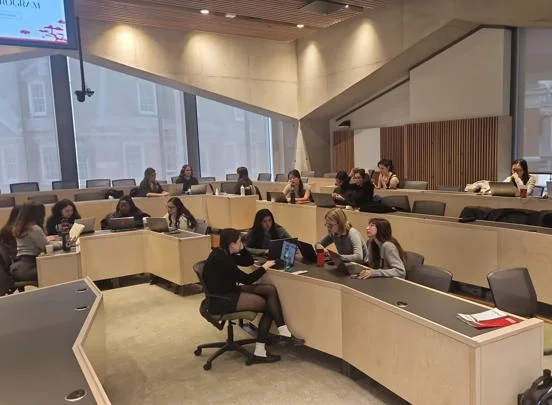
Sacha: Jonathan and I designed this workshop by asking ourselves: “What do we wish we had known while sitting in those seats?”. We wanted to demystify the think-tank industry from A to Z. We explored how they are funded, how they communicate, and the diversity of jobs available (spoiler: apart from researchers, many jobs exist in the think-tank world). We wanted to give students a practical toolkit for the 'day-to-day' reality of the job, from policy brief drafting to high-level stakeholder management.

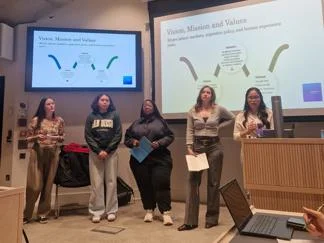
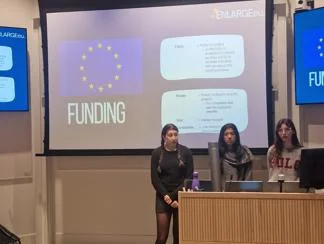
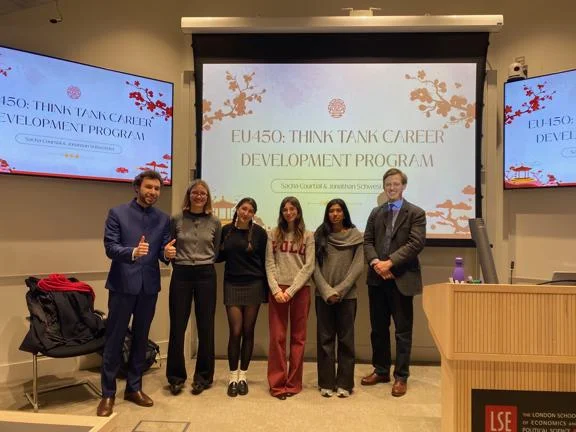
There is something deeply rewarding about returning to the place that shaped your career to help the next cohort find their footing.
Q: What was it like to return to the European Institute to share your insights as alumni with our current students?
Sacha: Returning to campus was a powerful reminder of the LSE “vibe” with all the students working in the library, having quick lunches in the canteens, casually playing some concerts on Thursday’s lunches breaks in the Saw Swee Hock Centre’s last floor. I have given class in other universities but the students definitely exceeded my expectations. Attendance and interest were high. Interactions were sharp and curious. There is something deeply rewarding about returning to the place that shaped your career to help the next cohort find their footing. I would be very honoured to facilitate this workshop again in the coming years.
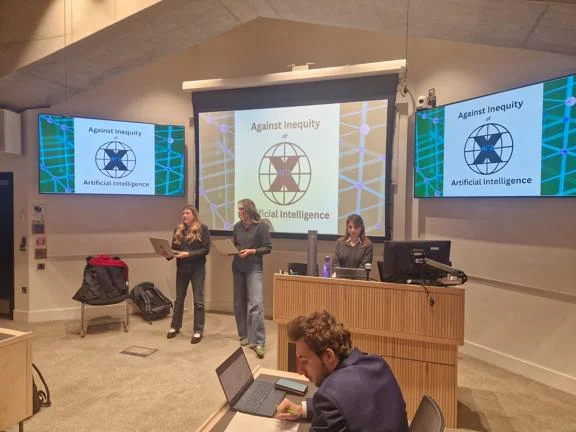
Jonathan: Coming back to campus immediately brought me back to the time when I was a student there, cycling to Old Building every day from my LSE student residence Butlers Wharf. In an episode of The Office, one of the main protagonists expressed his wish that “there was a way to know you're in 'the good old days', before you've actually left them” - and this is exactly how I felt, looking at students rushing to class, couples holding hands walking to the library, or the co-op meal deals. As to our class, I was extremely impressed by the quality of students. As this was a facultative class, we did not have high expectations regarding attendance or the final presentations - both of which were extremely rewarding. I think both Sacha and I also learnt a lot through this seminar, and I would be very honoured should the LSE invite us again: to implement our learnings, and help future cohorts make up their minds on becoming a “think-tanker.”
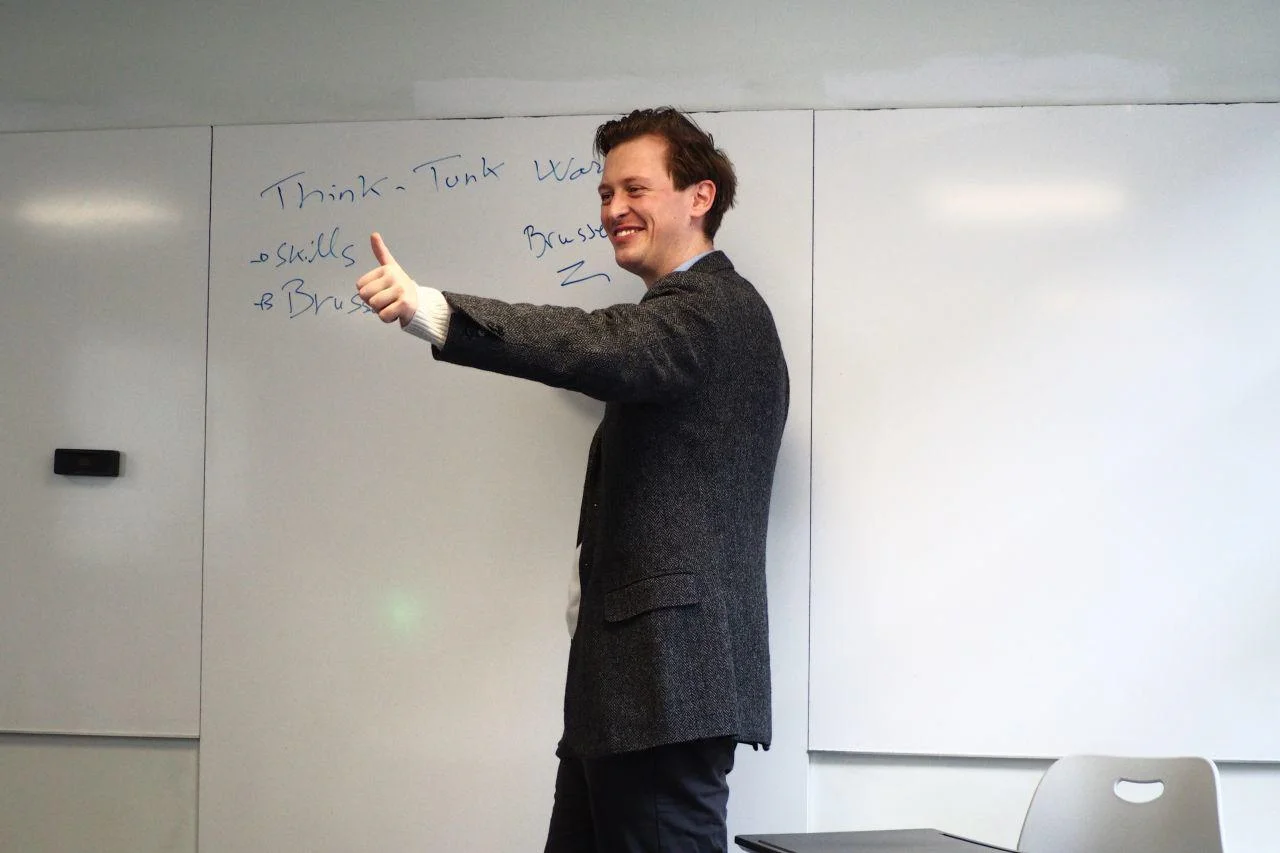
Q: What does being a part of the European Institute’s global alumni community mean to you?
Sacha: Our LSE-Fudan cohort was a tight-knit family despite the challenges of the pandemic. We’ve remained very close as we’ve scattered across the globe. Any business trip becomes a reason to visit an old friend! For me, the alumni community is a like a global home. Whether I am in Brussels, Paris, or Shanghai, there is an immediate sense of belonging and a shared intellectual language. For people moving in a new city without established social network, knowing that there is an LSE group in almost every major city is incredibly reassuring.
Jonathan: I have tried to stay in touch with the European Institute’s global alumni community, but must admit that there may be individuals that are better than me at this. However, getting the LSE Alumni Card was an (almost surprisingly) touching moment, and it really gave me the feeling that I was, and will always be, part of the EI family. For the future, I will try to be more engaged in the Brussels branch of this circle, and may even reach out to other branches when I travel abroad: one of the many under-utilised opportunities of the LSE!
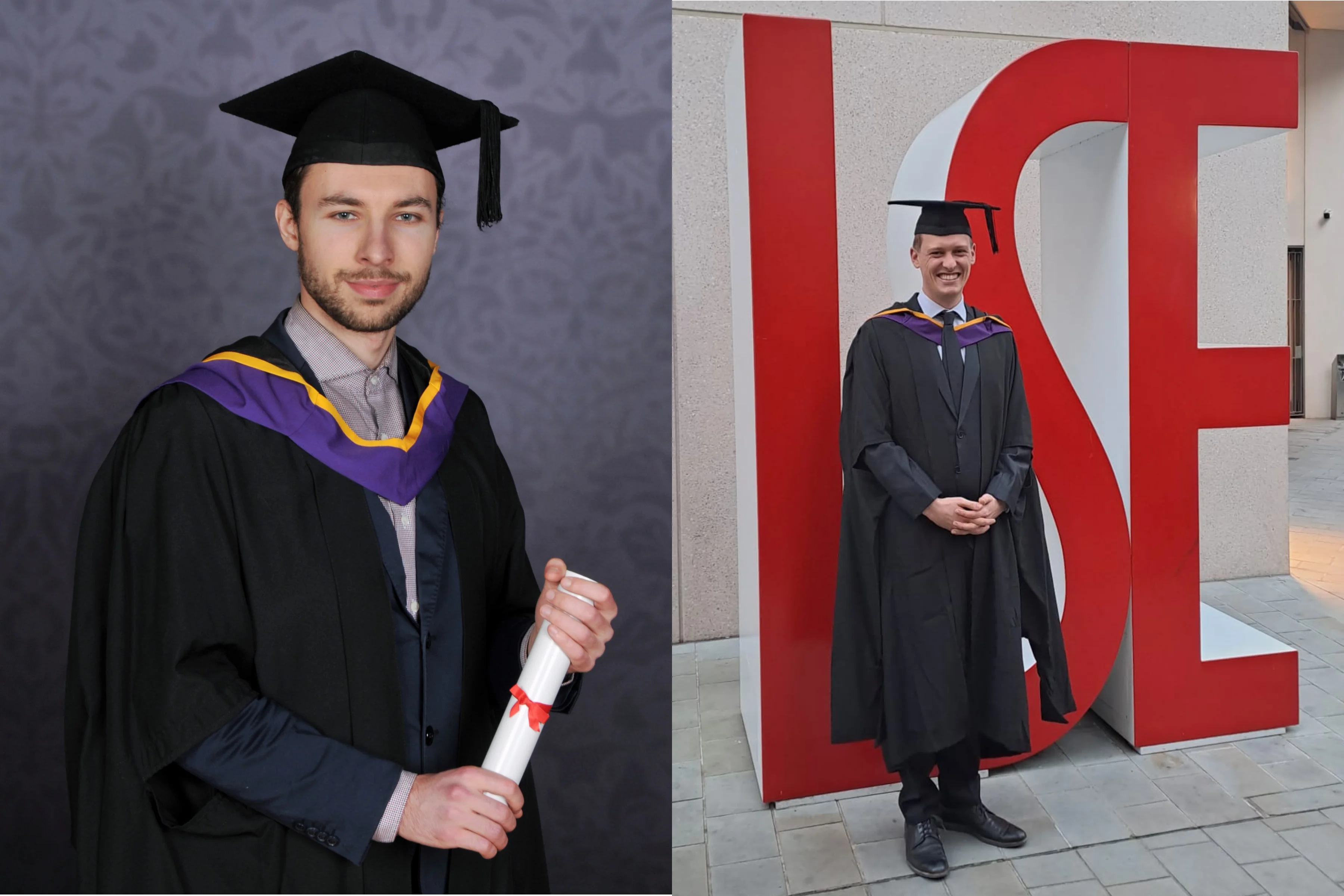
Getting the LSE Alumni Card was an (almost surprisingly) touching moment, and it really gave me the feeling that I was, and will always be, part of the EI family.
Thank you Sacha and Jonathan for facilitating such an insightful EU450 workshop for our students, but also sharing your journey at the EI and beyond with us! We look forward to having you back for another iteration of your workshop!