

People Powered Policy: A Day That Felt Different
This blog was written by SOCRATES Public Advisory Group member Samina Begum, describing her experience at an event held last Autumn. The event included representatives from The Casey Commission, who attended with an aiming of hearing more from people with lived experience of engaging with social care.
In September last year, I attended a Social Care Future event. Social Care Future describe themselves as “a growing, people-powered movement for change, born of frustration but powered by hope.” The event at Friend’s Meeting House in Manchester was full of warmth, energy, and fresh ideas. The day started with a joyful performance of “Lean on Me” by a women’s choir called Sisters of the yam. People clapped, smiled, and even joined in—it set a welcoming tone for the day.

As the music faded, an artist began creating a live infographic, capturing key messages and emotions from the room. This included the message that change in Social Care must start with people's lives, their rights and their aspirations, not with services, institutions or administrative systems. It also included a vision for a social care system that is human, trust-based, rights-driven and designed in partnership with the people it exists to support. The live infographics were an effective, creative way to capture these messages for a diverse audience, some of whom might find a lot of written information difficult. Seeing a visual infographic was an impactful way to show that everyone’s voice mattered and helped bring the day’s conversations to life.

The focus of the event was on listening to people with real experience of social care. It was also attended by representatives from The Casey Commission on Social Care. This is a group set up in the UK by the Government to look at how social care services are provided. For more information about what they do you can read their terms of reference. Baroness Casey’s team shared their plans for the Casey Commission and asked for honest feedback.
There was initially quite a bit of frustration from people who felt they were often consulted but not properly involved and one person said,
“We keep giving our views, but they never get implemented. Why should the Casey Commission make any difference?
Many people with lived experience who were present highlighted the need for services to be co-created with them. Throughout the day facilitators helped everyone to think about what might help resolve some of the issues that had been brought up.
After the opening activities I attended the Ordinary Neighborhoods’ session, in which we explored how local places shape people’s experience of care. We talked about how council funding cuts have meant that there are less community hubs and people don’t get to know each other. Communities need spaces to come together like community centres, libraries, youth centres, afterschool clubs and green spaces—places that reduce isolation, support people of all ages, and build connections between people who live in the same neighborhood. They also provide opportunities for self-development. Places of worship are helping with social drop-ins, but they’re stretched. Investing in local spaces helps neighbours get to know each other, build stronger, less divisive and more caring neighborhoods.
This is where I met people from a network/movement of people called Camerados who were promoting (mutual) informal support including opening Public Living Rooms in their communities. Camerados is an international movement about communal spaces where people come together to look out for each other, where everyone is welcome.
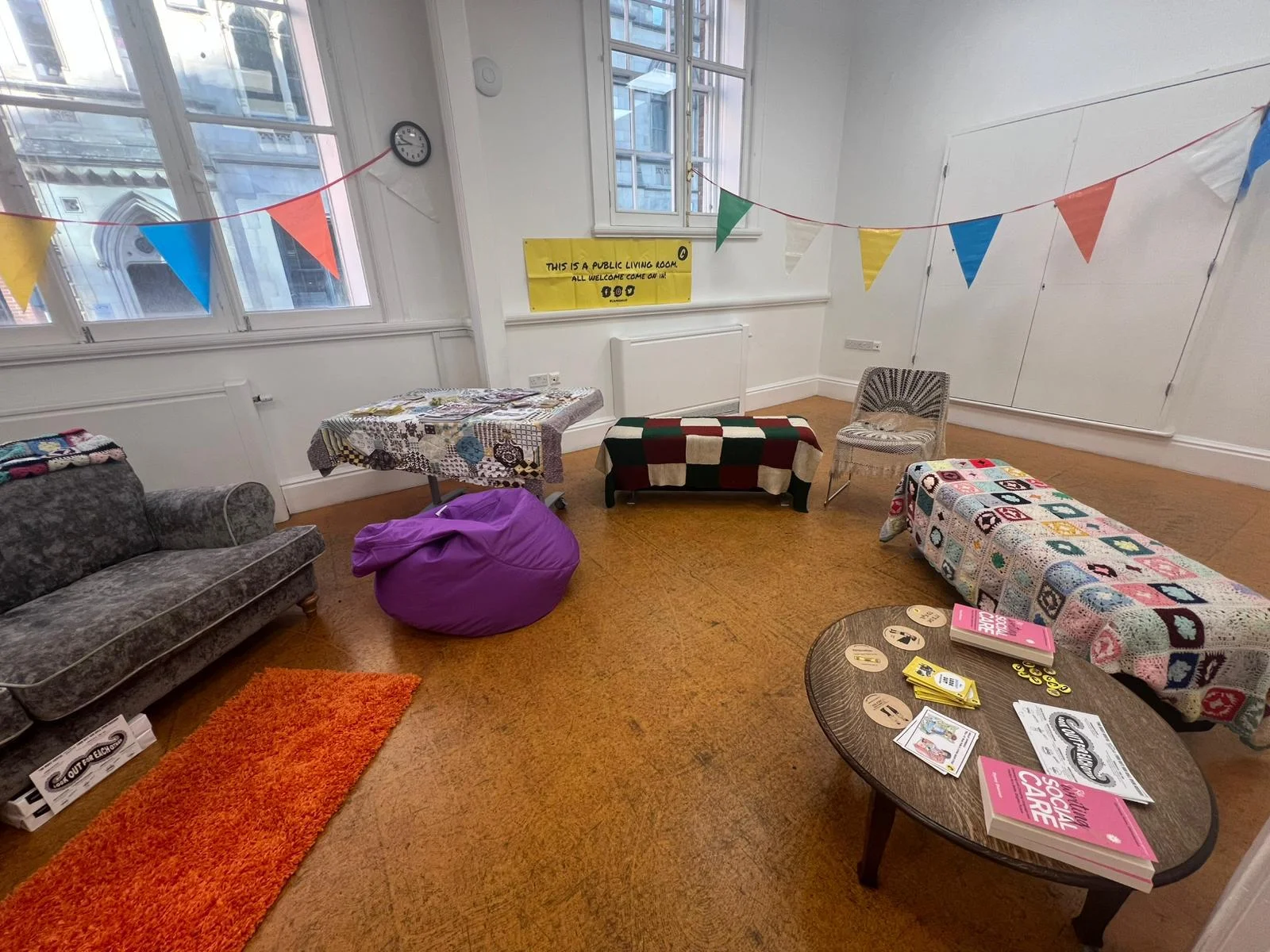
During lunch I popped into the “In Charge” App session. The In Charge app is a new and innovative way of using technology to manage care with families and the care providers, so multiple people involved in a person’s care had access to a holistic care plan as well as any updates that related to their care. Bryony Shannon was also there launching her new book ‘Rewriting Social Care’ focusing on the impact of the words we hear, recognising each other as equals and providing a better, more human future for us all, in the contact of Social Care and Social Work. More information can be found on the rewriting social care website.
Over lunch I also picked up a leaflet about an organisation/network of people wanting to improve social care for older people. They are called “When I get old” for more information about this see their website.
Another session that I attended later in the day focused on storytelling—how listening to people’s emotions and experiences can lead to real change. One message stood out to me: “Invest in feelings and emotions, not words.” This is important because the feelings show the impact and what is important to the person.
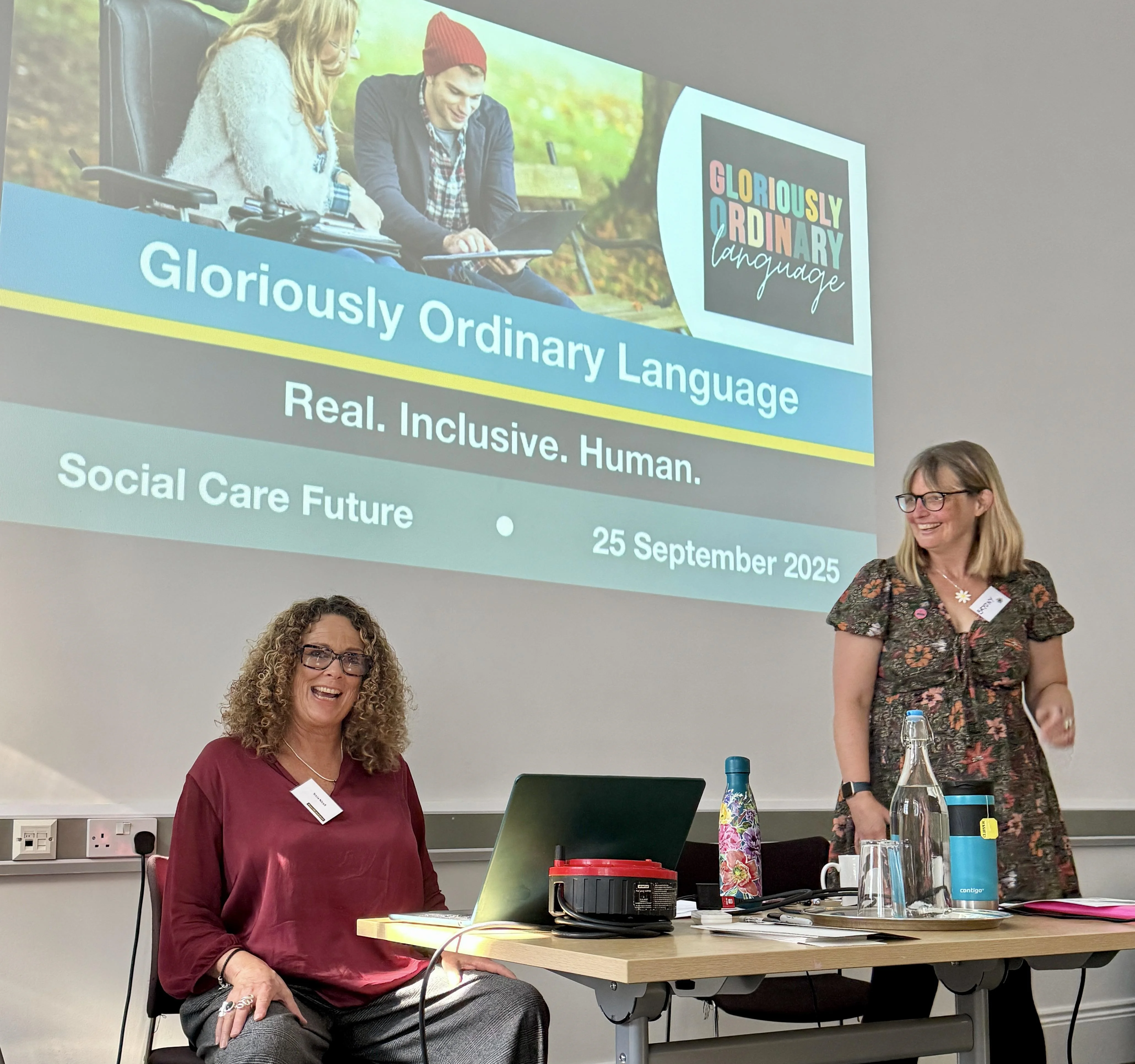
In the final breakout session I attended, we heard about Wigan Council’s co-production work. Instead of starting with a plan to consult people on, they started with conversations. People shared what mattered to them—like staying connected and having choice. These ideas shaped the “Wigan Deal,” a new way of working that focused on people’s strengths. Information about this can be found online.
The day ended with more music and a “Call to Action.” Everyone shared one idea they’d take forward. One powerful suggestion was: “Direct Payments—let us have agency in our own care. We know what we need.”
By the end of the day, I had a sense that everyone had had an opportunity to share their thoughts, feelings and experiences and there was a feeling that positive change might be possible. This was helped by it being a mutually supportive space as well as knowing that Baroness Casey’s team had come to a community venue and been involved in an event which was focused on listening to people with lived experience. I left with a sense of hope, and I think other people did too.
In March 2025, Baroness Casey spoke about some of the early findings from the Casey Commission, in a speech at the Nuffield Trust Summit. You can find out more about this online.