

Urban Society, Health and Wellbeing

Current research projects
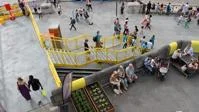
(De)Constructing Health & Wellbeing through data
An analytical project exploring data interdependencies and socio-spatial connections to understand how the physical environment impacts health and well-being.
Completed research projects

A pilot project focusing on the changing interrelationship between physical and digital spaces in cities and how this evolving interdependence informs the future trajectory of urban development at multiple scales.
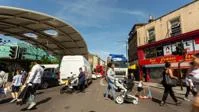
The project provided a rigorous mapping of spatial, social, economic and health parameters of two highly complex and diverse boroughs of London and compared them to similar neighbourhoods in other UK cities with a view to establishing links between the built environment, demographic trends and the health and wellbeing of urban residents.

This project explored methods of ‘peer research’ with girls and young women aged 16–24 in the UK, while equally addressing the lack of provision of public spaces for this demographic.
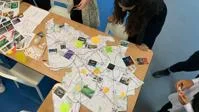
This project explores public realm experiences and spatial peer-research methodologies in various locations in and around London. It worked with young people, in particular young women, a constituency normally excluded from planning and development processes.

Scenarios for Lambeth and Southwark, commissioned by Impact on Urban Health, is a research project that evolved potential ‘futures’ or scenarios for policy advice and decision-making in the face of rapidly changing and uncertain events, including COVID-19 and Brexit.
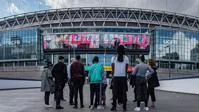
The Apprenticeship Programme engaged six young adults from the London Borough of Brent, to learn through practice at the LSE. It is a legacy project of Seen and Heard, a project coordinated by LSE Cities and commissioned by Brent 2020.

Seen and Heard is a research and engagement project with Brent Youth Parliament and the Blueprint Collective commissioned by Brent London Borough of Culture.

Metropolitan Melancholia maps a series of contemporary cityscape in terms that attempt to spatialise melancholy’s feelings of loss, abjection and implacability.

Incremental Infrastructure is a research project to identify, design, and prototype sanitation interventions in the context of marginalised and peripheral communities in Delhi.

Experiencing Density is a project jointly led by LSE Cities and LSE London that explores how residents experience life in different forms of high-density housing in London.
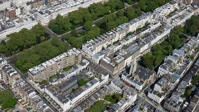
This LSE Cities’ seed fund project covers the initial phases of a planned multi-year empirical investigation into the social and material dimensions of community belonging.

This LSE Cities’ seed fund project covers the initial phases of a multi-year investigation into the impact of air transport growth in Africa on urban infrastructure.
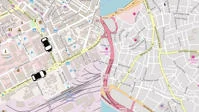
This LSE Cities’ seed fund project covers a pilot study into the impact Uber has on transport provision, job creation and labour informalisation in Lagos and Nairobi.

Ordinary Streets is an ethnographic and visual exploration of the spaces, economies and cultures of ‘street’, and engages with issues of immigration, adaptation and urban multiculture.
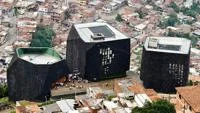
Theatrum Mundi is a professional network of urbanists and artists that offers a forum for cross-disciplinary discussion about practices relating to cultural and public space in the city. It was founded at LSE Cities and is now an independent charity.

The Super-diverse Streets project was an ESRC-funded research exploration of the intersections between city streets, social diversity and economic adaptations in the context of accelerated migration. It was a comparative analysis of ‘super-diverse’ high streets that explored how urban retail economies and spaces are shaped by and shape migrant practices.
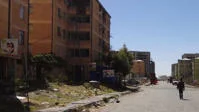
Precarious Homes is an Urban Age research project examining current approaches to housing in Addis Ababa, Nairobi and Lagos and asking whether they are fostering or constraining the achievement of better and more just urban futures.
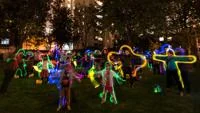
Urban Lightscapes/Social Nightscapes was led by the Configuring Light/Staging the Social Programme and explored how social research could be better used to help designers understand social spaces and the users they are designing for.
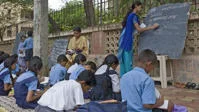
This research extended two representative city surveys previously conducted in São Paulo and Istanbul to Mumbai. The surveys analysed how residents are responding to the challenges of social inclusion, the environment, transport, security and urban governance.
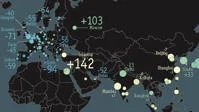
In collaboration with the Brookings Institution, Washington D.C, this research project analysed new urban and metropolitan economies emerging after the 2008 financial crisis.

Urban intelligences, subjects and subjectivities, led by Senior Urban Fellow from 2013–2014 Adam Greenfield, sought to develop a richer account of the affective and experiential dimensions of everyday urban life in the presence of networked informatic systems.
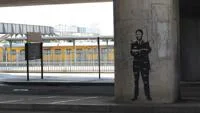
The Urban Memoryscapes project, led by Mellon Research Fellow for 2014–2015 Naomi Roux, examined the means by which collective and public memory is inscribed and contested in urban space.
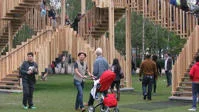
This research project, which was funded by the European Investment Bank University Research Sponsorship programme (EIBURS), reviewed and developed theory, policy and practice on better assessments of wider outcomes from impact investment.

The 2011 Urban Age conference in Hong Kong provided a platform from which to continue the Centre’s research and collaborations on urban health and well-being. Building on this, LSE Cities hosted a dedicated Lecture Series on "Cities, health and well-being" during 2012/13.

Socio-spatial segregation and inadequate urban transport provision are critical factors in exacerbating income and wealth inequalities in cities. This research project looked at the linkages between accessibility, mobility and activity participation in three developing world megacities; Istanbul, São Paulo and Mumbai.
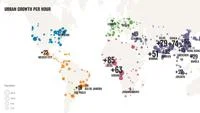
The European Metromonitor project drew on LSE Cities’ research on the economic resilience of European cities in order to establish an interactive exchange platform for the dissemination of key findings and case studies relating to metro-level responses to the economic crisis.
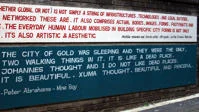
The Metropolitan Melancholia project, led by Mellon Research Fellow for 2015–2016 Ed Charlton, sought to map the contemporary cityscape in terms that spatialise the condition's associated feelings of loss, abjection and implacability.

The New Citizens project, led by Mellon Research Fellow for 2015–2016 Ninad Pandit, scrutinised the ways in which political and economic uncertainties of the postcolonial moment enabled the emergence of new violent forms of politics led by urban literary intellectuals in western India.