

Advisory Projects

Current Advisory Projects

Shillong Urban Strategy
A research and training programme for the Government of Meghalaya, India

Santiago Urban Age Task Force
Supporting the Regional Government of Santiago de Chile to deliver sustainable urban change through the Regional Development Strategy 2035.

Urban Age Task Force
Strategic advice, policy implementation and capacity building with local governments.
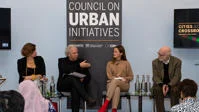
Council on Urban Initiatives
A new collaboration between LSE Cities at the London School of Economics, UCL’s Institute for Innovation and Public Purpose and UN-Habitat.
Completed Advisory Projects
A consultancy project carried out in partnership with the Swiss Federal Institute of Technology (EPFL) in Lausanne evaluating the value add of the Swiss Agency for Development and Cooperation’s activities in urbanising contexts.

Mapping Urban Transport Governance is a project to systematically understand and map the way in which urban transport is being governed in specific cities, enabling the World Bank to engage more effectively with the key context-specific transport decision-makers.

Seen and Heard is a research and engagement project with Brent Youth Parliament and the Blueprint Collective commissioned by Brent London Borough of Culture.
High Streets for All is a research study commissioned by the Mayor of London and authored by LSE Cities and We Made That. The study takes one of the most commonplace experiences of the city – the high street – and uses the perspective of Londoners to understand its diverse economic, social and environmental benefits, collectively known as its ‘social value’.
LSE Cities provided input to Bloomberg Philanthropies on the political and demographic make-up of selected European cities, and completed an objective assessment of the innovation level shown by the shortlisted proposals.

The study investigated how regional authorities in the Randstad and South East England can promote access to both jobs and open space for all income groups, how planners should respond to moderate economic growth or even decline and how metropolitan areas can become more viable and sustainable places to live and work.
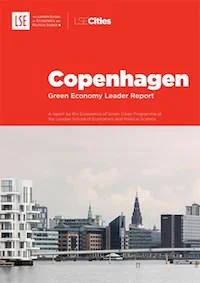
Featuring a wealth of new research findings, the report shows how Copenhagen’s success is underpinned by a strong combination of the city’s green growth drivers. A number of these drivers rank among the best in Europe and the world, including the city’s compact urban form, strong innovation, high skills and employment, low carbon emissions, and improved environmental quality.
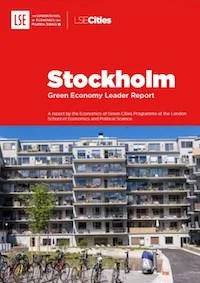
Featuring a wealth of new research findings, the report shows how Stockholm benefits from a low-carbon energy system, a relatively compact centre with good public transport, and an innovation-led economy for developing smart city solutions and export markets of the future.
While focused on the issue of density in urban neighbourhoods and what makes them successful, this report also has practical lessons for the whole approach towards sustainable communities in the UK and internationally.