The Centre and the Chair, in their desire to promote frontier research of relevance for Spain and the UK, welcomes the Spring Term's LSE-Miguel Dols Fellows.
Zésar Arranz Conte
Since 2025 I am a predoctoral researcher in the Department of History at the University of Zaragoza, funded by an FPU fellowship. My doctoral research examines the transnational networks connecting the American Right and the European conservative movement during the Cold War, with a focus on the circulation of ideas, actors, and political strategies. I hold a BA in History and a master's degree in Late Modern and Contemporary History by the University of Zaragoza, for each of which I have received a "premio extraordinario" and a Mention of Excellence in their corresponding undergraduate and master's thesis. I also possess two further master's degrees, in Political and Electoral Analysis (UC3M) and Secondary Teacher Training (UNIZAR). I have presented my research at national and international conferences on topics such as electoral laws, the American Christian Right, and transnational conservatism.
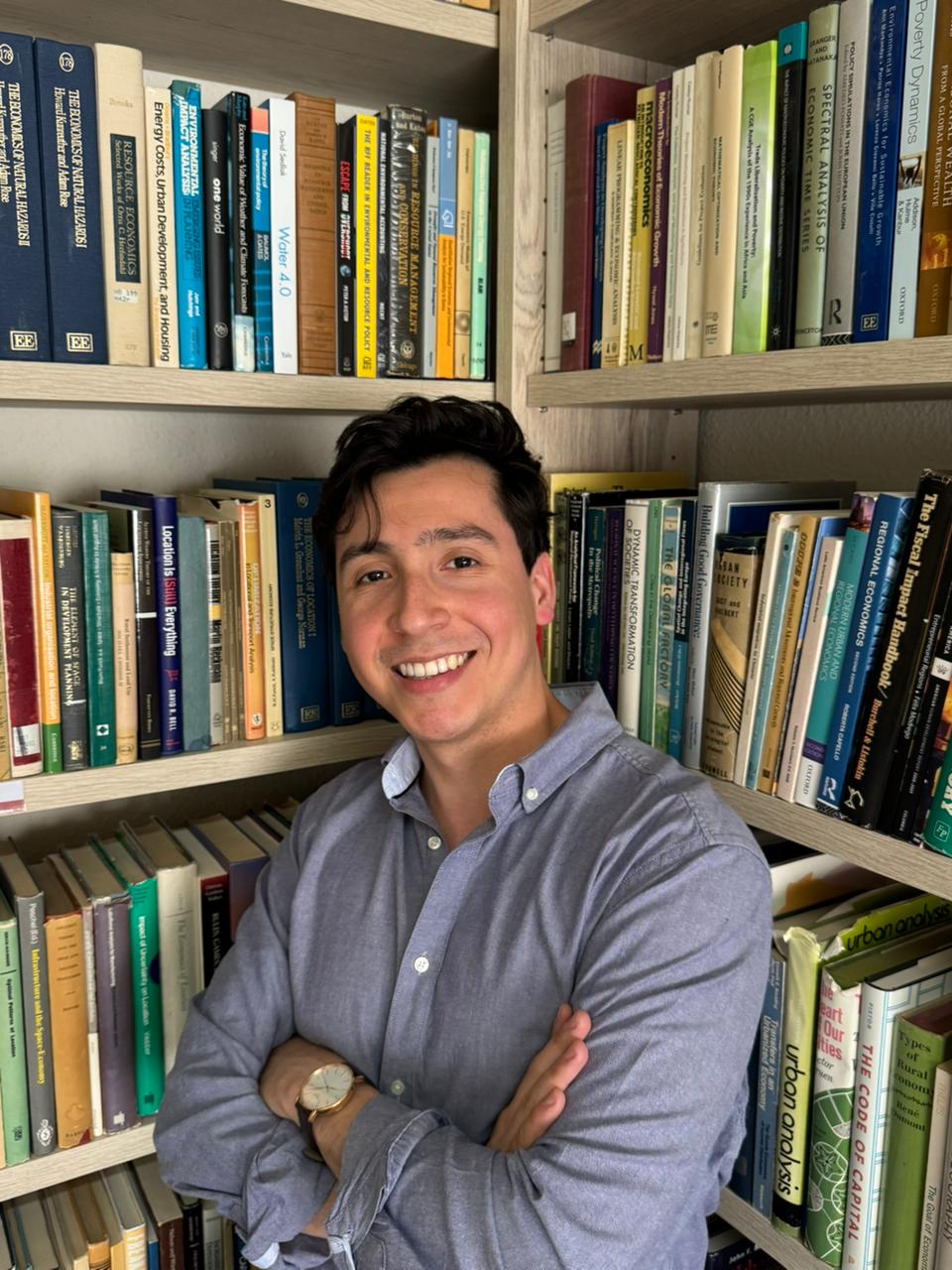
Wladimir Cerda
Wladimir is a PhD candidate in Economics jointly enrolled at Universidad de Oviedo and Universidad Católica del Norte (Antofagasta, Chile), where he specialises in labour economics, regional economics, and the economics of migration. His research investigates how labour supply shocks — such as long-distance commuting and international migration — reshape wages and employment across regional and local economies, and how their effects depend on the economic and institutional characteristics of receiving economies and the degree to which immigrant skills are effectively assimilated.
Wladimir is an Associate Fellow of the ISABEL project, funded by the European Union, and a member of REGIOlab at the Universidad de Oviedo. He is also affiliated with the Instituto de Economía Aplicada Regional (IDEAR) at Universidad Católica del Norte. In 2025, he received the Best Paper by a Young Researcher Award at the International Conference on Regional Science.
At the Centre, he is a Cañada Blanch Spring Fellow developing research on occupational downgrading among international immigrants in the European Union. Using microdata across EU countries, he examines how the concentration of highly skilled immigrants in low-skilled occupations intensifies labour market competition for native workers, and what role regional absorptive capacity, institutional conditions, and the individual characteristics of native workers play in moderating these effects.
Dr. Eva Coll-Martínez
Eva is Associate Professor of Economics at Sciences Po Toulouse (University of Toulouse Capitole), and a research fellow at LEREPS, the UNESCO Bernard Maris Chair, and the Centre for Collective Learning. Her research sits at the intersection of economic geography, innovation, and the cultural and creative industries, with recent work also engaging with entrepreneurship and green innovation. She is particularly interested in how geographic concentration, local knowledge, and cultural and creative industries dynamics shape innovation and economic development across regions and cities. She holds a PhD in Economics from Universitat Rovira i Virgili (Spain), and her work has been published in journals such as Environment and Planning A, Regional Studies, or Journal of Cultural Economics.

Cristián Eyzaguirre
Cristián is a JSD candidate at the University of Chicago Law School specializing in comparative constitutional law through empirical and interdisciplinary methods. As an LSE-Miguel Dols Fellow, he will be working on a project that traces the global rise of failed constitution-making and examines why some constitution-making processes collapse before a new constitution is adopted.
His work on constitution-making, social rights, and constitutional design in divided societies has appeared in the Journal of Law and Empirical Analysis, Global Constitutionalism, and Latin American Law Review, as well as in edited volumes by Oxford University Press (forthcoming) and Tirant lo Blanch.
Before joining Chicago, Cristián earned a JSM from Stanford Law School and an LLB from the Pontificia Universidad Católica de Chile, and served as a legal advisor at the Ministry General Secretariat of the Presidency of Chile. He has also been a research associate with the Comparative Constitutions Project since 2015.

Marco Mari
Marco is a Research Affiliate at the MIT Industrial Performance Center and a doctoral student at Politecnico di Milano, joining Bocconi University’s PhD in Business and Social Law in September 2026. He is Co-Founder and Executive Director of Italia Innovation, a field research program. His research investigates the origins of regional economic capability, focusing on how firms produce the institutional order of the communities in which they operate. He refers to this mechanism as corporate statecraft, developing a theoretical framework that synthesizes institutional economics, democratic theory, and organizational governance. His broader research program examines corporate statecraft comparatively across industrial towns in the United States, Europe, and Japan. At the Cañada Blanch Centre, he is developing a paired comparison of Manchester and Arteixo—two textile-origin towns whose institutional orders were produced through fundamentally different configurations of firm-led action. He holds an LLB from Università Cattolica del Sacro Cuore in Milan and an ALM in International Relations from Harvard University.
Ricardo Martínez de Vega Perancho
Ricardo Martínez de Vega Perancho holds a BSc in Economics and an MSc in Economic Analysis Instruments from the University of Oviedo, where he is currently a PhD candidate in Applied Economics. His research focuses on urban and regional economics, territorial inequalities, and the economic causes and consequences of populism. He has contributed to both national and European research projects and specialises in the application of generative and agentic AI to automate research workflows through customised tooling. He is proficient in R, Python, and QGIS. He has also worked as an Investment Analyst in the venture capital sector (2021–2024).
Irene Palomino Antolín
Irene is the Director of the Extremadura Delegation in Brussels, where she spearheads the region's institutional representation and defends its strategic interests within the European Union. Her primary responsibility involves fostering direct and effective interlocution with EU institutions, ensuring that Extremadura’s priorities and regional specificities are integrated into the legislative agenda.
Concurrently, Irene is a doctoral candidate at the University of Extremadura's University Research Institute for Sustainable Territorial Development (INTERRA). Her academic research focuses on consecutive EU Financial Frameworks, critically analysing the impact of EU Cohesion Policy through the specific case of Extremadura. By meticulously examining its operational programmes and achieved outcomes, her work aims to optimise regional positioning and strategic preparedness for the post-2027 cohesion context.

Alejandro de Rosa Cañete
Alejandro is a predoctoral researcher and teaching assistant in Constitutional Law at the University of Valencia, funded by the ACIF grant of the Generalitat Valenciana. He holds a Double Bachelor’s Degree in Law and Political Science from the University of Valencia, as well as a Master’s Degree in Law Practice and Corporate Compliance from ESADE, where he was awarded the Excellence Honour Award for his outstanding academic performance.
He previously worked as a lawyer in the Public Law Department at Cuatrecasas. He has taught Constitutional Law II in English within the high-performance group at the University of Valencia and has actively participated in national and international conferences.
His lines of research focus on the history of Spanish constitutionalism, with particular reference to the configuration of executive power, the regulation of caretaker governments at both state and regional levels, and the judiciary, with special emphasis on the exercise of fundamental rights by judges and magistrates and their impact on the principle of impartiality.
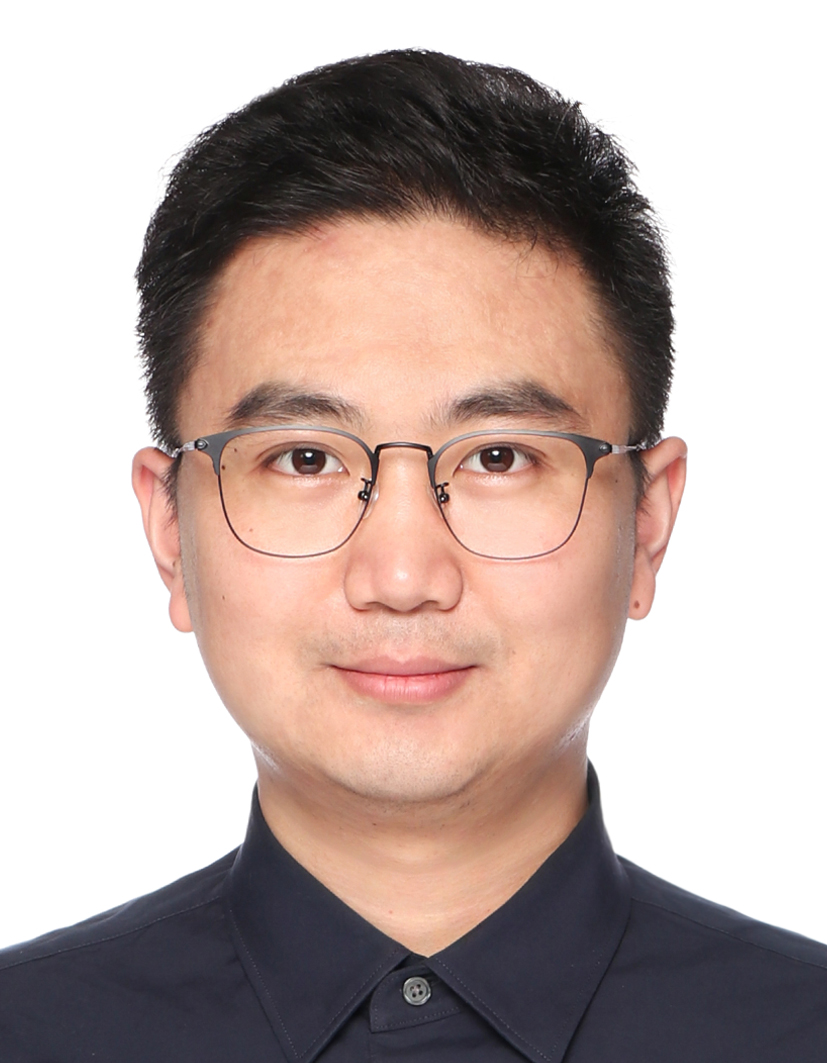
Dr. Xiangming Tao
Xiangming (Tommy) is an Assistant Professor in Innovation and Project Management at the Science Policy Research Unit (SPRU), University of Sussex Business School, where he co-directs the MSc in Project Management and co-chairs the Inclusive Teaching Working Group. He holds a PhD from Royal Holloway, University of London, and has served as a Visiting Scholar at Warwick Business School and Politecnico di Milano School of Management. His research examines learning from innovation failure, entrepreneurship and innovation in extreme contexts, and AI governance, with publications in journals including the Journal of Product Innovation Management. He is a Senior Fellow of the Higher Education Academy and a Committee Member of the Entrepreneurship Group at the British Academy of Management. He serves on the Editorial Board of the Journal of Management. At the Centre, he will be investigating how green technology firms sustain innovation resilience under geopolitical turbulence.