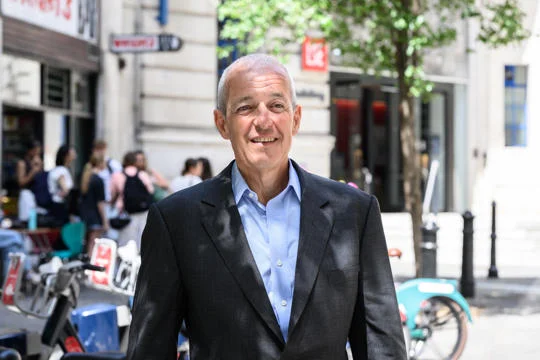

Finance Minister and LSE alumnus, Roland Lescure, on France's economic challenges and future prospects
Roland Lescure, France’s Minister of the Economy, Finance, and Industrial, Energy and Digital Sovereignty, returned to LSE, where he studied for a master’s in economics in 1992, to talk with students about economic growth, fiscal responsibility, and the EU’s financial and digital competitiveness. Of course, no visit to LSE for an alumnus could take place without a trip down memory lane.
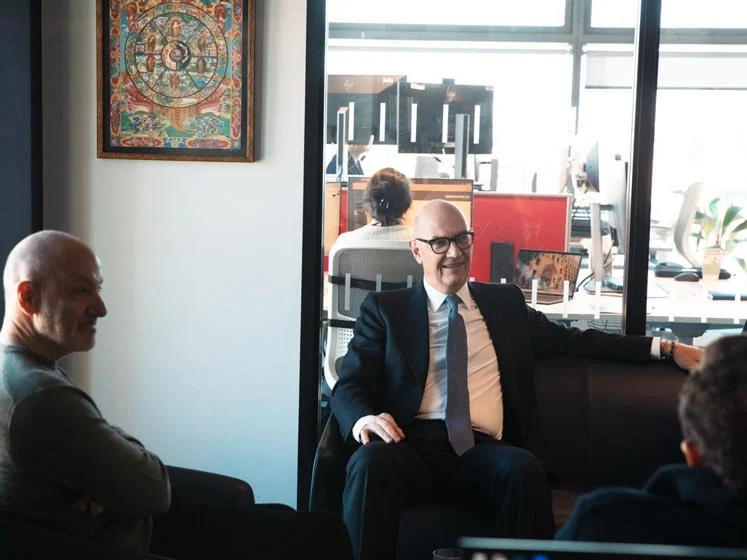
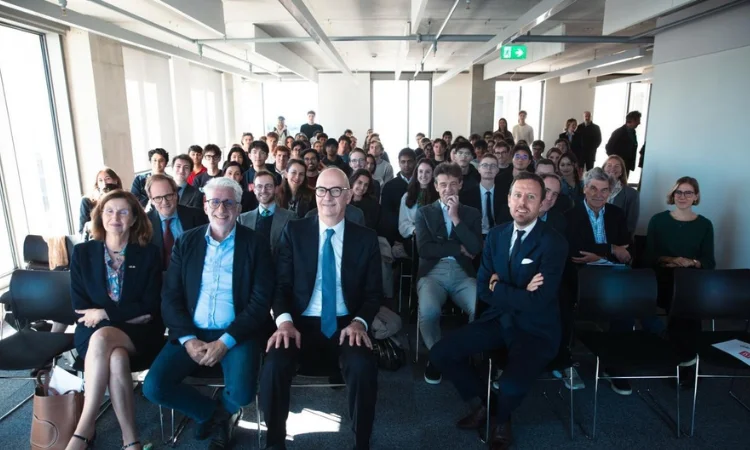
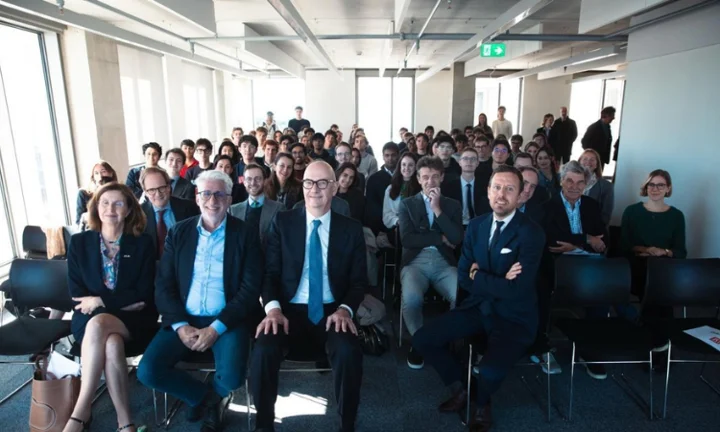
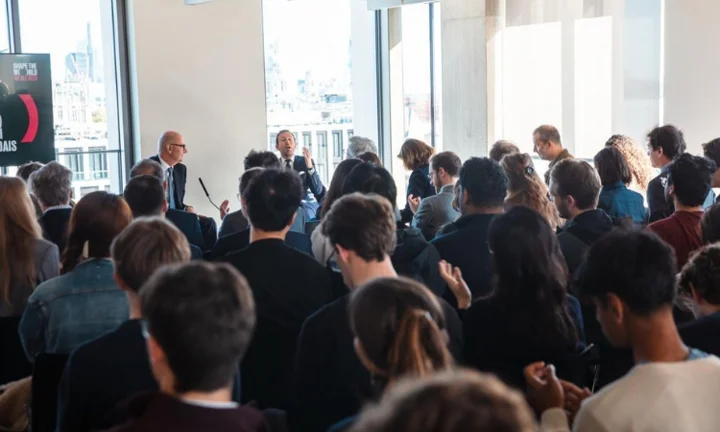
The minister was hosted on campus by Professor Ronny Razin, Head of the Department of Economics. He met with LSE President and Vice Chancellor, Professor Larry Kramer, before meeting with students from both LSE and the Lycée Français Charles de Gaulle in London.
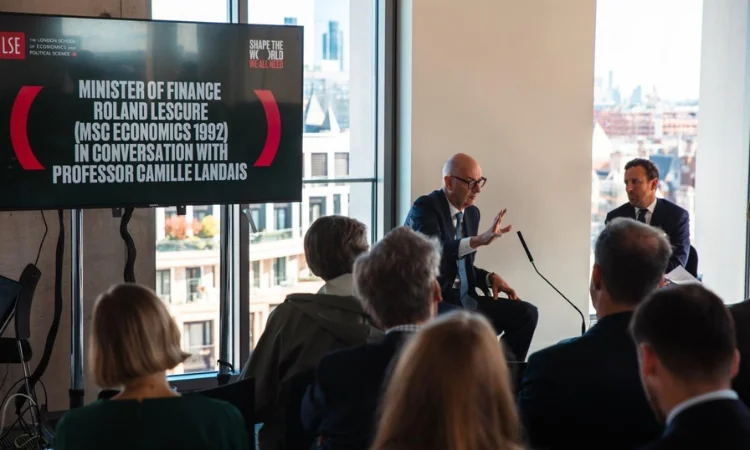
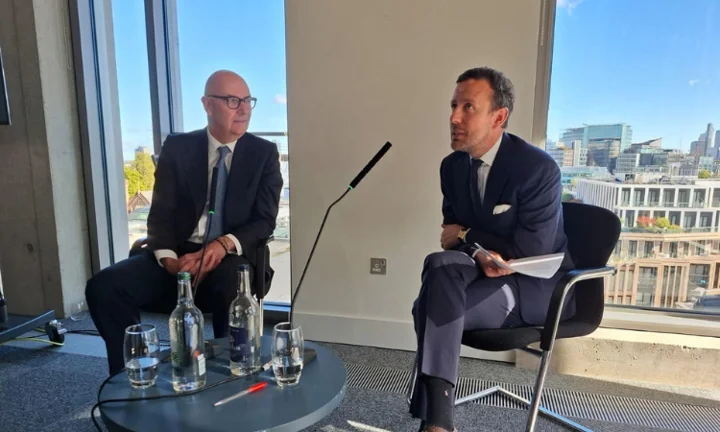
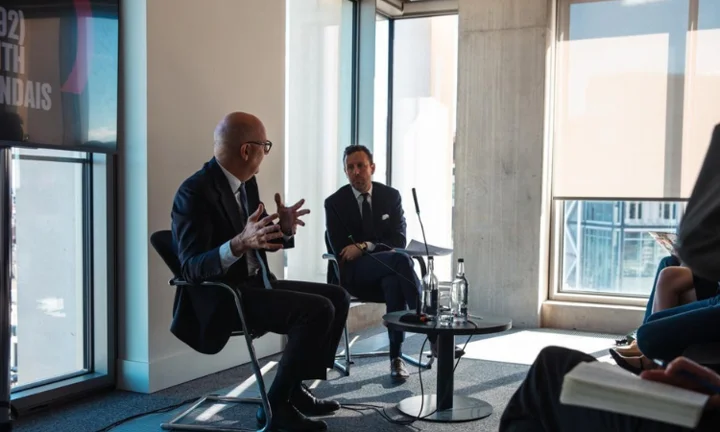
Camille Landais, Professor of Economics and the Co-Director of the recently launched Stone Centre for the Study of Wealth Inequality at LSE, chaired a fascinating discussion with the Minister, who kicked off the conversation by remarking how international LSE is today and how, in his day, he “was one of the only French men here.”
From an LSE economics degree to public life
What stood out to him from his LSE education was how the approach differed from his undergraduate studies in France. “We always started the classes with what's going on in the world, and do we have a way of explaining it. And then we ‘modalise’ it. In France, you usually start with, let's ‘modalise’ it, let's do some calculations, and let's see if that can fit the reality. So it was very much an interesting change of perspective.”
The wider world, Roland said, has changed sharply since his student years. When he was at LSE, the Berlin Wall had recently fallen, and China had not yet joined the World Trade Organization. The prevailing mood, as he described it, was one of confidence in globalisation, trade and peace. That optimism was not misplaced in every respect: global output grew, and hundreds of millions of people escaped poverty. But the backlash has been severe. Trade barriers have returned, war has returned to Europe, inflation has changed the behaviour of markets, and governments are carrying higher levels of public debt.
A changing global order
He was asked about France’s debt crisis, with borrowing currently at five per cent. He described “a global repricing of debt expectations, inflation expectations, that's taking place, and we have to take it on board as policymakers to do the right thing in order to reassure the fact that we're going to do our job.”
Given the audience intergenerational fairness was a theme throughout the discussion, and so fiscal consolidation, in his account, cannot simply be reduced to a programme of cuts. The central question is how to balance lower deficits with the investment needed for future growth. France, he said, must distinguish between current spending and long-term investment in research, innovation, artificial intelligence and infrastructure. Without growth, fiscal restraint risks becoming a “vicious circle” of repeated cuts. With the right mix, it can create the space for investment and protect the social model.
Digital sovereignty was also central to his message. Europe, he said, must invest in artificial intelligence, embed AI in existing companies and build its own champions. France, he argued, has the engineers, carbon-free electricity and industrial base to compete. The point, for him, was not only productivity. It was sovereignty. “We can compete, and we must compete,” he said.
An LSE education grounded in the real world
Roland reflected on how his training in economics shaped his public life, and how the choices facing France today require both economic discipline and political judgement. He returned several times to the limits of economic reasoning when it is detached from people’s lives. Discussing France’s ‘gilets jaunes’ movement that started in 2018, he pointed to the political consequences of a fuel tax that economists might see as a rational price signal, but citizens experience as a direct pressure on household budgets.
Any macro decision we take can have a micro impact on the very lives of people.
Returning to LSE as a government minister, investor and former student, he presented economics as both a discipline and a civic responsibility. It had given him a language for markets and policy, he said, but also a reminder that policy must remain “anchored in the world” - a clear link between the LSE he remembered and the challenges we all now confront.
For Professor Ronny Razin, Lescure’s remarks were a great endorsement of LSE and how rewarding it is to see the impact LSE economics graduates go on to have in public life around the world.
It was great to see Minister Roland Lescure, a graduate of our MSc Economics from 34 years ago. Roland’s reflections were a powerful reminder of what we want an LSE economics education to do: give students the tools to understand the world, but also the judgement to recognise how economic decisions affect people’s lives. To see an alumnus carrying that approach into public life at the highest level was incredibly meaningful for our students.
The Huth Initiative for a New Political Economy