
Masculinity under pressure


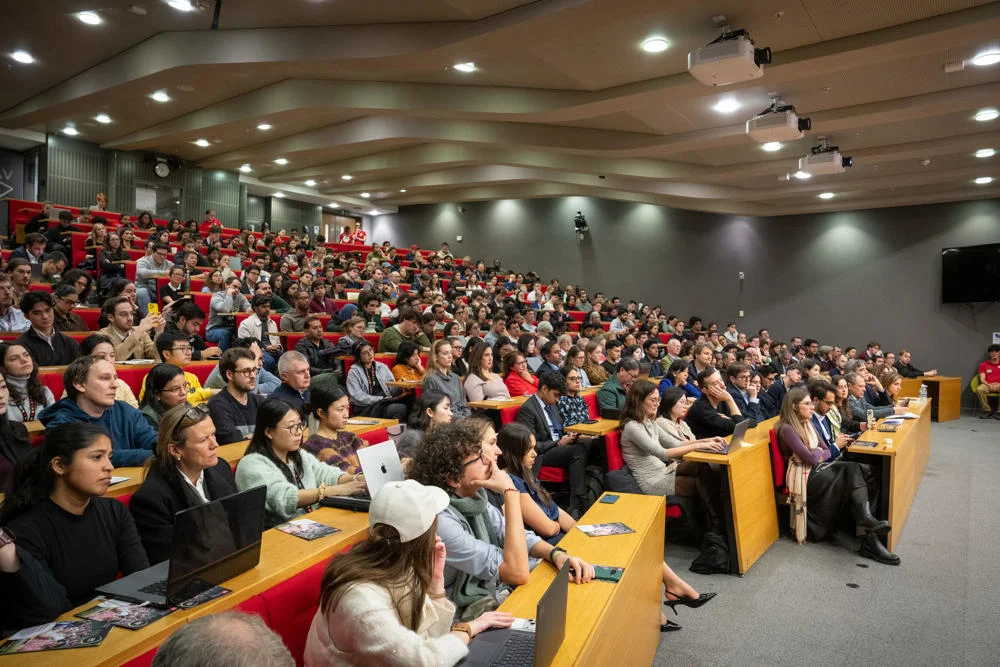
In this talk, Georgios Samaras presented his research on how the post-2009 crash reshaped work, status, and family roles for men, and how that strain was channelled by far-right actors into grievance, protection, and order narratives. The paper traces three mechanisms—economic precarity, threatened masculine identity, and nationalist framing—and maps how they interact to lower thresholds for radical mobilisation. Attendees left with a clearer account of why economic shocks don’t automatically produce extremism but do when identity and messaging align.
Meet our speaker and chair
Georgios Samaras is Lecturer (Assistant Professor) in Public Policy at the International School for Government and Policy Institute, King’s College London. Previously, he was a Lecturer in Political Economy at the Department of Political Economy during the academic year 2022/23. He received his PhD in Political Science from King’s College London in 2022. His doctoral research focused on the emergence of the far-right Greek neo-Nazi party 'Golden Dawn', analysing its impact on voting behaviour and the online mobilisation of the broader far-right in Greece amidst the economic crisis. Dr Samaras is currently leading a study on Greek voting behaviour funded by the ETERON Institute. Additionally, he is a Senior Research Associate at the ENA Institute in Athens, Greece.
Professor Vassilis Monastiriotis is Director of the LSE Centre for Research on Contemporary Greece and Cyprus - Hellenic Observatory, Professor in Political Economy and Eleftherios Venizelos Chair of Contemporary Greek Studies at the European Institute, LSE.
The Hellenic Observatory (@HO_LSE) is internationally recognised as one of the premier research centres on contemporary Greece and Cyprus. It engages in a range of activities, including developing and supporting academic and policy-related research; organisation of conferences, seminars and workshops; academic exchange through visiting fellowships and internships; as well as teaching at the graduate level through LSE's European Institute.
LSE holds a wide range of events, covering many of the most controversial issues of the day, and speakers at our events may express views that cause offence. The views expressed by speakers at LSE events do not reflect the position or views of The London School of Economics and Political Science.
From time to time there are changes to event details so we strongly recommend that if you plan to attend this event you check back on this listing on the day of the event.
Whilst we are hosting this listing, LSE Events does not take responsibility for the running and administration of this event. While we take responsible measures to ensure that accurate information is given here (for instance by checking that the room has been booked) this event is ultimately the responsibility of the organisation presenting the event.
LSE holds a wide range of events, covering many of the most controversial issues of the day, and speakers at our events may express views that cause offence. The views expressed by speakers at LSE events do not reflect the position or views of the London School of Economics and Political Science.
Subscribe to the LSE Events newsletter