

Animal sentience messaging outperforms health and safety in promoting cultivated meat to UK pet owners
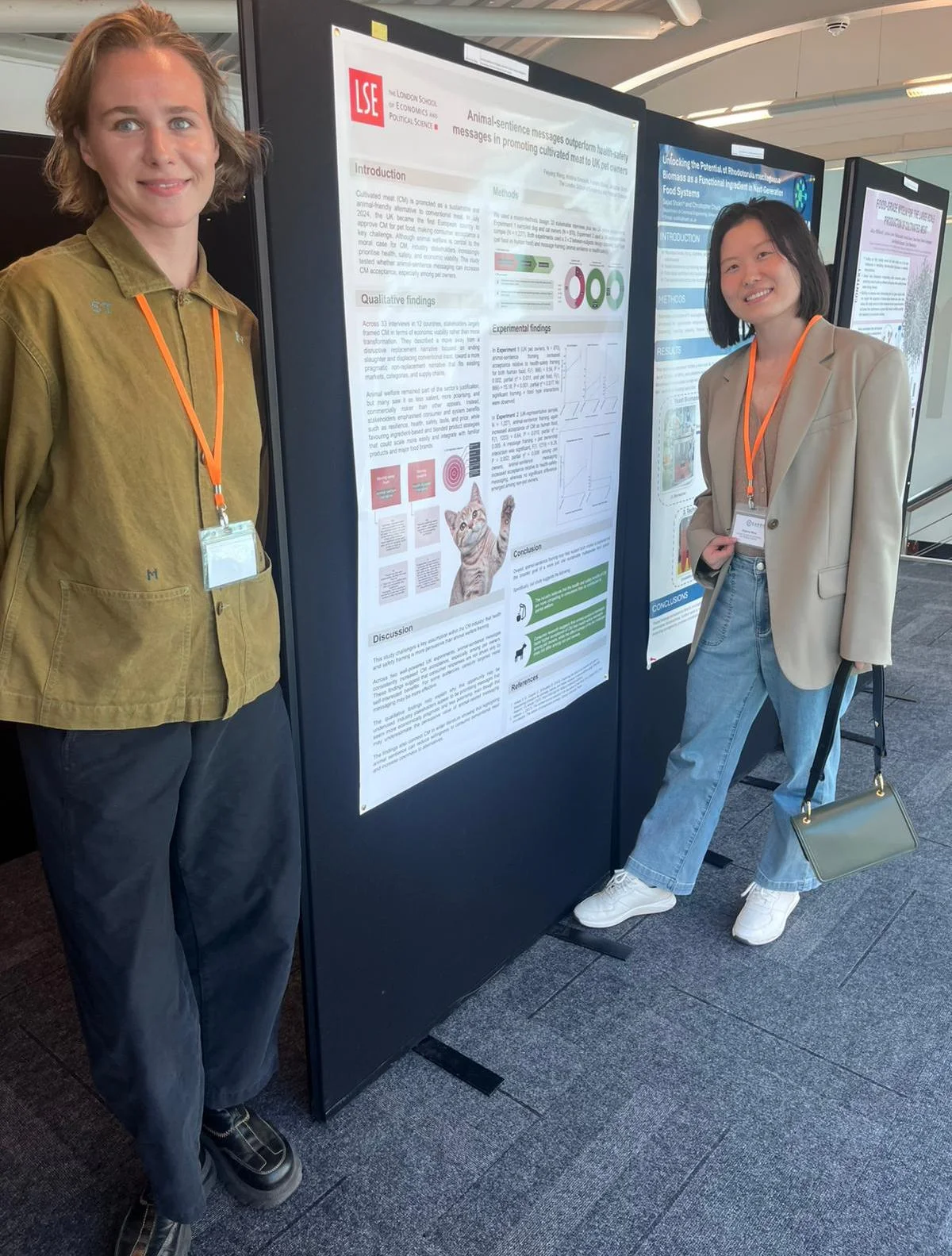
Many people self-describe as animal-lovers, but still buy conventional meat products for themselves and their pets. Our "Changing Behaviours and Attitudes" research team - Feiyang Wang, Kristina Kiminiute, Frederic Basso, Jonathan Birch - are exploring this gap through a psychological and behavioural science lens, to determine how animal-loving values can be more consistently aligned with everyday choices.
One emerging innovation is cultivated (lab-grown) meat, which provides UK pet owners with an alternative to conventional meat pet food. But how these products are promoted is crucial to determining consumer acceptance.
Through interviews with cultivated meat sector stakeholders, the team found that current promotional strategies emphasise benefits such as health and safety rather than messages about animal sentience (e.g. animals' capacities to experience pain and suffering). This approach has been described as more economically practical and less polarising - but is it the most effective?
The teams quantitative experiments found that animal-sentience messages outperform health-safety messages among UK pet owners. For non-pet owners, there is no difference. This suggests an underused opportunity for industry to support consumer acceptance through targeted animal‑sentience messaging.
Feiyang Wang and Kristina Kiminiute were pleased to share these early findings with a poster presentation at the CARMA Cellular Agriculture Manufacturing Hub conference in April 2026 (pictured above). View the poster here.