
Counting as Chinese in the Southern Seas: A decade of transimperial enumerations, c. 1901-1907

Speaker

Chair
In the first decade of the twentieth century, three imperial states—Britain, the United States, and Qing China—each undertook efforts to enumerate emigrant and settled Chinese populations across the transimperial region known today as Southeast Asia.
Reading these competitive and highly discrepant statistical projects—Britain’s empire-wide count of Chinese subjects, the American special census of Chinese in the Philippines and mainland United States, and the Qing Empire’s first informal tabulation of Nanyang Chinese—this paper explores the divergences in their conceptions of ‘Chinese’, calibrated variously by language, race, birthplace, bloodline, history, and other categories.
In these acts of enumeration, demography became an arena for inter-imperial competition: counting Chinese offered a way to claim and stabilize mobile emigrants as subjects. These contestations become visible only by reading the Southern Seas as an exceptional transimperial space—one where multiple Asian and western empires intersected without hegemonic resolution in the era before the creation of Southeast Asia’s postwar nation-states.
The story of how people came to ‘count as Chinese’ in the Southern Seas allows us to rethink the global history of Chinese migration beyond bilateral frameworks of ‘hostland’ and ‘homeland’ that have long dominated the field.
Speaker & chair biographies
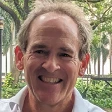
Dr. Rachel Leow is Associate Professor of Modern East Asian History at the University of Cambridge. Her first book, Taming Babel: Language in the Making of Malaysia, explored the ethnolinguistic constructions of Chineseness and Malayness over the colonial-postcolonial transition in Malaysia. She is currently co-editing the Oxford Handbook of Asian Migration and Diaspora, c. 1300s-2000s with Emma Teng, and her next book, Southern Seas: Chinese migrant worlds in the age of global empire, is forthcoming with University of California Press and Penguin Allen Lane.
Prof. John Sidel is Director of the Saw Swee Hock Southeast Asia Centre, and the Sir Patrick Gillam Professor of International and Comparative Politics at the London School of Economics and Political Science (LSE).
*Banner photo by Polina Kuzovkova on Unsplash
LSE holds a wide range of events, covering many of the most controversial issues of the day, and speakers at our events may express views that cause offence. The views expressed by speakers at LSE events do not reflect the position or views of the London School of Economics and Political Science.