
Satellite Sectarianisation or Plain Old Partisanship? Inciting Violence in the Arab Mainstream Media
Speaker
Chair

This report assesses widespread claims that pan-Arab satellite news channels have been responsible for inciting sectarian violence during the Arab uprisings. Based on an empirical study of how three of the most popular channels – Al-Jazeera Arabic, Al-Arabiya and Al-Mayadeen - have framed seminal events involving violence between sects in Syria and Iraq, the report finds that while often geo-politically charged, some of these claims are valid. While abusive language or direct promotion of violence is rare in a mainstream context, incitement to sectarian violence has primarily been invoked through linguistic, stylistic and thematic tropes that forge legitimacy claims and narratives of victimhood. The paper draws on these findings to make recommendations for UK policymaker engagement with the Arab media.
Jessica Watkins is Research Officer at the Middle East Centre, currently working on a DFID-funded project looking at regional drivers of conflict in Iraq and Syria. The project ties in with Jessica’s previous research at the Rand Corporation into Iraqi and regional security issues. Her PhD at the Department of War Studies, King’s College London, was on policing and dispute management in Jordan.
Ian Black (@ian_black) is Visiting Senior Fellow at LSE Middle East Centre and a former Middle East editor, diplomatic editor and European editor for the Guardian newspaper.
Join the conversation on Twitter using #LSEArabMedia
The LSE Middle East Centre (@LSEMiddleEast) builds on LSE's long engagement with the Middle East and North Africa and provides a central hub for the wide range of research on the region carried out at LSE.
Join the MEC mailing listto keep up to date with our latest events, publications, news updates and podcasts.
Keep up to date with the latest MEC podcasts by following us on Soundcloud.
You can also find our latest interviews and videos on YouTube.
If you are planning to attend this event and would like details on how to get here and what time to arrive, as well as on accessibility and special requirements, please refer to LSE Events FAQ. LSE aims to ensure that people have equal access to these public events, but please contact the event’s organiser as far as possible in advance if you have any access requirements, so that arrangements, where possible, can be made. If the event is ticketed, please ensure you get in touch in advance of the ticket release date. Access Guides to all our venues can be viewed online.
LSE holds a wide range of events, covering many of the most controversial issues of the day, and speakers at our events may express views that cause offence. The views expressed by speakers at LSE events do not reflect the position or views of The London School of Economics and Political Science.
From time to time there are changes to event details so we strongly recommend checking back on this listing on the day of the event if you plan to attend.
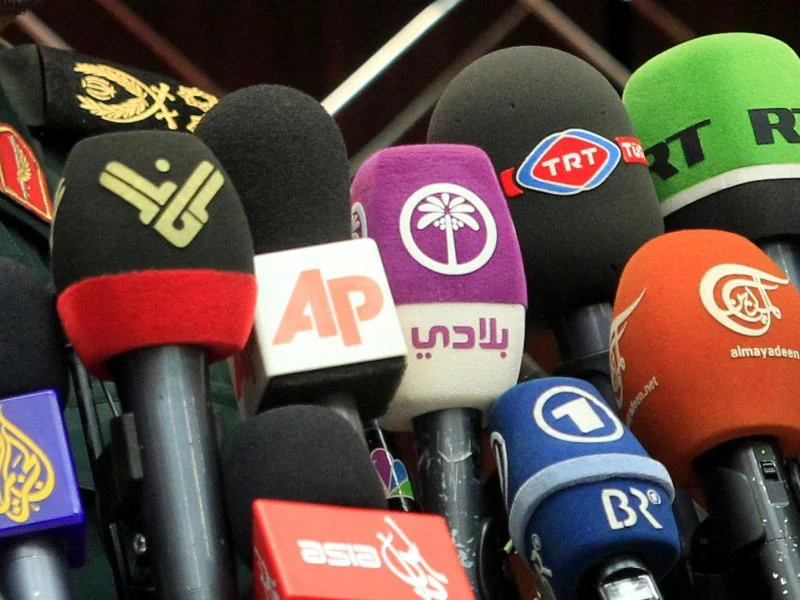
Image: Microphones set out for a Tehran press conference with Iran’s Revolutionary Guards Commander Mohammad Ali Jafari, 16 September 2012. © Stringer/EPA/Shutterstock
LSE holds a wide range of events, covering many of the most controversial issues of the day, and speakers at our events may express views that cause offence. The views expressed by speakers at LSE events do not reflect the position or views of the London School of Economics and Political Science.
Subscribe to the LSE Events newsletter