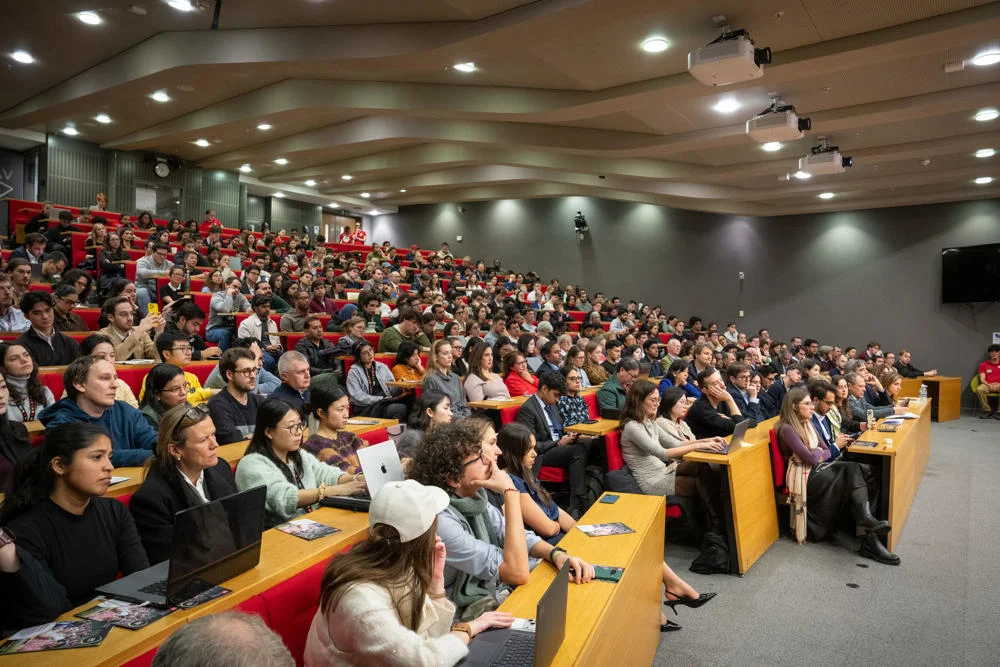
How AI is helping - and harming - animals
Speakers




Learn more about the Jeremy Coller Centre for Animal Sentience, a new LSE initiative committed to making sure technological change works for - rather than against - the interests of other species.
Would you trust a device that claimed to translate your dog or cat's emotions into English? Would you be OK with completely automated, human-free farming? What if you had a driverless car that was indifferent to hitting birds and foxes?
AI is transforming the lives of animals at speed, but these huge impacts are going unnoticed and unregulated. Some of the changes could transform our relationships with our fellow creatures for the better, whereas others could make existing animal welfare problems much worse and even more deeply entrenched. How can we curb the risks and take the opportunities?
Meet our speakers and chair
Kristin Andrews (@KristinAndrewz) is Professor of Philosophy at the CUNY Graduate Center, York Research Chair in Animal Minds and Professor of Philosophy at York University (Toronto), and CIFAR Fellow in the Future Flourishing program. She is on the board of directors of the Borneo Orangutan Society Canada, a member of the College of the Royal Society of Canada, and the author of several books on social minds, animal minds, and ethics.
Leonie Bossert works on Environmental, Animal, AI, and Conservation Ethics at the University of Vienna. Leonie's research focuses on the intersection of technology and environmental ethics, the ethics of life science, theories of interspecies and intergenerational justice, as the ethics of sustainable development, including research on sustainable AI.
Jane Lawton is Managing Director of the Earth Species Project, an initiative to decode animal communication using AI. She has more than 30 years of international experience working with leading organisations focused on sustainable development and nature conservation.
Jeff Sebo (@jeffrsebo) is Associate Professor of Environmental Studies, Director of the Center for Environmental and Animal Protection, Director of the Center for Mind, Ethics, and Policy, and Co-Director of the Wild Animal Welfare Program at New York University. In 2025, he published The Moral Circle: who matters, what matters, and why.
Jonathan Birch (@birchlse) is Professor of Philosophy and Director of the new Jeremy Coller Centre for Animal Sentience at LSE. In 2021, he led a "Review of the Evidence of Sentience in Cephalopod Molluscs and Decapod Crustaceans" that led to invertebrate animals including octopuses, crabs and lobsters being included in the UK government's Animal Welfare (Sentience) Act. In 2024, he published The Edge of Sentience: risk and precaution in humans, other animals, and AI, an Open Access book.
More about this event
The Jeremy Coller Centre for Animal Sentience at LSE Philosophy (@LSEPhilosophy) is dedicated to improving the lives of non-human animals through interdisciplinary, impact-oriented research across the natural sciences, social sciences and humanities.
Join us on campus or register to watch the event online at LSE Live. LSE Live is the home for our live streams, allowing you to tune in and join the global debate at LSE, wherever you are in the world. If you can't attend live, a video will be made available shortly afterwards on LSE's YouTube channel.
Podcast and video
A podcast of this event is available to download from How AI is helping - and harming - animals.
A video of this event is available to watch at How AI is helping - and harming - animals.
Podcasts and videos of many LSE events can be found at the LSE Public Lectures and Events: podcasts and videos channel.
Hashtag for this event: #LSEEvents
Many speakers at LSE events also write for LSE Blogs, which present research and critical commentary accessibly for a public audience. Follow LSE British Politics, LSE Business Review, LSE Impact, LSE European Politics and the LSE Review of Books to learn more about the debates our events series present.
If the event is live streamed, automated live captions will be available. Please note that this feature uses Automatic Speech Recognition (ASR) technology, or machine generated transcription and is not 100% accurate.
Photographs are regularly taken at LSE events both by LSE staff and members of the media and events are routinely filmed. Photographs from events taken by LSE staff are often used on LSE's social media accounts, with videos being made available on the LSE Player. If you have any concerns about this please contact the event organiser in advance of the event.
Please contact the Press Office if you would like to request a press seat or have a media query about this event, email LSE.Press.Events@lse.ac.uk. Please note that press seats are usually allocated at least 24 hours before each event.
We aim to make all LSE events available as a podcast subject to receiving permission from the speaker/s to do this, and subject to no technical problems with the recording of the event. Podcasts are normally available 1 week after the event. Podcasts and videos of past events can be found online.
Event updates and other information about what’s happening at LSE can be found on our Facebook page and for live photos from events and around campus, follow us on Instagram.
Livestreams and archive videos of past lectures are shared on our YouTube channel while event podcasts can be found on the LSE Player.
Attending our events in-person or online? Join the conversation using #LSEEvents.
If you are planning to attend this event and would like details on how to get here and what time to arrive, as well as on accessibility and special requirements, please refer to LSE Events FAQ. LSE aims to ensure that people have equal access to these public events, but please contact the events organiser as far as possible in advance if you have any access requirements so that arrangements, where possible, can be made. If the event is ticketed, please ensure you get in touch in advance of the ticket release date. Access Guides to all our venues can be viewed online.
LSE has now introduced wireless for guests and visitors in association with 'The Cloud', also in use at many other locations across the UK. If you are on campus visiting for the day or attending a conference or event, you can connect your device to wireless. See more information and create an account at Join the Cloud.
Visitors from other participating institutions are encouraged to use eduroam. If you are having trouble connecting to eduroam, please contact your home institution for assistance.
The Cloud is only intended for guest and visitor access to wifi. Existing LSE staff and students are encouraged to use eduroam instead.
From time to time there are changes to event details so we strongly recommend that if you plan to attend this event you check back on this listing on the day of the event.
LSE holds a wide range of events, covering many of the most controversial issues of the day, and speakers at our events may express views that cause offence. The views expressed by speakers at LSE events do not reflect the position or views of the London School of Economics and Political Science.
Subscribe to the LSE Events newsletter