

“The talent is already here”: LSE alumni powering Africa’s AI future

The memory of studying by candlelight. The desire to understand the impact on systems. The knowledge that context is everything. For three African LSE alumni, their work in AI could not be more authentic.
“Entire afternoons, nights and mornings without power. That was not exceptional,” reflects Ikenna Oguguo (MSc African Development 2020). “Growing up in boarding school in Nigeria, hundreds of us were regularly left in the dark. That experience shaped every choice I made across a 20-year career building power systems. You do not forget what it feels like to study by candlelight, or not study at all.” Ikenna is the Co-Founder and Group President of Wetility, South Africa’s fastest growing integrated multi-utility fintech platform, harnessing the power of the sun and of AI to bring positive change to people across Africa. He’s one of a growing number of LSE alumni in Africa whose careers now directly involve the management, deployment and possibilities of AI to respond to some of the continent’s most urgent challenges.
Adapting in real time
Ikenna recalls a familiar phrase from his childhood in Nigeria—“when they bring light”—a shorthand for the uncertainty that defined electricity provision for millions.
“That phrase captures how infrastructure has historically been experienced across Africa,” he says. “It has typically been a promise made to communities, on an uncertain timeline, by institutions that are often missing the urgency needed by those on the ground.”
Through Wetility, which has raised USD 75 million to provide solar-powered energy with no upfront cost to customers in South Africa, Ikenna and his team are using AI to shift that dynamic. Their systems analyse household consumption patterns, weather forecasts and tariff structures to optimise when to store or draw energy, balancing cost savings with reliability. No small task in a country where, in 2025 alone, their systems recorded more than 91,000 grid outages.
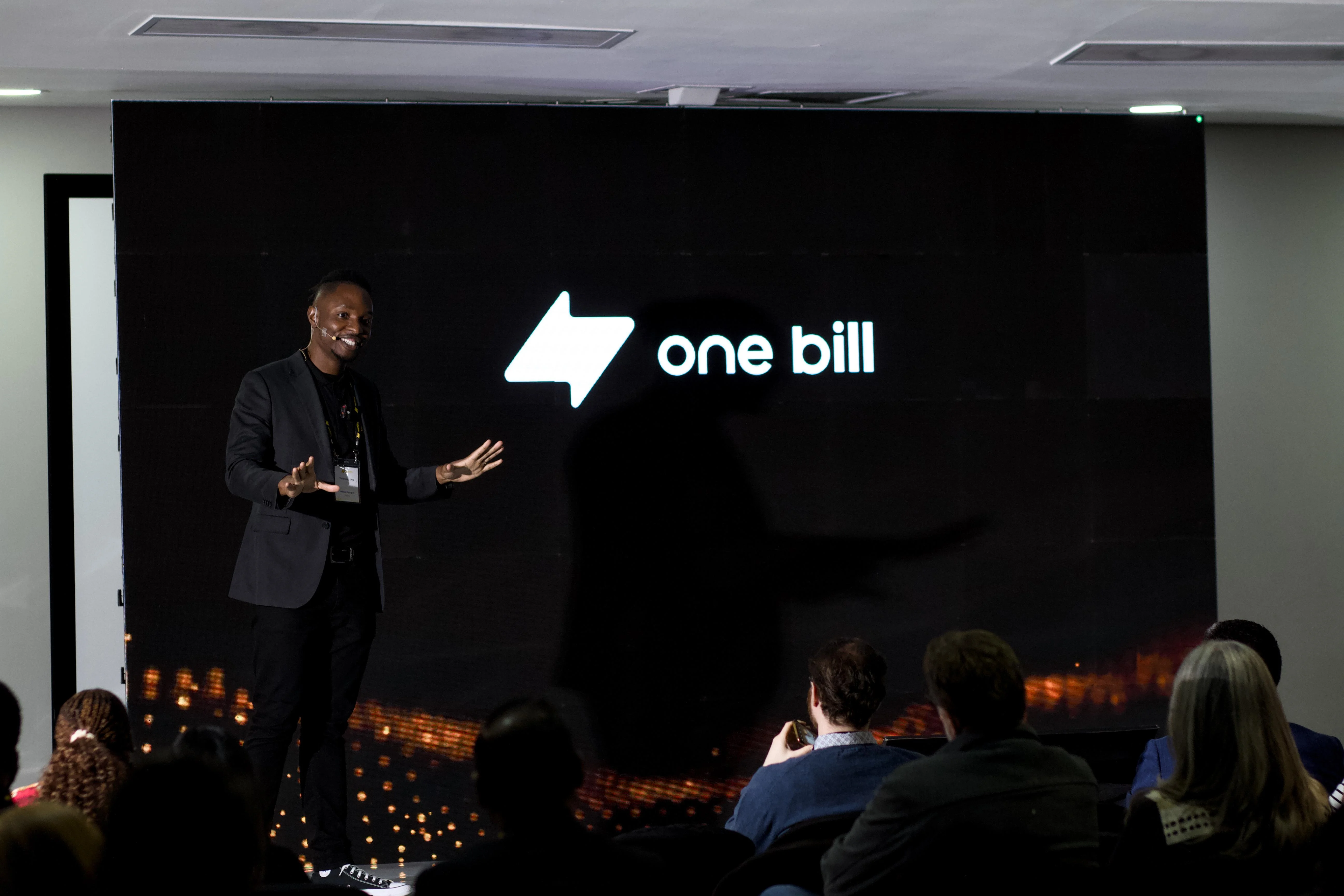
“Most solar systems were designed for stable grids and thus often struggle to withstand this level of disruption,” he explains. “AI allows us to adapt in real time, so customers can keep the lights on and still save money.”
The impact is profound. “When I speak to a parent whose children can now do homework after dark, or a small business owner who can finally keep the lights and fridges running reliably, those are not just individual journeys. Each one breaks a cycle. A child who can study at night has a different trajectory. A business that stays open creates jobs and keeps wealth circulating in a community. The ripple effect across generations is what gets me out of bed every morning,” explains Ikenna.
What we build today determines what the next generation inherits.
He credits LSE with bolstering his engineering background with the necessary context of policy, economics and institutional history to be successful in the public service access space. “The scholars who shaped the MSc African Development programme had lived through decades of what works and what fails on this continent. That is irreplaceable,” Ikenna reflects. The network he gained at LSE also feeds his success. “Peers from my cohorts have contributed directly to Wetility’s growth. These are people who hold genuinely insightful views on development, and who hold me to account on the bigger picture especially when the weight of daily operational demands threatens to narrow the lens. That combination from LSE of intellectual rigour and trusted relationship is something I draw on every day”.
“The main risk is not just job loss, but income volatility.”
For Emma Kimani, (Master of Public Policy 2025, Programme for African Leadership), it’s the impact AI-driven change will have on the welfare systems of different countries that is of particular interest through her role as a Research Fellow at the Windfall Trust. It’s a role she’s come to after a career working across different public sectors, bolstered by what she calls the “ideal balance of quantitative rigor and policy-oriented coursework” of her LSE degree. Receiving a scholarship meant she could fully engage in her studies and now bring her experience and knowledge to bear on the world of AI.
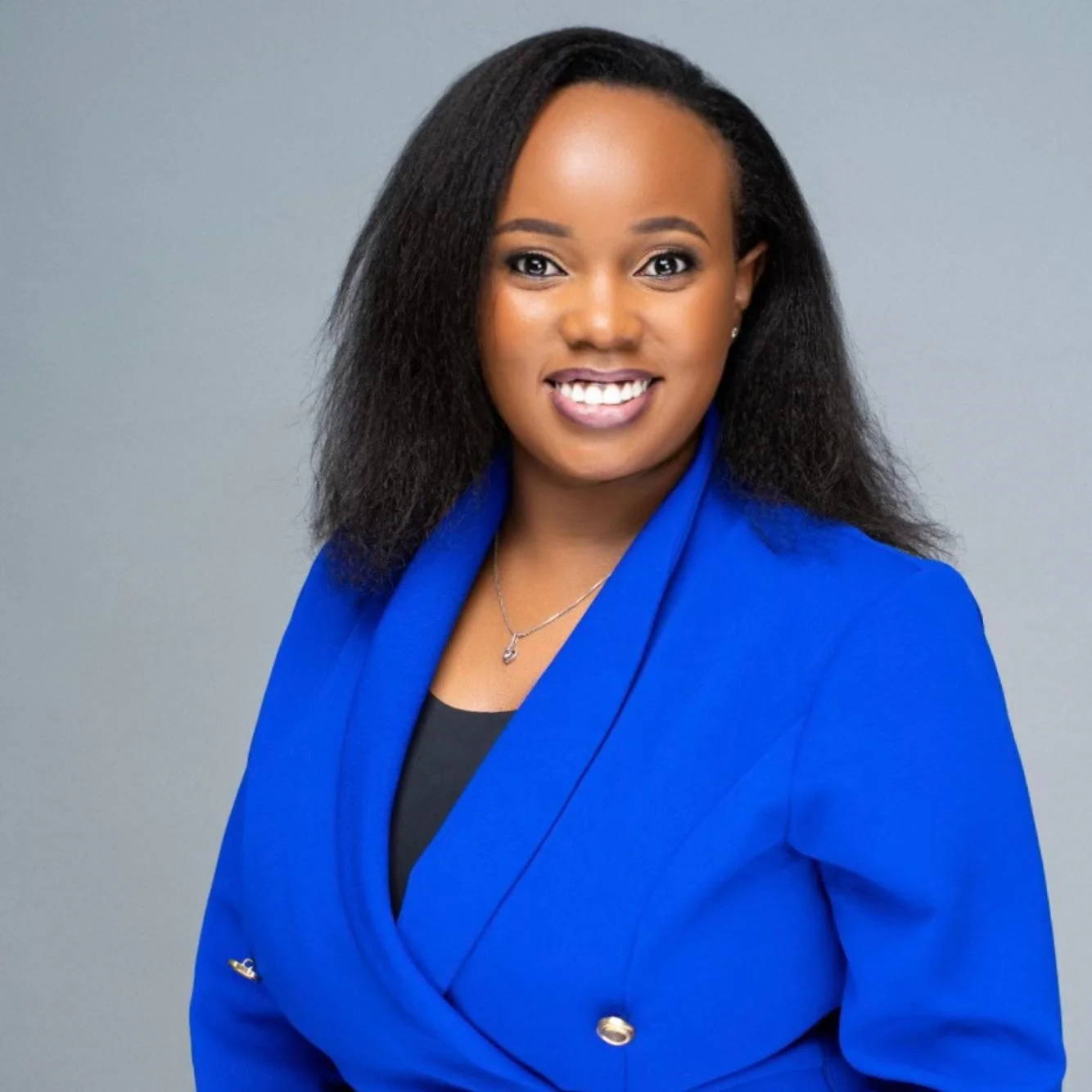
“My work focuses on how African economies, such as Kenya, where most people work in informal or self-employed roles, experience AI-driven change differently. A key finding is that the main risk is not just job loss, but income volatility. People’s earnings can fluctuate significantly, and AI is likely to amplify this by increasing competition in digital services and automating routine tasks,” Emma explains.
By applying a Welfare Resilience Framework, Emma seeks to understand how well systems can respond, not only to immediate shocks but to longer-term structural changes in inequality and productivity. Her findings highlight that policy solutions alone are not enough; their success depends on the strength of delivery systems, including digital infrastructure, administrative capacity and data availability.
Yet amid these challenges, she points to encouraging examples of AI’s impact on the ground. In Kenya, AI-enabled diagnostic tools are already supporting frontline healthcare workers, helping them detect high-risk cases earlier and extend care in low-resource settings. Smartphone-based applications can assist in diagnosing diseases such as malaria and tuberculosis, while AI-assisted ultrasound is improving maternal care, even in clinics without specialist staff.
These tools aren’t a replacement for healthcare workers. Emma notes, “they extend their reach and improve reliability where access has been limited.”
From her perspective, Emma argues that speed is not the way to keep up with evolutions in AI.
It’s more about whether the underlying systems are strong enough to evolve with it.
The pace of change is fast, and trying to respond to each development individually is unlikely to work. What seems more effective is a shift towards more structured and coordinated approaches. You can already see this in the push for national AI strategies in countries like Kenya and Nigeria, as well as in Rwanda’s work on data governance and responsible AI.” For Emma, the need for investments in data ecosystems, connectivity and skills is critical, as are efforts to embed AI within broader development priorities.
“What AI does for this generation is multiply us.”
For Kayode Adeniyi (MSc Management of Information Systems and Digital Innovation 2025, Programme for African Leadership), his work as Founder and Chief Technology Officer of Quantile Labs and as an AI researcher, solidifies for him that people need to be at the centre of the AI conversation. “The talent is already here,” he comments, “What AI does for this generation is multiply us. A solo researcher in Lagos can now do work that once required a lab of twenty. The bottleneck on African talent has rarely been ability. It has been the gap between what once person could do here and what one team in a wealthier place could do there. AI narrows that gap.”
Through his work, Kayode sees firsthand the AI opportunities to societal challenges around health, climate, finance and language. When it comes to climate and water in Africa, for the past eight years, Kayode has been using AI and satellite data to map flood risk across more than 30 communities in Nigeria and Ghana. “Climate data in Africa is sparse, fragmented, and often arrives too late to act on. AI is good at finding signals in messy, incomplete data.”
Kayode has also helped to bring the power of AI to finance in Africa. “As an engineer at Flutterwave, I worked on payment infrastructure that serves millions of customers across the continent. The data flowing through African mobile money is some of the richest behavioural data in the world. A trader in Onitsha, Nigeria may have no formal credit history, but her daily transaction rhythm tells a clearer story than any bank statement. AI can read that rhythm,” he highlights. The focus on the local and personal can also be made possible when AI facilitates language modelling. “Africa has more than 2,000 languages, and most large models still treat them as noise. That treatment comes at a real cost.” Kayode points out. “The value sitting inside our languages is cultural, and it is economic. The opportunity is to use AI to bring African languages into full digital life, in education, in commerce, in healthcare, and in the everyday tools that increasingly mediate how we live.”
The promise and reality is exciting, but to flourish, “we need the unglamourous things. Stable electricity. Reliable internet. Compute access. A room where curiosity can compound into capability,” Kayode says.
Last year, Kayode worked with the United Nations Development Programme on country-wide AI landscape assessments across African countries, covering everything from digital public infrastructure to data exchange. His work also involved developing AI governance and institutional readiness frameworks for governments trying to figure out where to begin. “What I find genuinely encouraging is that in examples like with Nigeria's National AI Strategy, the strategy has moved from paper to action.”
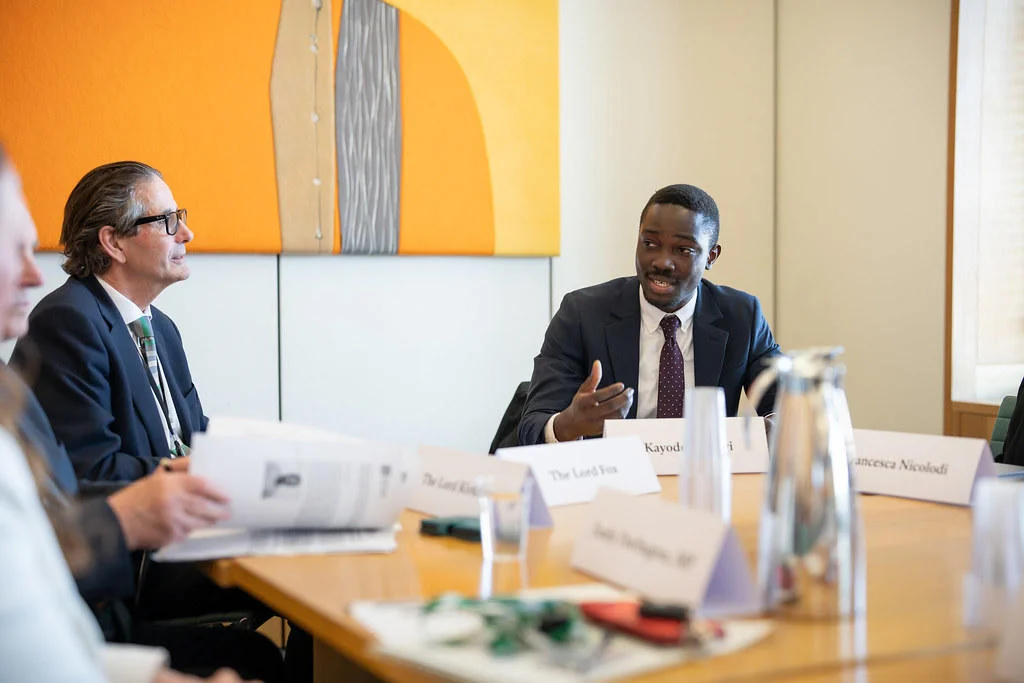
Ultimately though, for Kayode, it’s people and the individual contexts of local situations which need to be given focus. “The rooms where the largest AI decisions are made are rooms in which the people most affected by the outputs are rarely present,” Kayode reflects.
The two questions we need to keep asking are ‘How does this technology benefit everyone?’ and ‘How does AI handle the moments that demand truth?
Truth beyond probability. Truth beyond the most likely pattern. The kind of truth that lives in the texture of a particular life.” He gives the example of insurance, an area where AI is already making decisions at scale, in the aftermath of a flood. “A flood to a farmer in the Niger Delta is completely different event from a flood to a car owner in central London. For the farmer, it is a season of income gone and a food supply disrupted. For the car owner, it is an inconvenience and a claim form. Both are valid, yet the truth of what the flood means differs entirely between these two lives. When an AI system is asked to prove that risk, or approve the claim, or decide who gets paid first, it has to reach for something beyond pattern in the data. It has to reach for context. The question of who supplies that context, and who gets overruled when their context is inconvenient, is the louder version of the question few are asking.”
The future is now
Together, the work of these three LSE alumni reflects a purposeful relationship with AI where it is being imagined and implemented across the African continent, as a tool shaped by local realities, needs and ambitions.
“Africa belongs to this moment by right,” reflects Kayode, “but the young people on this continent, and the millions more behind them, do need permission from us, the ones already in the room, to build, to fail, and to build again.”
In March 2026, the LSE Africa Summit, an annual student-led conference that promotes debate around the continent's contemporary challenges and opportunities, had AI as its theme. View recordings of some of the panel discussions here.
April 2026