

From absorption to productivity: lessons from RRF experience


As the EU’s Recovery and Resilience Facility (RRF) approaches its 2026 completion, this roundtable will assess its role in fostering economic recovery and structural transformation, with Greece as a central case study. Greece has been one of the largest RRF beneficiaries and an early adopter of green and digital reforms, making its experience highly relevant for understanding how EU recovery instruments can support long-term growth.
The discussion will explore four key dimensions: the effectiveness of RRF implementation across member states; Greece’s capacity to deliver reforms and investments with high productivity impact; governance and monitoring lessons from the conditionality model; and forward-looking recommendations for designing future EU funding tools. By situating Greece’s experience within the broader EU context, the panel aims to identify what worked, what didn’t, and how to improve the link between absorption and sustainable growth.
This event will bring together policymakers, academics, and practitioners to generate actionable insights for Greece’s growth strategy and inform debates on the next EU Multiannual Financial Framework.
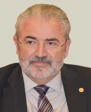
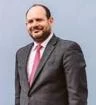
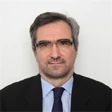
Meet our speakers
Dr Fay Makantasi is the Research Director at diaNEOsis, one of Greece’s most distinguished think tanks. She holds extensive academic experience, having taught Microeconomic Theory and Game Theory at the Athens University of Economics and Business (AUEB) and Principles of Economics at the Hellenic Open University (HOU). She completed her PhD at AUEB, focusing on a game-theoretic approach to international trade. Her research has been published in international academic journals, and she has presented her research at prominent national and international conferences. She has also co-authored and edited significant socio-economic studies, focusing on Greece’s path to recovery from the economic crisis and its broader modernization efforts. Her contributions to applied research and policy analysis continue to influence critical debates on Greece’s development trajectory and institutional reform.
Nikos Mantzoufas is Associate Partner at EY Parthenon in Athens, leading EU Policies & Access to EU Funding & Incentives. With more than 25 years of experience across government, consulting, investment banking, and industry, he specializes in EU funding strategy, public-private partnerships, and large-scale investment programs. He previously served as Governor of Greece’s Recovery and Resilience Facility Agency, overseeing the country’s €37 billion plan, and has led major financing initiatives with the European Commission, EIB, EBRD, and global industrial players. He is widely recognized for bridging public policy and commercial execution.
George Petrakos is Professor at the Department of Planning and Regional Development, University of Thessaly. He research interests include development, integration and regional policy. He has served as the Rector of the University of Thessaly (2014-18), Dean of the Engineering School, University of Thessaly, 2023-24, Chair of the Department of Planning and Regional Development (2000-04, 2008-10), Expert with the European Research Council (ERC), Visiting Scholar, LSE, (2019), Vice-President of the European Regional Science Association (ERSA) (2007-11), Secretary General in the Ministry of Development, (2010-12), and Member of the Board of Directors of the Hellenic Development Bank (2018-19).
Anthony Bartzokas is Professor of Economics at the University of Athens, Research Associate at the London School of Economics and Political Science and Director of the International Economics and Development Laboratory, where research focuses on growth dynamics, economic integration, and structural transformation. His research covers financial systems, corporate investment and innovation dynamics, informed by direct experience in investment decision-making and financial markets. He previously served as a Board Member of the European Bank for Reconstruction and Development. He has led international research teams working on how financial constraints shape innovation and capital market development in emerging markets.
Vassilis Monastiriotis is Director, LSE Centre for Research on Contemporary Greece and Cyprus - Hellenic Observatory, Professor in Political Economy and Eleftherios Venizelos Chair of Contemporary Greek Studies at the European Institute, LSE.
More about this event
The Hellenic Observatory (@HO_LSE) is internationally recognised as a leading research centre on contemporary Greece and Cyprus. In 2024, it became the LSE Centre for Research on Contemporary Greece and Cyprus, with a strategy to expand its research base within LSE and beyond. The Centre produces world-leading, non-partisan research, critically engaging with key issues and fostering debate among academics, policymakers, and the public. Its work spans academic research, knowledge exchange, and policy impact.
Follow us: Instagram, LinkedIn, Bluesky, Twitter, YouTube.
Join our mailing list to receive news about our events and activities.
From time to time there are changes to event details so we strongly recommend that if you plan to attend this event you check back on this listing on the day of the event.
Whilst we are hosting this listing, LSE Events does not take responsibility for the running and administration of this event. While we take responsible measures to ensure that accurate information is given here this event is ultimately the responsibility of the organisation presenting the event.
LSE holds a wide range of events, covering many of the most controversial issues of the day, and speakers at our events may express views that cause offence. The views expressed by speakers at LSE events do not reflect the position or views of the London School of Economics and Political Science.
LSE holds a wide range of events, covering many of the most controversial issues of the day, and speakers at our events may express views that cause offence. The views expressed by speakers at LSE events do not reflect the position or views of the London School of Economics and Political Science.