
Limitarianism: the case against extreme wealth
Speakers


It’s often said that there shouldn’t be any billionaires. But this is a mistake. What we need is a world without decamillionaires – people having more than ten million pounds. That is what the philosopher Ingrid Robeyns from the University of Utrecht argues in her new book Limitarianism. The Case Against Extreme Wealth.
Why would a world without anyone being superrich be better? Because extreme wealth undermines democracy; is incompatible with climate justice; and the money could be used much better elsewhere. Most fundamentally, no-one deserves to have so much money. But do these reasons stand up to scrutiny? Would preventing the accumulation of extreme wealth kill innovation, undermine our freedoms and opportunities to live the lives we lead, and in the end also harm the poor? Is limitarianism viable? Would it require us to abolish capitalism, and if so, what could replace it? And what, if anything, would it require from the overwhelming majority who do not have sizeable wealth?
This event will put these ideas to the test in a lively debate with the author of Limitarianism in conversation with LSE's Lea Ypi and Martin Sandbu of the Financial Times.
Meet our speakers and chair
Ingrid Robeyns (@IngridRobeyns) was trained in economics and in philosophy. She received her PhD from Cambridge University, where she was supervised by Amartya Sen. Her work focusses on socio-economic questions in contemporary political philosophy and applied ethics. Robeyns holds the Chair in Ethics of Institutions at the Ethics Institute of Utrecht University.
Martin Sandbu (@MESandbu) is the Financial Times's European economics commentator. He also writes Free Lunch, the FT's weekly newsletter on the global economic policy debate. He has been writing for the FT since 2009, when he joined the paper as economics leader writer. Before joining the FT, he worked in academia and policy consulting. He is the author of three books, on business ethics, the euro, and on the economics of belonging.
Lea Ypi is Professor in Political Theory in the Government Department, London School of Economics and Political Sciene, and Adjunct Associate Professor in Philosophy at the Research School of Social Sciences, Australian National University. Before joining LSE, she was a Post-doctoral Prize Research Fellow at Nuffield College (Oxford) and a researcher at the European University Institute where she obtained her PhD.
Tania Burchardt is Associate Director of the Centre for Analysis of Social Exclusion (CASE), Deputy Director of STICERD, and an Associate Professor in the Department of Social Policy at LSE.
More about this event
The Centre for Analysis of Social Exclusion (@CASE_LSE) was established in October 1997 at the London School of Economics and Political Science (LSE). We are a multi-disciplinary research centre exploring social disadvantage and the role of social and public policies in preventing, mitigating or exacerbating it. Social disadvantage is taken to be multidimensional, and often best understood in a dynamic or lifecourse perspective, and with individual, family, local, national and international aspects.
is home to some of the most internationally respected experts in the study of politics. in the Department of Government maintains close relations with political theorists and philosophers in other parts of the School, for example in the Departments of Law, Philosophy, and International Relations.
The Programme on Cohesive Capitalism is a major new multi-disciplinary initiative to investigate new politico-economic paradigms, institutions and policies that could serve the common interest. Led by Professor Tim Besley, and housed in STICERD and the Department of Economics, it will bring together world-class thinkers in political philosophy and the social sciences to address some of the fundamental questions about the kind of world that we want to create and what is needed to bring it about.
Explore LSE’s dedicated hub , showcasing research and expertise on the state of the UK economy, its global context and its future.
Twitter Hashtag for this event: #LSEWealth
Podcast & Video
A podcast of this event is available to download from Limitarianism: the case against extreme wealth.
Podcasts and videos of many LSE events can be found at the LSE Public Lectures and Events: podcasts and videos channel.
Many speakers at LSE events also write for
, which present research and critical commentary accessibly for a public audience. Follow
, the
, the
,
and the
to learn more about the debates our events series present.
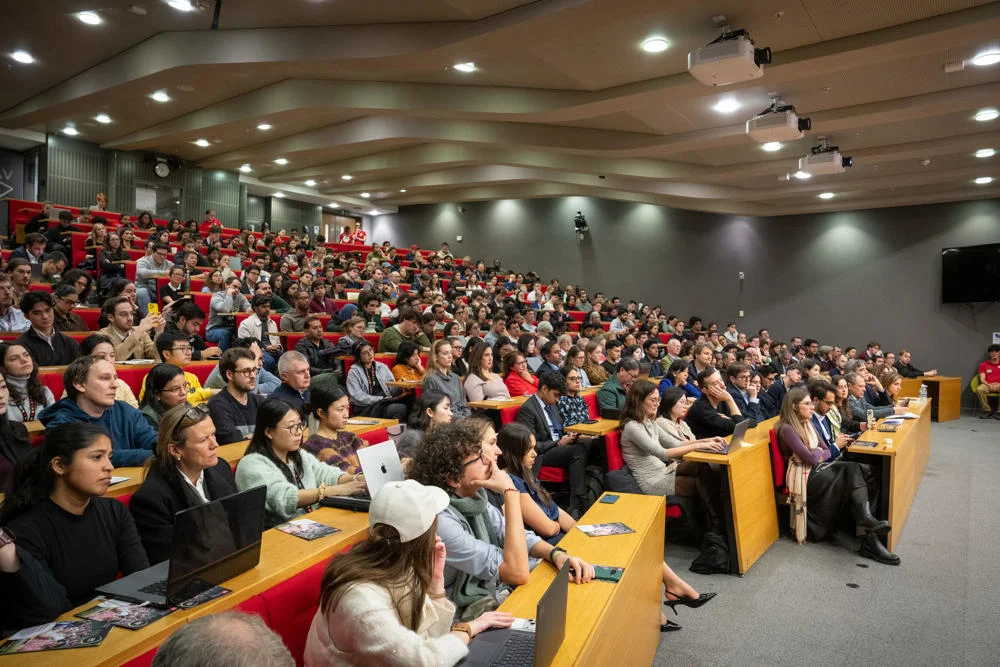
Photographs taken on behalf of LSE are often used on our social media accounts, website and publications. At events, photographs could include broad shots of the audience and lecture theatre, of speakers during the talk, and of audience members as they participate in the Q&A.
If you are photographed participating in an event Q&A but would not like your photograph to be stored for future use, please contact events@lse.ac.uk.
We aim to make all LSE events available as a podcast subject to receiving permission from the speaker/s to do this, and subject to no technical problems with the recording of the event. Podcasts are normally available 1 week after the event.
of past events can be found online.
Follow LSE public events on Twitterfor notification on the availability of an event podcast, the posting of transcripts and videos, the announcement of new events and other important event updates. Event updates and other information about what’s happening at LSE can be found on the LSE's Facebookpage and for live photos from events and around campus, follow us on Instagram. For live webcasts and archive video of lectures, follow us on YouTube.
LSE in Picturesis a selection of images taken by the school photographer.
If you are planning to attend this event and would like details on how to get here and what time to arrive, as well as on accessibility and special requirements, please refer to
. LSE aims to ensure that people have equal access to these public events, but please contact the events organiser as far as possible in advance if you have any access requirements so that arrangements, where possible, can be made. If the event is ticketed, please ensure you get in touch in advance of the ticket release date.
Access Guides to all our venues can be viewed online
.
LSE has now introduced wireless for guests and visitors in association with 'The Cloud', also in use at many other locations across the UK. If you are on campus visiting for the day or attending a conference or event, you can connect your device to wireless. See more information and create an account at Join the Cloud.
Visitors from other participating institutions are encouraged to use
. If you are having trouble connecting to eduroam, please contact your home institution for assistance.
The Cloud is only intended for guest and visitor access to wifi. Existing LSE staff and students are encouraged to use
instead.
LSE holds a wide range of events, covering many of the most controversial issues of the day, and speakers at our events may express views that cause offence. The views expressed by speakers at LSE events do not reflect the position or views of The London School of Economics and Political Science.
From time to time there are changes to event details so we strongly recommend that if you plan to attend this event you check back on this listing on the day of the event.
LSE holds a wide range of events, covering many of the most controversial issues of the day, and speakers at our events may express views that cause offence. The views expressed by speakers at LSE events do not reflect the position or views of the London School of Economics and Political Science.
Subscribe to the LSE Events newsletter