

News

Read about the School of Public Policy's activities and impact on society.
April 2026

Cybersecurity regulation is fragmenting the global economy — LSE and Sciences Po call for urgent reform
New joint policy paper sets out practical steps to reduce regulatory duplication, cut compliance costs, and strengthen cyber defences across borders.

School of Public Policy students awarded top prize at Global Public Policy Network competition
Congratulations to the eleven School of Public Policy (SPP) students who represented LSE at the annual Global Public Policy Network (GPPN) conference and competition 2026.
March 2026

Lula, the man, the myth and a dream of Latin America
The LSE School of Public Policy welcomed Richard Lapper to the Old Theatre last week for a timely discussion on the life and legacy of Luiz Inácio Lula da Silva.

The wrong choice in Cuba: new commentary by Professor Andrés Velasco
Professor Andrés Velasco, Dean of the School of Public Policy, has published a new Project Syndicate commentary, The Wrong Choice in Cuba, examining current US efforts to reshape Cuba’s political landscape.

SPP students visit the European Bank for Reconstruction and Development
Students from the LSE School of Public Policy recently visited the European Bank for Reconstruction and Development for an insightful look into the work of one of the world’s leading development finance institutions.
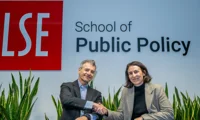
Developing Chile's public leaders through the Luksic Scholarship
The Luksic Foundation has renewed its scholarship programme with LSE’s School of Public Policy for a further three years, extending a partnership that has supported 38 Chilean students since 2020.

Why Voters Embrace Eroding Democracies: Understanding the Paradox of Democratic Backsliding
Professor Andrés Velasco, Dean of the School of Public Policy, has published a new commentary in Project Syndicate titled The Paradox of Democratic Backsliding, offering a timely analysis of a puzzling trend in global politics.

Devolution economics: can local decision making strengthen Britain’s economies?
Last Monday the School of Public Policy co-hosted a public event with the LSE Growth Lab titled “Devolution economics: can local decision making strengthen Britain’s economies?”. The discussion brought together policymakers, economists and business leaders to explore the opportunities and risks of increased devolved policymaking across the UK.

SPP students visit Downing Street and the Royal Courts of Justice
Studying public policy in London offers a unique advantage. With the institutions that shape government, law and public decision-making located just minutes from campus, the city itself becomes an extension of the classroom.
Recently, our SPP students had the opportunity to experience this first-hand through visits to two of the UK’s most significant institutions: 10 Downing Street and the Royal Courts of Justice.
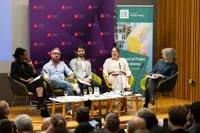
Narratives in policy-making: celebrating the latest edition of LSE Public Policy Review
In the latest edition of the LSE Public Policy Review (PPR) experts from a range of disciplines take a deep dive into the power of storytelling and investigate how much narratives matter to framing, designing, implementing, understanding, and evaluating policy.

Is the era of the ‘Hollow Dollar’ beginning? New paper by Professor Alexander Evans explores shifts in global financial power
Professor Alexander Evans of the School of Public Policy has published a new paper titled The Hollow Dollar, released by the British Academy in partnership with the Carnegie Endowment for International Peace.
February 2026

Why democracy remains central to Venezuela’s future
Professor Andrés Velasco, Dean of the School of Public Policy, has published a new commentary in Project Syndicate titled “Give Democracy a Chance in Venezuela,” offering a timely reflection on the country’s political trajectory and the conditions needed for long term stability and recovery.

The Public Sphere Journal: new podcast episodes
The Public Sphere Journal (PSJ) of international policy studies is created by SPP students for students, academics, and practitioners. Now in its thirteenth year, the journal offers a platform for evidence-based research spanning economic policy, public management, international affairs, development studies, and social policy.

Are revolutions ever justified? Lea Ypi delivers a thought-provoking inaugural lecture at LSE
The School of Public Policy recently partnered with LSE Law School to host the inaugural lecture by Professor Lea Ypi which centred on a bold and enduring question: are revolutions ever justified?
January 2026

Paying It Forward: Reflections from the SPP Alumni Mentorship Scheme
To mark International Mentorship Day, we caught up with SPP alumna Signe Sorensen (Master of Public Administration 2014) to learn more about her experience as an SPP mentor and the value of “paying it forward”.

Sir Philip Barton Appointed Visiting Professor in Practice at LSE School of Public Policy
The School of Public Policy is pleased to welcome Sir Philip Barton as a Visiting Professor in Practice, recognising his distinguished career in diplomacy, international relations, and public service leadership.

2026 New Year Honours for LSE academics
Professor Tony Travers, Visiting Professor in the Department of Government, Associate Dean of the School of Public Policy and Director of LSE London, has been appointed Commander of the Order of the British Empire (CBE) for Public Service.
December 2025

Reflecting on a Standout Autumn Term at SPP
The autumn term at the School of Public Policy has been packed with learning, debate and community. From Welcome Week and a busy academic programme to visits from global leaders and memorable student events, the term has offered countless highlights for our students and staff.

Professor Alexander Evans on the LSE IQ Podcast
Professor Alexander Evans, Associate Dean for Strategic Development at the School of Public Policy, appears on the latest episode of the LSE IQ Podcast to discuss the growing threat of cyber-attacks and the UK’s preparedness to protect its critical infrastructure. Drawing on his experience as former Director Cyber at the Foreign Office, he explores how the UK approaches cyber defence and deterrence.

LSE Excellence in Education Awards 2025
The School of Public Policy congratulates its faculty and staff who were among this year’s winners of the LSE Excellence in Education Awards, recognising outstanding teaching and educational leadership.

Dean Andrés Velasco appointed to the Group of Thirty
Dean Andrés Velasco has been appointed to the Group of Thirty, an independent global body of leading figures in international economics and finance. His appointment recognises his distinguished career in economic policy, international finance, and public leadership.
November 2025

Former Finnish Prime Minister Sanna Marin delivers the School of Public Policy’s 2025 Annual Lecture
The School of Public Policy welcomed Sanna Marin, former Prime Minister of Finland, to deliver its 2025 Annual Lecture on Tuesday 11 November. Speaking to a full audience in the Sheikh Zayed Theatre, Marin joined Dean Andrés Velasco for an in-depth conversation exploring leadership, geopolitical change, and the themes of her new book, Hope in Action: A Memoir About the Courage to Lead.
October 2025

Welcome new School of Public Policy students
This September, LSE SPP welcomed over 300 new students from 55 nationalities, bringing a wealth of academic and professional experience to our classrooms. From MPP and MPA students to our Executive and MPA double degree cohorts, the year began with engaging welcome activities, panels, and bootcamps that set the stage for collaborative learning and global perspectives in public policy.

Professor Sandra Sequeira joins the School of Public Policy
The School of Public Policy is delighted to announce the appointment of Sandra Sequeira as Professor of Development Economics.
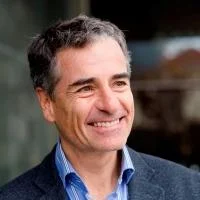
Deliveroo Politics
Why are voters turning to populist and authoritarian leaders even when their countries are growing and inequality is declining?
In his latest Project Syndicate article, SPP Dean Professor Andrés Velasco challenges the popular notion that populism thrives because democracies “fail to deliver.” Drawing on global examples from India to Poland, he questions whether strong economic performance is enough to sustain trust in democratic systems and explores the deeper forces shaping today’s political discontent.

Professor Tony Travers joins Greater London Authority roundtable on connecting sustainability to social justice in London
Professor Tony Travers, School of Public Policy Associate Dean, joined the Deputy Mayor of London for Environment and Energy policy during a visit to LSE for a roundtable discussion on how to connect climate policy to Londoners’ priorities for social, racial, and economic justice.
Hosted in collaboration with the Greater London Authority, the roundtable series examined how to make climate action more inclusive, effective, and aligned with the needs of communities across the capital.

Bloomberg Philanthropies and LSE launch pioneering European City Leadership Initiative
LSE Cities, a research unit affiliated with the School of Public Policy, has launched the Bloomberg LSE European City Leadership Initiative (ECLI), the region’s first professional leadership and management programme designed specifically for mayors and senior municipal officials.
This $50 million partnership between LSE Cities and Bloomberg Philanthropies recently welcomed its inaugural class of 30 mayors and 60 senior officials, representing 17 countries and a combined population of more than 21 million residents.

LSE Law School and LSE School of Public Policy welcome Professor Lea Ypi as Ralph Miliband Professor of Politics and Philosophy
LSE Law School and the LSE School of Public Policy are delighted to announce Professor Lea Ypi's appointment as Ralph Miliband Professor of Politics and Philosophy a joint position between the two schools.
Professor Andrés Velasco on India, UK, China and Trade
Andrés Velasco spoke with Business Today on global trade amid uncertainties including India–UK trade opportunities, the impact of tariffs, and the roles of China and the US.
September 2025

LSE named as top university in the UK
The Times and Sunday Times Good University Guide 2026 ranks LSE as the number one university in the UK.
The Good University Guide also names LSE as University of the Year for Academic Performance; Russell Group University of the Year; University of the Year in London; and joint runner-up for University of the Year for Graduate Employment.

Professor Vanessa Rubio-Marquez presents at Ontario Teachers' Pension Plan (OTPP) Portfolio Company Leaders Conference 2025
Professor Vanessa Rubio-Marquez participated at the Ontario Teachers' Pension Plan (OTPP) Portfolio Company Leaders Conference 2025: “Excelling Amid Complexity: Unlocking Opportunities” in Toronto, Canada. The event revolved around discussions on geopolitics, geoeconomics, decision making, AI, leadership and demographics, amongst others.
Professor Rubio presented to 500 global CEOs on the characteristics of complex systems, the trends of authoritarianism and populism, democratic retrenchment and multipolar fragmentation, and gave some thoughts on the concept of anti-fragility.
August 2025

SPP Associate Dean Prof Tony Travers receives the Freedom of the City of London
Professor Tony Travers received the Freedom of the City of London last week, a ceremonial award given to those who have a strong connection to the City.
Professor Travers was recognised at the Guildhall for his expertise in public finance, elections, and local and regional government.
July 2025

Graduation 2025
A huge congratulations to our LSE School of Public Policy graduating Class of 2025!
In July, the SPP community gathered on campus to celebrate the dedication and achievements of our Master of Public Administration, Master of Public Policy, MPA double degree, MPA in Data Science for Public Policy and Executive programme graduates who now join a global network of over 2,300 SPP alumni making an impact around the world.

AI’s great brain robbery — and how universities can fight back
ChatGPT and its like have swept through academia, changing how students work, write and think. The bots are here to stay, so we need to reimagine learning, our Visiting Professor Niall Ferguson writes in a new essay for The Telegraph.
June 2025

LSE Impact Prize 2025
We are delighted to share that earlier this week, our LSE Growth Lab team led by Professor Richard Davies, as well as our Assistant Professor Dr Alexandra Cirone, were recognised at LSE’s inaugural Impact Prize 2025, which celebrates outstanding engagement, impact, and the development of a strong impact culture across the School.
Our SPP members were recognised in The Spark Award category, which supports the further development of sustainable new products, services, methodologies or processes with potential to lead to the betterment of societyWinner: LSE Growth Lab (Professor Richard Davies, Finn McEvoy, Josh Hellings, and Rahat Siddique) – “AI-powered price collection for evidence-based policy”
Runner-up: Dr Alexandra Cirone – “Representative Voices: Selection Bias in Citizen’s Assemblies”
The Spark Award winner receives £10,000 and the runner-up £7,500 to support the development of a specific project.

Dame Sharon White Appointed to the House of Lords
The LSE School of Public Policy celebrates Dame Sharon White’s appointment to the House of Lords. Dame Sharon White DBE joined the LSE School of Public Policy as a Visiting Professor in January 2025.
Our Dean, Professor Andrés Velasco, commented: "I am delighted that our Visiting Professor in Practice, Dame Sharon White, has been awarded a life peerage. Her wide-ranging impact across public life continues – and this honour from King Charles is hugely deserved."
The School of Public Policy joins in congratulating her.

Can AI Save the NHS?
Is Artificial Intelligence the solution to the UK's National Health Service? Can we use technology to help reduce wait times in Accident and Emergency (A&E) departments at hospitals in the country?
Our Visiting Professor in Practice Dr. Laura Gilbert CBEfeatures in LSE's latest AI video, discussing how technology can help with simple processes that can give time back to NHS workers, and how AI isn’t about taking away jobs in the NHS but giving doctors, nurses and pharmacists more time with patients.
Laura is a specialist in technical data science currently working as Director of Data Science at 10 Downing Street and as joint Chief Analysts in the Cabinet Office, with responsibility for the "AI for the Public Good" programme.

How to Strengthen UK Business and Public Sector Against Cyber-Threats
Cyber risk is increasing in the UK – costing companies and citizens billions. Notwithstanding robust efforts by the government, MPA in Data Science for Public Policy Programme Director, Professor Alexander Evans OBE FRHistS, argues another step is needed to bolster individual responsibility at company Board level.
Read more on the LSE Politics and Policy Blog.

LSE Class Teacher Awards 2025
Congratulations to Pol Simpson, Tom Monk, Felix Iglhaut and Lisa Beihy Pacheco on receiving a LSE Class Teacher Award, as well as Benjamin Dahmen, Line Relisieux, Emiliano Rinaldi and Johannes Matt for having been Highly Commended.
LSE Class Teacher Awards are given to Graduate Teaching Assistants, Teaching Fellows and Guest Teachers in recognition of their very special contribution to teaching at LSE. They are organised by the LSE Eden Centre, and will be celebrated at an event on Thursday 5 June 2025 at the Saw Swee Hock, alongside the LSESU Teaching Awards.

Tackling America’s Diploma Divide
"It is a cliché of American politics that Trumpian populism was fueled by the divide between arrogant college graduates brandishing elite degrees and regular folks with a high-school diploma or less. But it is a cliché that contains more than a kernel of truth."
In his latest article for Project Syndicate, SPP Dean Professor Andrés Velasco asks whether we can keep our belief in education as the ultimate source of social uplift while avoiding the uplifted noses of the educated.
May 2025

Abolishing the Two-Child Benefit Limit Would Be a Great Investment
Thirty per cent of children in the UK (4.3 million) live in poverty. Professor Nicholas Barr, Professor of Public Economics at the LSE School of Public Policy and LSE European Institute, argues that abolishing the Two-Child Benefit limit and overall Benefit Cap is good policy not just for ethical reasons but – less widely realised – because investment in children has a very high payoff and should therefore be a part of the Government’s growth agenda.
Read more on the LSE British Politics and Policy Blog.

How London Bridge is Fighting Back Against the ‘Grotification’ of London
Has London got dirtier, darker and more unsafe? As local authority budgets to maintain our high streets, parks and roads have been squeezed in recent years, this is the question policymakers and Londoners alike have asked themselves. Described by Professor Tony Travers as the ‘grotification’ of a city, it conjures up an image of dirty, cluttered streets, poorly lit, unsafe walkways and pollution of all varieties rising.

How Africa Eats: Trade, Food Security, and Climate Risks
Our Professor in Practice and Strategic Director of the LSE Firoz Lalji Institute for Africa, Professor David Luke, has recently published a new book with LSE Press, "How Africa Eats," which is due to be launched at this year's #LSEFestival!
Professor David Luke is a course convenor for our PP435 Trade Policy and Development course here at the LSE School of Public Policy, where he draws on his decades of experience in African trade policy and trade negotiations to share invaluable insights with our students.
His bold new book tackles Africa’s food insecurity by exposing trade barriers, climate shocks & fragmented markets.
You can register for the book launch on Saturday 21 June here and read David Luke's latest #LSEResearchForTheWorld article on stopping the hunger crisis here.
LSE Co-Hosts Ministerial Roundtable on Social Participation in Health Decision-Making at the World Health Assembly in Geneva
On 20 May, LSE co-hosted a Ministerial Roundtable on Social Participation in Health, a side event at this year‘s World Health Assembly. It was organised in collaboration with Brazil, France, Norway, Slovenia, Thailand, Tunisia, the Civil Society Engagement Mechanism for Universal Health Coverage (UHC),UHC2030 (a global membership organization pushing for universal health coverage), and the UHC Partnership.
At the conference, Professor Alex Voorhoeve summarised his co-authored research on the value of social participation in health and the preconditions for its effectiveness, which was followed by statements from Ministers and CSOs. Countries renewed their commitment to effective, inclusive participation and exchanged information on case studies to enable mutual learning.
What are the achievements of 25 years of mayors Livingstone, Johnson and Khan?
In this guest blog for the Centre for Cities, our SPP Associate Dean Professor Tony Travers, reflects on 25 years since London elected its first executive mayor.
‘Islamabad may listen to Beijing’, says former acting High Commissioner of India and Pakistan Professor Alexander Evans
Professor Alexander Evans OBE FRHistSwas on Channel 4 News last night discussing the latest escalation between India and Pakistan prompted by the terrorist attack in Pahalgam.
Read the transcriptor watch the broadcast here.
Who Benefits From a Global Dollar?
"It is not easy to devise a policy that hurts almost everyone, but the economists surrounding US President Donald Trump have managed this feat by undermining confidence in the greenback. If the global dollar goes down the drain as a result, it will have many mourners – not least in the United States."
In his latest article for Project Syndicate, SPP Dean Professor Andrés Velasco discusses the potential repercussions of Donald Trump's aggressive policies on the global financial stability of our dollar-based order.
Professor Nick Barr Elected as a Founding Fellow of the Royal Economic Society (RES)
Congratulations to Professor Nicholas Barr, Professor of Public Economics at the LSE European Institute and School of Public Policy, for having been elected as a founding Fellow of the Royal Economic Society (RES).
RES President Prof Sir Chris Pissarides, who chaired the judging panel, said:
"Through their applications our new Fellows demonstrated the impact they have made not just in their roles, but to the wider economics profession. We congratulate them and look forward to working with them to advance the RES vision: that economics be understood, advanced and applied for the good of society and the world around us."
April 2025

SPP Students Win Impact Analysis Prize at the 2025 Turner MIINT Competition
Congratulations to our students Sachin Iyer, Emma Kimani, Shad Hoshyar, Tiffany Lam and Angela Aristizábal Borrero, who took part in the 2025 Turner MBA Impact Investing Network & Training (MIINT) Competition at the global finals in Philadelphia earlier this month and took home the inaugural Impact Analysis Prize.
Professor Tony Travers Gives Evidence at Built Environment Committee
Last week, Professor Tony Traversgave oral evidence to the House of Lords' Built Environment Committee as part of their inquiry into "New Towns: Practical Delivery" - the government's plans to deliver dozens of new towns in England.
Professor Tony Travers said the programme, which envisages a minimum of 10,000 new homes at each site, could only form part of the solution to the nation’s housing shortage. He told peers on parliament’s Built Environment Committee that new towns should not be viewed as the sole answer to high house prices and the failure to build sufficient new homes in recent decades.
Open and Inclusive: Fair Processes for Financing Universal Health Coverage
Professor Alex Voorhoeve, who has taught for several years on the course PP406 Philosophy for Public Policy, has co-authored a new World Bank Report, "Open and Inclusive: Fair Processes for Financing Universal Health Coverage".
This report makes the case for transparent and participatory decision-making about how to fund health coverage for all. This report is the topic of a symposium in the latest issue of Journal Health, Economics, Policy and Law. Leading academics and health policy experts from the World Health Organisation and the International Budget Partnership criticise and extend the report’s analysis.
The full symposium is available open access here.

What Do We Know About Income and Earnings Volatility?
Professor Stephen Jenkinshas co-authored a new article with Mike Brewer and Nye Cominetti in The Review of Income and Wealth.
In this article, the authors review research about income and earnings volatility and provides new UK evidence about the latter using high-quality administrative record data, with implications for the design of cash transfer support in the UK.
Tony Travers: MHCLG Risks Facing Mission Impossible
At a time when money is in short supply, the ministry finds itself with a huge programme of legislation and implementation, writes our SPP Associate Dean, Professor Tony Travers, for the Local Government Chronicle.
There Is No Method to Trump’s Tariff Madness
"Trump is a politician who has made unpredictability part of his brand."
In his latest article for Project Syndicate, SPP Dean Professor Andrés Velasco argues that there is no merit in any of the rationales the White House has advanced for launching a global trade war. Trump's behavior exposes the truth behind his tariff fusillade: it is not about the US economy but about his desire to exercise unilateral power, he writes.

SPP Students Accompany Professor Vanessa Rubio-Márquez to the 2025 Global Prosperity Forum
Our students Helena Fee Rasch and Achilles Tsirgis recently attended the inaugural Global Prosperity Forum conference in Washington DC with Professor Vanessa Rubio-Márquez, as part of their Fellowship Programme between the LSE School of Public Policy and the Atlantic Council's Freedom and Prosperity Center (FPC).

USMCA & U.S. Relations with Mexico and Canada
Our Associate Dean Professor Vanessa Rubio-Márquez, also three-time Vice Minister of Mexico, participated in an online panel hosted by the American Leadership Initiative to discuss US relations with Mexico and Canada alongside Congressman Greg Stanton of Arizona and Canada expert, Christopher Sands. The discussion was moderated by McLarty Senior Counselor, Kellie Meiman, who was formerly a Foreign Service Officer in Latin America and then a Latin America trade negotiator at USTR.
Pension reform in Chile
Professor Nicholas Barr, Professor of Public Economics at the LSE European Institute and School of Public Policy, recently gave a talk at the Catholic University in Santiago, Chile about a pension reform legislated two days prior. Also speaking at the event was Chilean Finance Minister Mario Marcel.

The Growth Co-Lab Wins FCA Economic Research Competition
Earlier this term, we were thrilled to share that the LSE Growth Lab, led by Professor Richard Davies, was awarded funding from the Financial Conduct Authority for their project on improving measurement of productivity in UK financial services.
Watch this new videowith Rahat Siddique and Andrea Correa to learn more about their proposal.
March 2025
Professor Tony Travers Praised by Peer of the Realm
As members of the House of Lords debated legislation that will merge or eliminate local authorities across England, Lord Rennard, a Liberal Democrat Peer, praised Professor Tony Travers for his insights on the matter:
"I am grateful to Professor Tony Travers of the London School of Economics for pointing out to me that there are about 18,000 councillors in the UK—a figure soon to be reduced significantly—while in France there are 36,000 councils or communes. The UK is often cited as the most centralised government in the western world, notwithstanding the post-1999 constitutional settlements."
Professor Travers added: "Parliament is rightly concerned by the impact of the proposed local government reform on British democratic institutions. Fewer councillors will mean fewer people to run local political organisations and to provide accountability to the electorate. The proposed move to significantly bigger municipalities in England needs to bear this reality in mind".
The London Consensus: Economic Principles for the 21st Century- Upcoming book by Andrés Velasco and Tim Besley
This year, 2025, marks 35 years since the Washington Consensus came out - a list of recommendations, do's and don'ts, for economic policy and economic development. But the world has changed a great deal since 1989 - so what should today's policy priorities be and how can they be implemented?
In May 2023, the SPP brought together experts across policy fields to discuss what ought to be retained or amended in the Washington Consensus to reflect modern thinking in the social sciences.
Bringing together these contributions under one publication, we are delighted to announce an upcoming book co-edited by Professor Andrés Velasco(LSE School of Public Policy) and Tim Besley(LSE Department of Economics) to be published with LSE Press in Autumn 2025.
Join us on Monday 16 June 2025 for an LSE Festival event chaired by Andrés Velasco and featuring contributors of the book to get a taster of the new publication!
Learn more with our launch video and upcoming LSE Festival event on our London Consensus website.
London: Latest Commentary by Professor Tony Travers
Our Associate Dean Professor Tony Travers has been interviewed for The Financial Times about the ONS' decision to postpone publishing trade dataand the alarm bells raised about the UK's critical national infrastructure after the recent shutdown at Heathrow Airport.

Calls to Amend Payout Rules for Wrongly Convicted
Our Assistant Professor Dr Lewis Ross, who specialises in legal and political philosophy, was interviewed by the BBC to comment on the government's rejection of compensation requests by those wrongly convicted by the system.

How to Confront Orbán and Save the EU
U.S. President Donald Trump has undermined NATO, probably fatally. Amid this shifting geopolitical landscape, Europe desperately needs to react, rapidly and decisively, to ensure its future security. Unfortunately, Hungarian Prime Minister Viktor Orbán is determined to avoid such resolute action.
The legal tools to address this internal opposition exist — Europe just needs to use them, and meet the moment with courage, argues our Professor of Public Policy Luis Garicanoand his co-author Andrew Duff, both former MEPs, in a new op-ed for POLITICO.
The Regulatory Diplomacy and Cybersecurity Initiative
How can 'regulatory diplomacy' be better fostered, utilised, and embedded in government practice to boost cybersecurity, particularly in an OECD and G7 context?
This is the question that , a new applied research and policy programme at the LSE School of Public Policy in partnership with Microsoft and the Charter of Trust, seeks to answer.
Led by Professor Alexander Evans OBE FRHistS and coordinated by MPA student Nicholas Filipek, the programme has brought together G7 governments, the tech sector, and regulators to discuss ways of strengthening international cybersecurity through enhanced cooperation.
To learn more, watch our launch videoand .Where Have All the Flowers Gone?
"A teenage boy who came to the United States as a refugee from Augusto Pinochet's Chile found that he and his family were welcomed with open arms. Now, nearly 50 years later, he wonders how the country he fell in love with could have started to resemble the country he left."
In his latest article for Project Syndicate, SPP Dean Professor Andrés Velasco takes us back to his arrival in the United States with his family as a child fleeing Augusto Pinochet’s dictatorship in Chile, and the support they received at the time. "Where is that America today?"
Mexico’s Fork in the Road: Rule of Law or Authoritarian Shift?
In a new report for the Atlantic Council's Freedom and Prosperity Center's latest atlas on global democracy trends, Professor Vanessa Rubio-Márquez unpacks democratic decline and economic uncertainty in Mexico after a tumultuous 2024 that saw the country elect its first female president.

Global Public Policy Network (GPPN) Conference 2025
Congratulations to all our students who represented the School of Public Policy at the annual Global Public Policy Network (GPPN) conference, which this year was hosted by Columbia SIPA in New York City. Fellow participants also included our MPA/MGA double degree students, who are currently at the University of Toronto.
London: Latest Commentary by Professor Tony Travers
Our Associate Dean Professor Tony Travershas recently been featured in a number of articles discussing London and local government politics.
Discover Tony Travers’ latest commentary on council tax coming up in April, Labour’s attacks on local democracy, and the instrumentalisation of public opinion against the Mayor of London’s Ultra Low Emission Zone (ULEZ).
President Donald Trump Expected to Set Delayed Tariffs on Mexico & Canada
President Donald Trump is expected to bring in delayed tariffs for goods coming from in Mexico, and Canada.
Our Professor in Practice and Associate Dean for Extended Education Professor Vanessa Rubio-Márquezwas invited on the BBC World Business Report and Bloomberg TV to discuss US-Mexico relations
The European Economy Has A Trump Problem
Europe’s economy is in trouble. Our Professor of Public Policy Luis Garicanorecently featured on The Economist’s podcast "Money Talks" to discuss the challenges facing Europe’s leaders today.
February 2025
The Growth Co-Lab Wins FCA Economic Research Competition
We are thrilled to share that our colleagues at the LSE Growth Lab have been awarded funding from the Financial Conduct Authority for their project on improving measurement of productivity in UK financial services.
This research aims to understand the interplay between productivity in financial services and macroeconomic risks.The Growth Co-Lab will develop a comprehensive risk framework to guide policies, exploring how regulation can balance promoting growth with risk. It will deliver new productivity metrics and identify key constraints in the UK.
Learn more about the competition winners.

Dr. Zhamilya Mukasheva Discusses Research on Politics of Higher Education Cost-Sharing in APSA Education Politics Newsletter
Last year, our LSE Fellow in Public Policy Dr. Zhamilya Mukashevareceived the Best Dissertation Award from the American Political Science Association's Education Politics & Policy section.
Zhamilya has been featured in APSA Education Politics' latest newsletter with a Q&A on her paper which explored the politics of higher education cost-sharing — policies aimed at shifting the cost of higher education onto students. As part of her thesis, Zhamilya developed a novel dataset of major reforms to higher education cost-sharing.

LSE's School of Public Policy Welcomes Natalie Black CBE
We are delighted to welcome Natalie Black CBE, a leading expert in AI, cybersecurity, and trade, as a Visiting Professor in Practice at the LSE School of Public Policy.
Commenting on her appointment, Natalie said: "I am delighted to be returning to the LSE which is such an important source of innovation and international collaboration. I look forward to engaging with the world class faculty and students."
Job Vacancy: Programme Manager (Data Science/Double Degrees)
The LSE School of Public Policy is seeking to recruit a full-time Programme Manager to work on the MPA in Data Science for Public Policydegree programme and the international MPA Double Degrees, as well as supporting the wider portfolio of SPP degree programmes.
This is a fixed term appointment until May 2026 to cover maternity leave. Apply by 12 February 2025 at 23:59.

Meta's Governance Team Speaks to SPP Students About Deliberative Online Governance
Through her research on deliberative democracy, our Assistant Professor Dr. Alexandra Cironerecently consulted with Meta to implement its new community forums, a democratic initiative designed to help govern social media.
This exciting collaboration led us to hosting Meta’s Governance Director Kris Rose and Technology Policy Officer Andreas Katsanevas at the School of Public Policy to speak to our students. We were thrilled to have Meta's governance team share their insights on initiatives in deliberative online governance, the role of the Oversight Board, and how tech companies can better incorporate user input into platform policy.
Watch our video with Dr Ali Cirone to learn more!

LSE School of Public Policy Celebrated in the 2024 LSE Excellence in Education Awards
The SPP was once again widely recognised in this year's LSE Excellence in Education Awards hosted mid-November by the LSE Eden Centre. A huge congratulations goes out to this year's winners, across both our academic and professional services staff!
View the full list of SPP awardees.
English Councils Forecast £9.3bn Deficit in Three Years, Analysis Shows
Local authorities in England are predicting a collective deficit of £9.3bn by 2026-27, almost four times the figure estimated for this year, according to research that underlines the scale of the strains on council financing.
Our SPP Associate Dean, Professor Tony Travers, commented that, despite an estimated 23 per cent per head cut in local government funding since 2010, most councils had not declared bankruptcy.
"The very fact that council finance officers generally balance their books has clearly tempted the Treasury to ‘carry on cutting’ councils," he said.
Claudia Sheinbaum: A "Techno-Populist" In Waiting?
In a new article for Americas Quarterly, Professor Vanessa Rubio-Márquezdiscusses the possible features and existing challenges for the new government of Mexico, arguing that Mexico's next president will aim for a more pragmatic relationship with the private sector amid mounting fiscal pressure.
The State of Mexican Economy
As Mexican President López Obrador prepares to hand over office in October to Claudia Sheinbaum, Professor Vanessa Rubio-Márquezwas invited by the BBC World Business Report to comment on the state of the Mexican economy.
Listen to her full analysis (minute 19 to 25).