

Connect
About
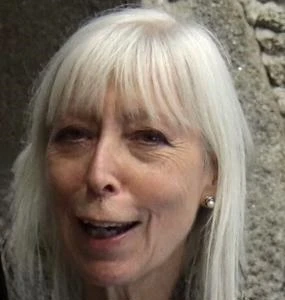
Educated in Spain and Britain, Professor Rodríguez-Salgado taught at the universities of St. Andrews and Newcastle-Upon-Tyne before joining the LSE in 1985. She retired in 2015 but continues to take active part in conferences and workshops, as well as with research, writing and publications, mainly in English and Spanish.
Professor Rodríguez-Salgado has pursued a number of research areas, most notably:
International relations in the early-modern period, with particular reference to the global empire of the Spanish Habsburg monarchs (e.g.: The Changing Face of Empire: Charles V, Philip II and Habsburg Authority 1551-1559 (Cambridge University Press, Cambridge etc.., 1988 and reprint 2008; Spanish and Italian editions, 1992, 1994); 'Obeying the ten commandments: Charles V and France', in W. Blockmans & N. Mout (eds.), The World of Emperor Charles V (Amsterdam, 2004), pp.15-67. ‘«Ni cerrando ni abriendo la puerta» Las negociaciones de paz entre Felipe II e Isabel I, 1594-8’ in: A. Marcos Martín (ed.) Hacer Historia desde Simancas. Homenaje a José Luis Rodríguez de Diego (Valladolid, 2011) pp.632-660; 'Guerra sorda, paz ruidosa. Las relaciones de Felipe II e Inglaterra.', in L.A. Ribot García (ed.), La Monarquía de Felipe II a Debate (Madrid, 2000) pp.63-119; "I loved him as a father loves a son ... Europe may curse me then, but from him, I deserved only gratitude". Philip II’s relations with Rudolf II’ in: J.Martínez Millán & R. González (eds): La Dinastía de los Austria. Las relaciones entre la Monarquía Católica y el Imperio (3 vols., Madrid, 2011), vol. I pp.335-389.). ‘A masterclass in Justification: Francis I, Charles V and Pope Paul III in the 1540s’ in Juan Carlos d’Amico and Jean-Luis Fournel (eds.), François Ier et l’espace politique Italien. États, domaines et territoires, Rome, École Française de Rome n.548 (2018) pp.397-419. ‘"Do not reveal that I wrote this": diplomatic correspondence, news and narratives in the early years of the civil war in the Low Countries’, in: Raymond Fagel, Leonor Álvarez Francés and Beatriz Santiago Belmonte (eds.) Early modern war narratives and the revolt in the Low Countries (Manchester University Press, Manchester, 2020), pp. 18-35. "No great glory in chasing a Pirate". The manipulation of news during the Tunis Campaigns of 1534 and 1535’, in: Mediterranea. Ricerche Storiche, n.49, Anno XVII, (2020) pp.417-444. ‘”Thys warre betwixte ladys is a swete warre”. A re-assessment of the 1519 election of the Holy Roman Emperor.’ In: Raffaele Tamalio (ed.), L’impero di Carlo V e la geopolitica degli Stati Italini nel quinto centenario dell’elezione imperiale (1519-2019), Mantova, Quaderni dell’Academia Nazionale Virgiliana di Scienze, Lettere e Arti, n.20 2021), pp. 17-34. ’Charles Quint et la reconfiguration de l’Europe de 1539-1540. “Songe, illusion ou phantasme ou mensonge?”’, in Marie de Hongrie. Art & Pouvoir à la Renaissance. Edd. Jean-Marie Cauchies & Gilles Docquier. Domaine & Musée royal de Mariemont, 2025, pp. 27-36.
Works on the Spanish Monarchy, particularly Charles V and Philip II, including: 'Charles V and the dynasty', in: H. Soly (ed.) Charles V. 1500-1558. Mercatorfonds, Antwerp, 1999, pp.27-111. French and Dutch editions, 1999; Spanish and German editions 2000; ‘ Kinship, collaboration and conflict: The complex relations between Alessandro Farnese and Philip II’, in Rafael Valladares, Feliciano Barrios & Juan A. Sánchez Belén (eds.), En la Corte del Rey de España. Liber Amicorum en homenaje a Carlos Gómez-Centurión Jiménez (1958-2011), Ediciones Polifemo, Madrid 2016, pp.59-105.; ‘"Materia de padre a hijo". Felipe II y el recogimiento del príncipe Don Carlos’, in Alberto Marcos (ed.) La Cátedra de Felipe II a los Cinquenta Años (Valladolid, 2020) pp. 429-459; ‘The Transformation of Philip, Prince of Spain, into the Lord of the Low Countries’ in: Margaret M. McGowan and Margaret Shewring (eds), Charles V, Prince Philip and the politics of succession: imperial festivities in Mons and Hainault, 1549 (Tournhout, Brepols, 2021) pp 61-78. ‘Personality and politics in Ferdinand I’s correspondence with Juan Alonso de Gámiz, his “Well-beloved Councillor” at the Court of Charles V, in the 1540s.’, in Václav Bůžek and Pavel Marek (edd.), Ferdinand I and His Times (Brepols, 2026).
Relations between Christian and Muslim powers have also resulted in publications such as: Felipe II. El "Paladín de la Cristiandad" y la Paz con el Turco (Salamanca, 2004); 'Carolus Africanus: Carlos V y el Turco', in: J. Martínez Millán (ed), Carlos V y la quiebra del humanismo político en Europa, 1530-1558 (Madrid, 2000) pp.487-531; ‘Eating bread together: Habsburg Diplomacy and Intelligence-Gathering in Mid Sixteenth-Century Istanbul’, in Emilio Sola Castaño and Gennaro Varriale (eds.), Detras de las apariencias. Información y espionaje (siglos XVI-XVIII), Universidad de Alcalá, 2015 (ISBN 978-84-16133-63-5) pp.73-100.
Identity (1) Europe: and on Europe. For a number of years she co-taught a master’s course on the development of a distinct European identity and her ideas have been expressed at different levels, from her contribution to The European Economic and Social Commitee’s Lectures and Debates on the current and future nature of the European project ('Forging a European Identity', Treffen, Brussels, 12.5.2005); to the popular introduction 'In Search of Europe', History Today (February 1992) vol.42 pp.11-15. [the basis of a Swedish Radio programme, Summer 1992] to the more recently the BBC Radio 3 documentary Sunday Feature (February & August 2005) Europe of the Mind. Identity (2) the Spanish Monarchy. Another important strand has been her work on identity. This has focused on the multi-ethnic Spanish empire (publications include 'Patriotismo y Política exterior en la España de Carlos V y Felipe II', in F. Ruiz Martín (ed) La Proyección Europea de la Monarquía Hispánica (Madrid, 1996) pp.49-105; 'Christian, Civilised and Spanish. Multiple identities in sixteenth-century Spain', in Transactions of the Royal Historical Society, 6th series, vol. VIII (December 1998) pp.233-251); ‘ "How oppression thrives where truth is not allowed a voice.’ The Spanish polemic about the American Indians.’ In: G.K. Bhambra & R.Shilliam (eds.) Silencing Human Rights. Critical engagements with a contested project (Palgrave Macmillan, 2008) pp.19-42;.
The Early-modern Court. Rodríguez-Salgado has also researched and published on the early-modern European court, including: 'The Court of Philip II of Spain' in R. Asch and A.M. Birke (Eds), Princes, Patronage and the Nobility. The Court at the Beginning of the Modern Age c.1450-1650 (Oxford University Press, 1991) pp.205-244; 'Honour and profit at the court of Philip II of Spain' in M. Aymard & M. Romani (eds) La Cour comme Institution Economique (Éditions de la Maison Des Sciences de l'Homme, Paris, 1998) pp.67-86; ‘Ferrante Gonzaga: The Champion of Innocence.’ in: G. Signorotto (ed.) Ferrante Gonzaga. Il Mediterraneo, L’Impero (1507-1557) (Rome, 2009) pp.139-196; ‘"Una Perfecta Princesa" Casa y vida de la reina Isabel de Valois (1559-1568). Primera Parte.’, in: C. Gómez-Centurión Jimenez (ed.), Monarquía y Corte en la España Moderna, Monografías de Cuadernos de Historia Moderna, Anejo II, (Madrid, 2003), pp.39-96; part II in: Cuadernos de Historia Moderna, vol.28 (Madrid, 2003) pp.71-98.
Documentaries, exhibitions, media. Her extensive use of visual and material sources in addition to written and published documentation led to her involvement with media, taking part in a number of televised documentaries (BBC Armada week, Elizabeth’s Pirates, The Map Makers, A la sombra del Emperador etc.), and several exhibitions (Felipe II. Un monarca y su época, 1998 etc. Charles V exhibitions in 2000), and most notably curating the major National Maritime Exhibition on the Armada. The exhibition and its catalogue (Armada. The Official Catalogue of the National Maritime Museum Exhibition, with contributions from the NMM staff, Penguin Books, 1988) served as a model for later historical exhibitions. It was followed by the collection edited with Dr. S. Adams, England, Spain and the Gran Armada, 1585-1604. Essays from the Anglo-Spanish Conferences, London and Madrid 1988 (Edinburgh, 1991).
Art and Politics in Early-Modern Europe. In the last few years Professor Rodríguez-Salgado has been involved in major projects exploring the relationship between early-modern women in power and art patronage, collaborating with the University of Murcia and the Museo Nacional del Prado, Among the articles published are: ‘Challenging Images: Charles V’s relationship with art, artists and festivities’, in: Noelia García Pérez (ed.) Mary of Hungary. Renaissance Patron and Collector. Gender, Art and Culture (Tournhout, Brepols Publishers, Collection: Études Renaissantes, 2020), pp.23-41; ‘“If I were a man, I would leave at once and challenge him and his master”: The life and character of Juana, Pricess of Portugal (1535-1573)’. In: Noelia García Pérez (ed.) The Making of Princess Juana of Austria. Gender, Art, and Patronage in Early Modern Iberia (Baton Rouge, Luisiana State University Press, 2021) pp. 44-78. https://inform.academia.edu/MJRodriguezSalgado; ‘Captive in a Portrait Gallery: Titian’s portraits of John Frederick I of Saxony (c.1548 and c.1551) and the collection of Mary of Austria, Queen of Hungary’ in: Noelia García Pérez (ed.), Portraiture, Gender and Power in Sixteenth-century Art: Creating and Promoting the Public Image of Early Modern Women, (Routledge, New York & London, 2024) pp.136-163.
Conferences and presentations online:
‘María de Hungría’, in El Prado en Femenino. Promotoras artísticas de las Colecciones del Prado, 1451-1633 (Madrid, Museo del Prado, 2022). Conferene in Spanish with English subtitles.
‘Las mujeres de las Casas Reales (1451-1633)’: El Prado en Femenino. Protagonistas femeninas en la formación de las colecciones del Prado. De Isabel la Catolica a Isabel Clara Eugenia (Madrid, Museo del Prado, 2022, mins. 1-46) Conference in Spanish with English subtitles.
‘Forjando un mito: Tiziano, Carlos V, María de Hungría y el Museo Nacional del Prado’. Ciclo de Conferencias, 2024, (Madrid, Museo del Prado, February 2024. Conference, in Spanish, with English subtitles).
https://www.youtube.com/watch?v=gW_NuwRwnSg
Cranach the Elder: Cacería de Torgao, Museo Nacional del Prado (Video in Spanish)
https://www.instagram.com/reel/CpcV4tjgk3S/?utm_source=ig_embed&utm_campaign=loading
Peter Snayers: El sitio de Gravelinas (Video in Spanish)
https://www.instagram.com/reel/DUDOsJtjXva/?utm_source=ig_embed&utm_campaign=loading
Rodríguez-Salgado is currently working on the use of medallic forms in political propaganda, collaborating with museums such as the Museo del Prado and the Museo Arqueologico Nacional (Madrid), and the British Museum.
Expertise
Philip II; Charles V; 15th-17th Century International Relations; Early-Modern Anglo-Spanish Relations; Relations between the Habsburgs and the Muslim Powers in the Sixteenth Century; European Identity; The Early-Modern Court; The use of Art in early-modern Politics.